You want to be eco-friendly, but the world of "compostable" can be confusing. You worry about making the wrong choice and just adding to the landfill problem.
Yes, certified compostable paper bowls are a much greener choice. They are made from renewable plants and designed to break down into soil, but only if they are disposed of correctly.
Many of my clients ask me about compostable bowls. They want to do the right thing for the planet, but they hear conflicting information. They are scared of "greenwashing"—fake green claims. As an engineer, I tell them that "compostable" is not a marketing buzzword; it's a scientific standard. It means a product is designed to return to the earth. But to get that benefit, you have to understand the whole story: how it's made, how you prove it's real, and where it goes after use. Let's break it down.
What's the Difference in How a Compostable Bowl Is Made?
A compostable bowl looks and feels just like a regular paper bowl. You worry that there is no real difference and that you are just paying more for a word.
The critical difference is the inner lining. Instead of a petroleum-based PE plastic, compostable bowls use a plant-based bioplastic (PLA) or a water-based coating that allows them to decompose.
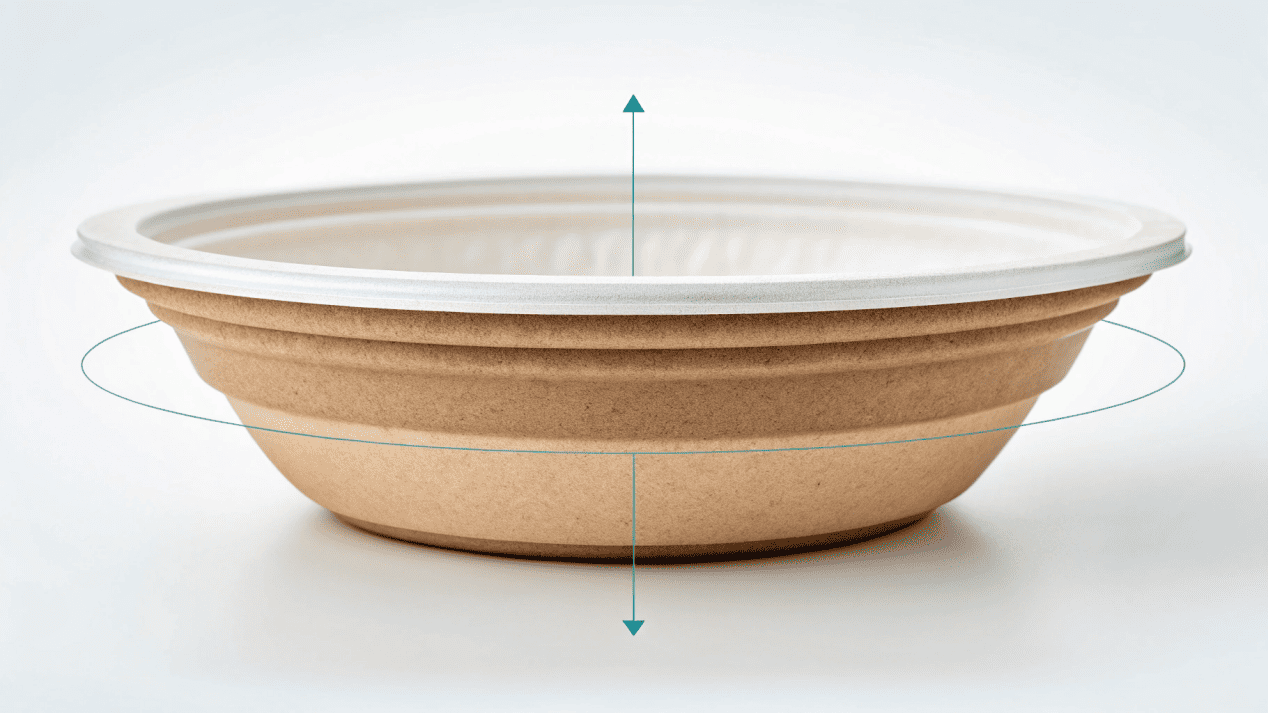
The secret to a compostable bowl is its barrier against moisture. For decades, that barrier was a thin layer of polyethylene (PE) plastic. That PE lining is the reason a standard paper cup or bowl cannot be easily recycled or composted. It's a contaminant. To create a truly compostable bowl, we had to re-engineer that fundamental layer.
From Plastic to Plants: The PLA Revolution
The biggest change was the switch to Polylactic Acid, or PLA. PLA is a bioplastic made from renewable resources like corn starch. It looks and acts just like plastic, providing a great barrier against grease and liquids. But its chemical structure is completely different. Under the right conditions, microorganisms can break it down into simple, organic matter.
The New Wave: Water-Based Coatings
An even newer technology is an aqueous, or water-based, coating. Instead of a separate plastic film, we apply a special water-based solution that soaks into the paper fibers and creates a waterproof barrier. This makes the entire bowl structure compostable and sometimes even recyclable in specific streams.
| Feature | Traditional PE Bowl | Compostable PLA Bowl |
|---|---|---|
| Lining Material | PE (Petroleum Plastic) | PLA (Plant-based Bioplastic) |
| Material Source | Fossil Fuels | Renewable (Corn, Sugarcane) |
| End-of-Life | Landfill | Industrial Composting |
How Can You Be Sure a Bowl Is Genuinely Compostable?
Anyone can print "eco-friendly" on a bowl. You are worried about being fooled by fake claims and accidentally misleading your own customers. This is a very valid concern.
Look for official, third-party certification marks on the product or from the supplier. The most trusted marks are BPI for North America and TÜV AUSTRIA (OK compost) for Europe and global markets.
A few years ago, a client almost bought 100,000 "compostable" bowls from an unknown online seller. The price was very low. I told him to ask for their BPI certificate. The seller had no idea what he was talking about. We avoided a disaster. Uncertified products often use fake materials that will not break down and will contaminate the compost stream. Certifications are your only guarantee.
What Do the Logos Mean?
These logos are not just graphics. They are proof that the product has passed strict scientific tests.
- BPI (Biodegradable Products Institute): This is the gold standard in North America. It certifies that a product meets the ASTM D6400 standard for compostability in industrial facilities.
- TÜV AUSTRIA (OK compost INDUSTRIAL): This is a highly respected global standard from Europe, based on the EN 13432 standard.
What Does Certification Guarantee?
To get certified, a product must prove that it will:
- Disintegrate: Break down into small pieces within 12 weeks.
- Biodegrade: Have its organic material convert into carbon dioxide, water, and biomass within 180 days.
- Leave No Toxins: Not release any heavy metals or harmful substances into the soil.
A certified product is a promise kept.
Where Should Your Customers Throw Away a Compostable Bowl?
You proudly use compostable bowls, but then you see customers throwing them in the trash or recycling bin. This completely defeats the purpose and wastes your green investment.
Compostable bowls must go into a dedicated organics or compost bin that is sent to an industrial composting facility. They must never go into the recycling bin, as they contaminate the paper stream.
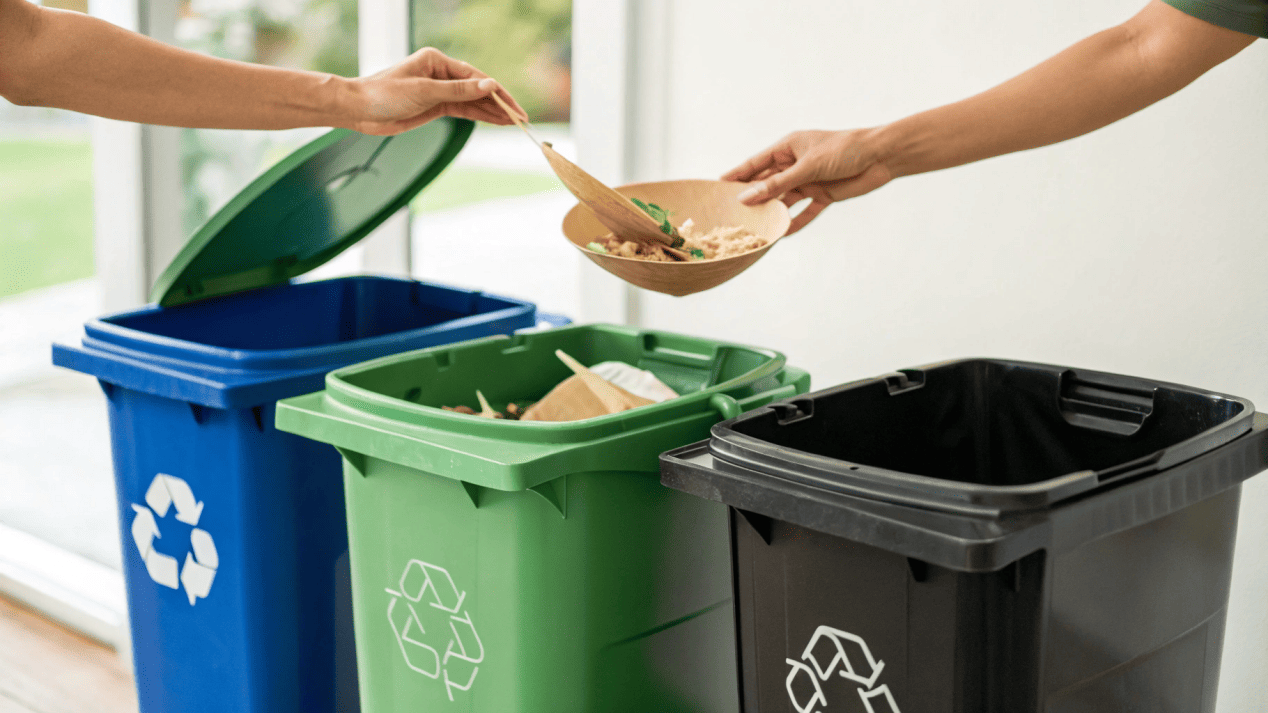
The environmental benefit of a compostable bowl is only unlocked at the end of its life. If it ends up in a landfill, it's just trash. If it ends up in recycling, it causes problems. As a business owner, your job is to guide your customers to put it in the one right place.
The Right Place: Industrial Composting
Most compostable packaging needs the specific conditions of an industrial facility to break down: high temperatures, high humidity, and a rich mix of microorganisms. Your backyard compost pile likely won't get hot enough.
The Wrong Bins
- Do NOT put it in Recycling: The PLA or aqueous coating is a contaminant to the paper recycling process, just like PE plastic.
- Do NOT put it in the Trash: In a landfill, it is deprived of oxygen and will not break down properly. The benefit is lost.
Your final step is to work with your local waste hauler to see if they offer commercial composting services and to use clear signs on your waste bins to educate customers.
| Disposal Bin | Correct for Compostable Bowl? | Why? |
|---|---|---|
| Organics / Compost | YES | This is the only place it can be turned back into soil. |
| Recycling | NO | The coating contaminates the paper recycling stream. |
| Trash / Landfill | NO | It will not break down properly and the benefit is lost. |
How Does a Compostable Bowl Help You Win More Customers?
You've invested more money in compostable bowls. Now you need to see a return on that investment. You want this choice to actually grow your business.
Market your green choice directly on the bowl and in your store. Eco-conscious consumers actively choose brands that share their values, giving you a powerful competitive advantage and building customer loyalty.

Switching to compostable bowls is more than an operational cost; it is a marketing investment. In today's market, sustainability sells. But you have to tell people about it. Don't assume they will notice on their own.
Tell Your Story on Every Bowl
This is your most powerful tool. Ask us to add a small line of text or a simple icon to your custom design. Something as simple as "Certified Compostable" or a small leaf icon instantly communicates your values. It tells customers you are a brand that cares.
Turn Your Bins into Billboards
Place clear, friendly signage above your waste bins. For example: "We've chosen compostable bowls to protect our planet. Please help us by placing them here!" This simple act does two things: it ensures proper disposal, and it actively markets your commitment to every single customer. It shows that you are not just using a bowl; you are leading a movement. This builds a deep, emotional connection that commodity bowls can never achieve.
Conclusion
Choosing certified compostable bowls and guiding their disposal transforms your packaging from a cost into a powerful statement of your brand's values for a greener planet.