
You want to choose sustainable cups, but the labels are confusing. Tossing them in the wrong bin does more harm than good. I will give you the honest truth.
It depends. Most paper cups1 have a plastic lining2 (PE) that makes them difficult to recycle. Cups with a plant-based lining3 (PLA) are only compostable4 in special industrial facilities.
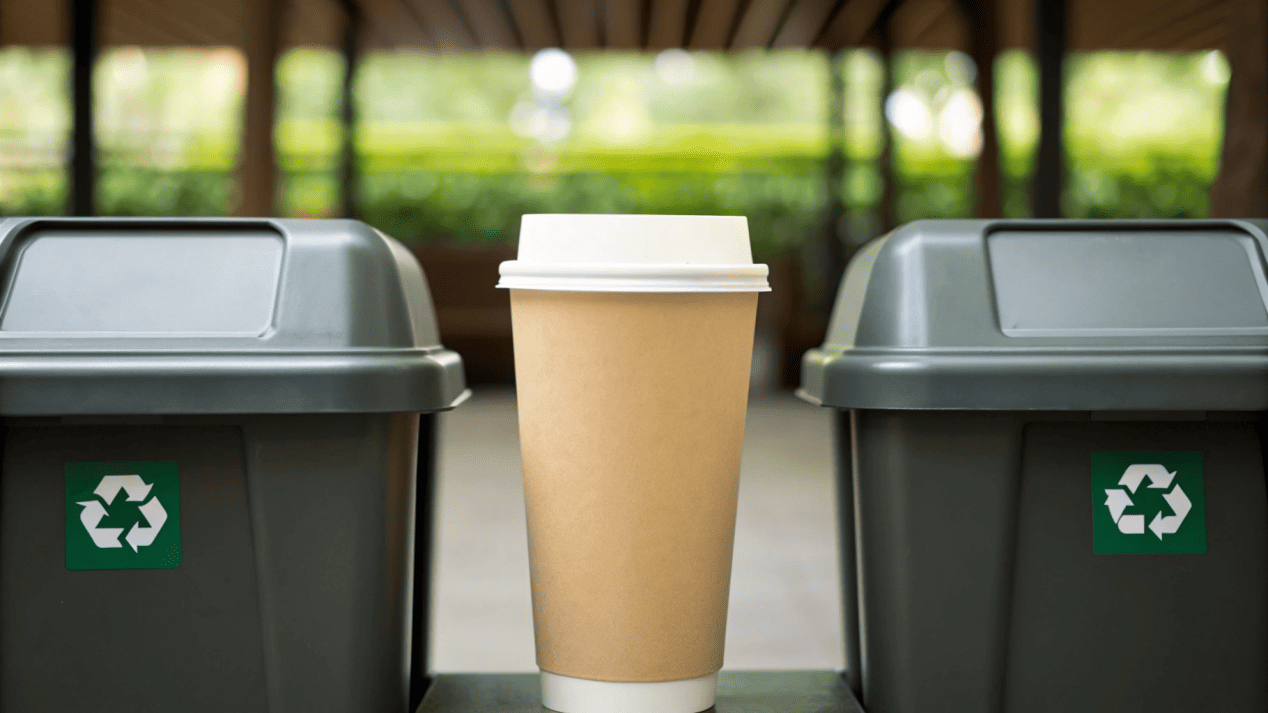
It's a daily ritual for millions: a warm coffee in a paper cup. We enjoy it, and then we face the question: What do I do with it now? Does it go in the recycling bin? The compost? Or the trash? The frustrating answer is: it depends. As someone who has been engineering packaging for over 15 years, I believe in providing clear answers. Let's break down the complex reality of paper coffee cups so you can make the best choice for your business and your customers.
What Makes Recycling a Paper Cup So Complicated?
You think a paper cup is just paper. But if it was, hot coffee would turn it to mush. The real challenge is the invisible lining inside that makes it waterproof.
The thin plastic (PE) or bioplastic (PLA) waterproof lining is the problem. It is bonded to the paper and must be separated, a process most standard recycling facilities cannot perform.
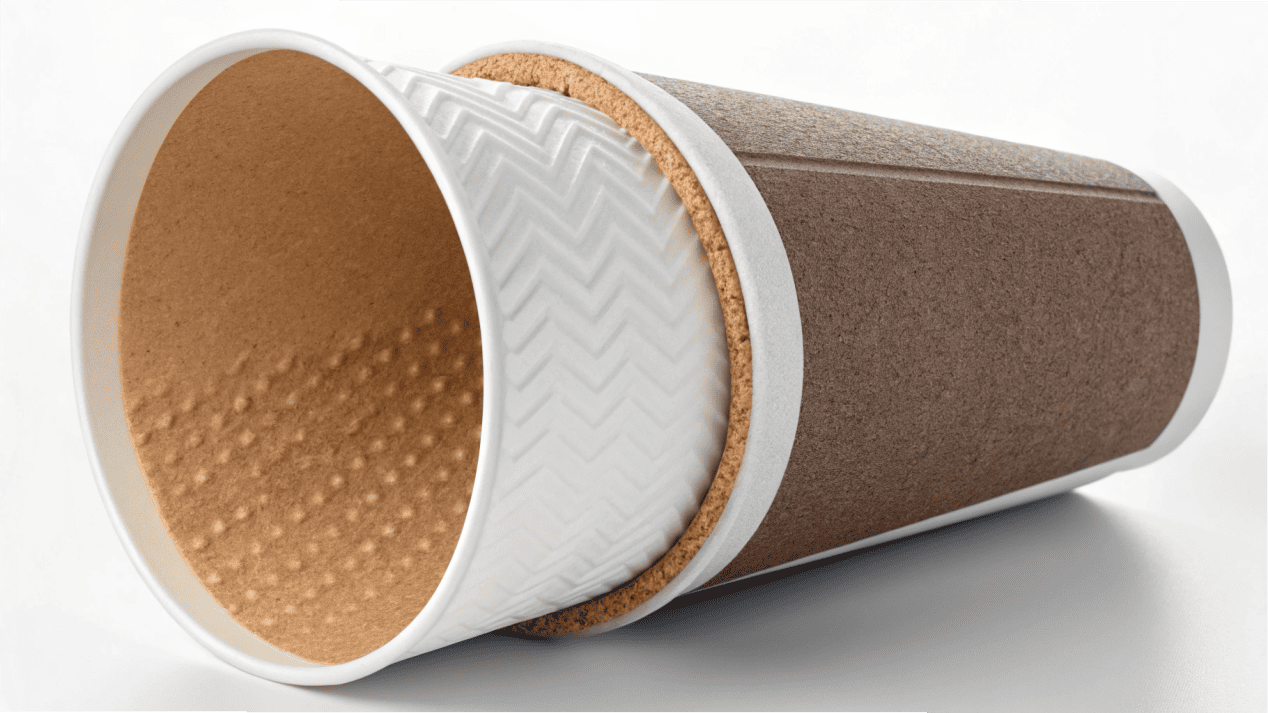
The core of the issue is the waterproof coating. A plain paper cup would fall apart the moment you poured coffee into it. To make it work, a very thin layer of coating is bonded to the paper. This coating is the single biggest hurdle to a cup's end-of-life.
PE (Polyethylene) Coating
This is the traditional, petroleum-based plastic lining2. It is excellent at holding liquid. But it is a major problem in standard paper recycling. Separating that thin plastic film from the paper fiber is a difficult and expensive process. Most recycling facilities are not equipped to handle it. So, the cup goes to a landfill.
PLA (Polylactic Acid) Coating
This is the popular "eco-friendly" alternative. PLA is a plant-based bioplastic, usually from corn. It is designed to be commercially compostable4. However, it is a big problem in both paper recycling and plastic recycling streams. It is not paper and it is not a traditional plastic. It's designed for a completely different end-of-life path.
The Next Frontier: Aqueous Coating
At Haokelao, my team and I are pioneering advanced water-based (aqueous) coatings. These "plastic-free" linings are designed to break down more easily in standard paper recycling systems. This is the future of truly recyclable cup technology.
Does a 'Recyclable' Label Mean It Will Be Recycled?
The cup has a recycling symbol5 on it. You feel good putting it in the blue bin. But is it actually getting recycled, or are you just wishing it would?
Not always. A cup is only recycled or composted if a local facility exists with the special technology needed to process its specific lining (PE or PLA). Without that facility, it goes to landfill.
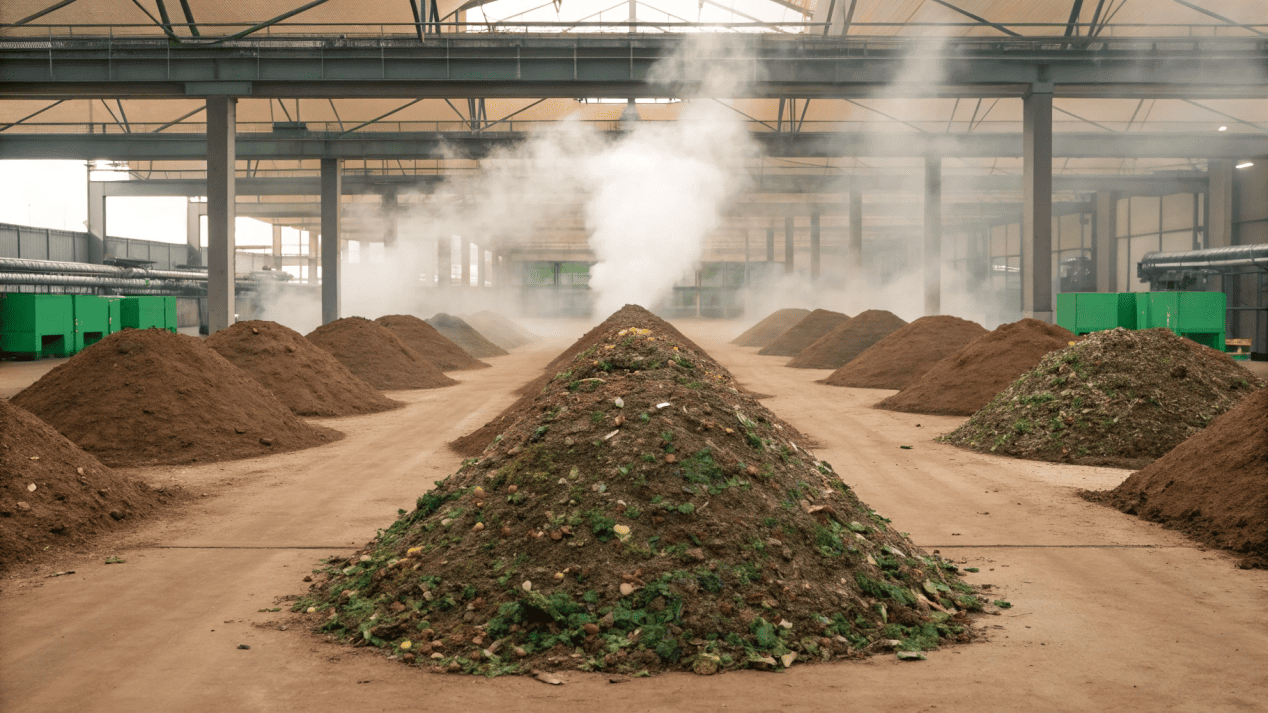
This is the hard reality check. A cup might be technically recyclable or compostable4, but that potential is meaningless without the right facility to process it. For my partners, this is the most important question to ask.
For Recycling PE-Lined Cups
Only a small (but growing) number of specialized recycling mills have the "repulping" technology. This tech can separate PE coatings from paper. If your community sends its recycling to a standard facility, these PE-lined cups will likely be sorted out and sent to a landfill.
For Composting PLA-Lined Cups
PLA-lined cups require industrial composting6 facilities. These sites are very different from your backyard compost bin. They create the perfect high-heat, high-moisture, microorganism-rich environment. This is what is needed for PLA to break down into organic matter, usually in about 90 days. A PLA cup will not break down in a landfill.
Before you choose a cup, I always tell my partners to call their local waste provider and ask two simple questions: "Can you recycle PE-lined paper cups1?" and "Do you send waste to an industrial composting6 facility that accepts PLA packaging?" The answer determines your best choice.
Why Does the System Fail Even With the Right Cup and Facility?
You did your homework. You bought the right compostable4 cups and confirmed you have a local facility. But your sustainability plan7 is still failing. Why?
The system fails because of customer behavior8. If customers leave liquid in cups or throw them in the wrong bin ("wish-cycling9"), they become contaminants and are sent to the landfill anyway.
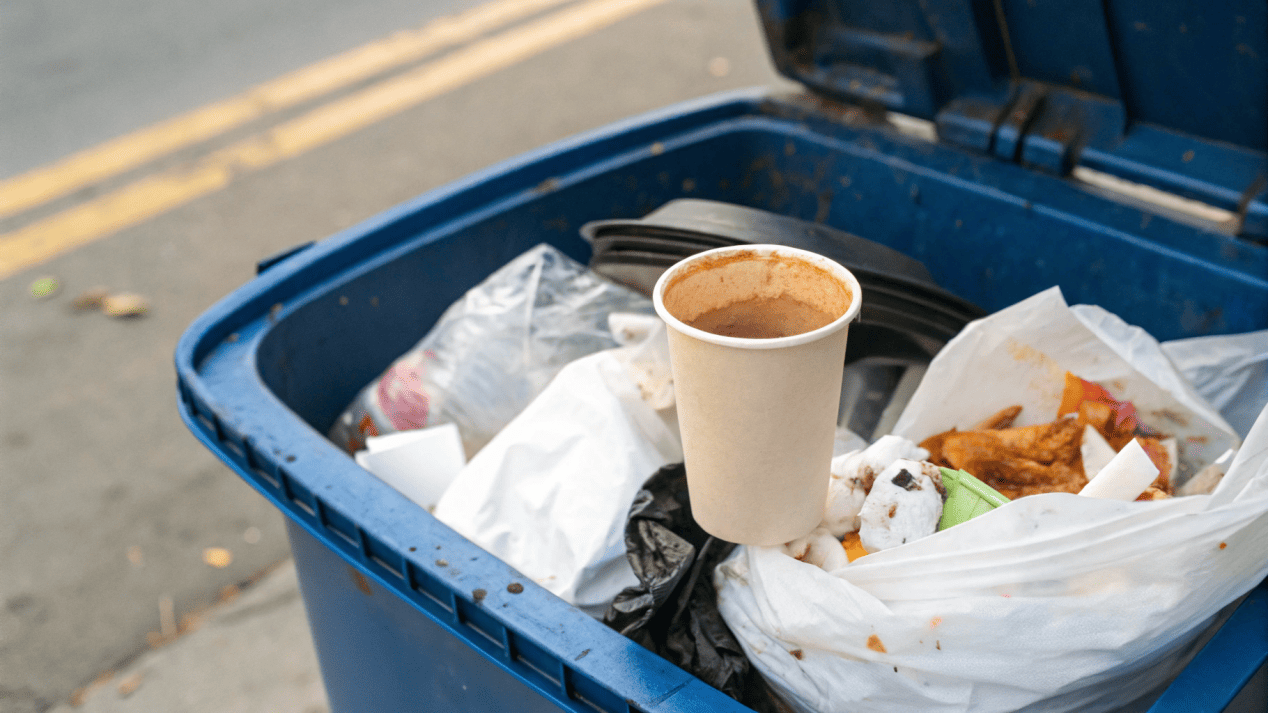
Even with the perfect cup and the perfect local facility, the entire system can fail at the last step: the customer. As a brand, teaching your customers is your responsibility.
Contamination is the Enemy
At a sorting facility, a cup with liquid, lids, or stir sticks left inside is considered a contaminant. It will be pulled off the line and thrown into the trash. A single contaminated item can ruin a whole batch of otherwise good materials.
The Problem of "Wish-cycling"
"Wish-cycling" is when people are hopeful. They toss something into the recycling bin, wishing and hoping it is recyclable. But this does more harm than good. A PLA cup thrown in a paper recycling bin is a contaminant. A PE cup tossed in a compost bin is a contaminant.
I always work with my partners to use our custom printing services for clear communication. We print simple, direct language on the cup itself, like "Commercially Compostable Where Facilities Exist." This empowers your customers to make the right choice and completes the sustainability loop.
How Can You Trust a Supplier's 'Eco-Friendly' Claims?
Every supplier says their cups are "green" or "eco-friendly." But many of these claims are just marketing. How do you know what is true and what is just a lie?
You trust them by looking for official third-party certifications10. Logos from the BPI (Biodegradable Products Institute) or TÜV Austria11 are scientific proof that a compostable4 cup performs as claimed.

How do you know if a supplier's claims are legitimate? Look for third-party certifications10. They are your proof of performance. They prove the supplier has invested in having their product scientifically tested.
The Gold Standard of Certification
These certifications are your guarantee. Without them, a supplier's claim is just an empty promise. At Haokelao, we believe in complete transparency and getting our products verified.
| Certification | What It Means | Region |
|---|---|---|
| BPI Certified12 | Proven to compost safely in a commercial facility | North America |
| TÜV Austria11 OK compost INDUSTRIAL | Proven to compost in an industrial facility | Europe / Global |
| TÜV Austria11 OK compost HOME | Proven to compost in a backyard compost bin (rare for cups) | Europe / Global |
Our certified compostable4 products meet these strict international standards. We proudly display these certifications alongside our other quality credentials like FDA and BRC. When you partner with us, you are not just buying a promise. You are buying a proven, certified product.
Conclusion
The world of cup disposal is confusing. But the right path is clear. It requires innovative materials, available facilities, and honest communication between you, your supplier, and your customers.
Explore this link to understand the complexities of recycling and composting paper cups. ↩
Learn how plastic linings affect the recyclability of paper cups and the environment. ↩
Discover the advantages of using plant-based linings for sustainable cup options. ↩
Find out what compostable means and how it applies to paper cups. ↩
Investigate whether a recycling symbol ensures that a product will be recycled. ↩
Understand the process of industrial composting and its importance for sustainability. ↩
Learn the key components of an effective sustainability plan for businesses. ↩
Explore how customer actions can impact the effectiveness of recycling systems. ↩
Understand the concept of wish-cycling and its negative effects on recycling efforts. ↩
Discover the importance of third-party certifications in verifying eco-friendly claims. ↩
Find out how TÜV Austria certification ensures the compostability of products. ↩
Learn about the BPI certification and its significance for compostable products. ↩