You want to make an eco-friendly choice for your business. But the truth about paper cups is confusing. You don't want your good intentions to end up creating more landfill waste1.
The answer depends on the cup's inner lining2. Cups with a PLA (plant-based) lining3 are commercially compostable4. Cups with a PE (plastic) lining5 are only recyclable in very rare6, specialized facilities.
When I first started in this industry, the focus was only on performance: making a cup that didn't leak. Now, the focus is on the cup's entire life cycle. I've spent years working with different materials and visiting waste facilities to understand this problem. The confusion is real, but the answer is actually quite simple once you understand the one hidden component that changes everything: the cup's inner lining2.
What is the Hidden Barrier Inside Every Paper Cup?
A paper cup holds hot coffee without turning into a soggy mess. This magic trick is performed by a hidden layer inside, but this layer is also the source of all the confusion.
Every paper cup has a waterproof lining. The traditional lining is PE (plastic), while the modern, eco-friendly option is PLA (a plant-based bioplastic). This lining determines if a cup is recyclable or compostable.
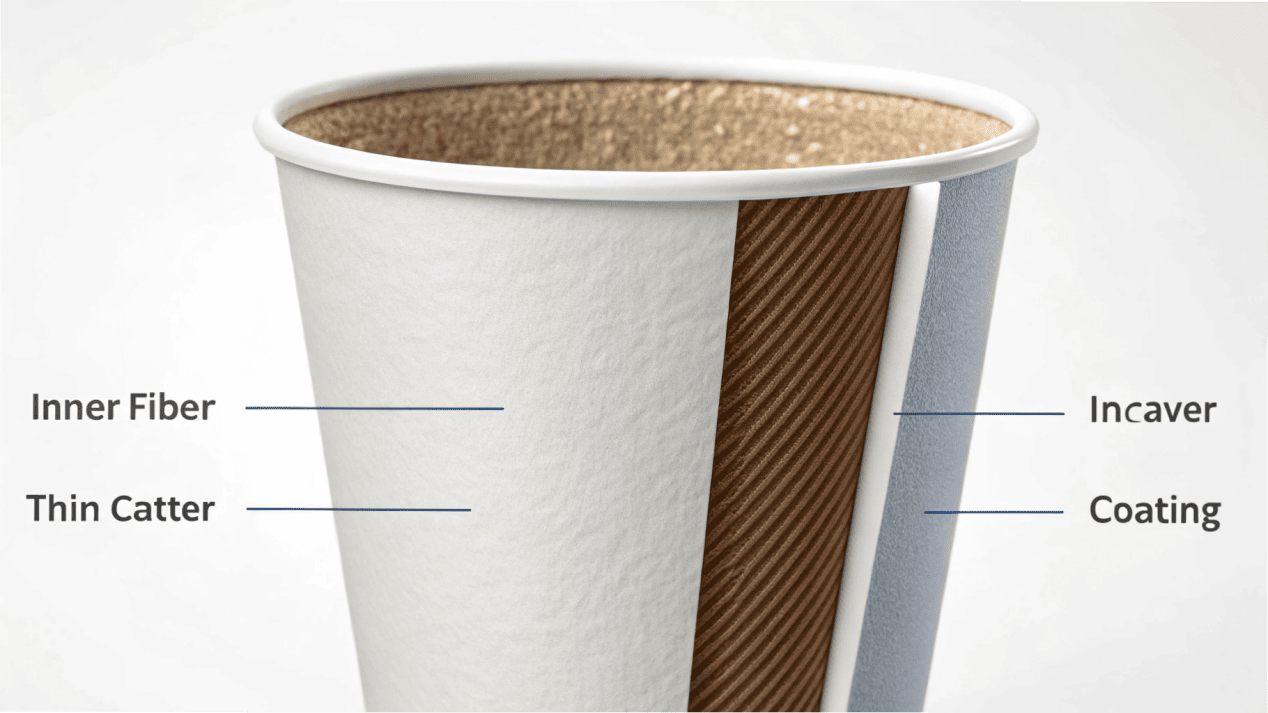
As a mechanical engineer, this lining is a fascinating and crucial component. Paper by itself is just fiber, and it absorbs water. To make it hold liquid, we have to bond a microscopic layer of waterproof material to the inside. For decades, the standard material has been PE, or polyethylene. This is a very effective, petroleum-based plastic. It does its job perfectly, but it creates a huge problem at the end of the cup's life. The modern alternative is PLA, or polylactic acid. This is a bioplastic made from renewable resources like corn starch. It performs just as well as PE, but it's designed for a completely different end-of-life: composting. The choice between these two invisible linings is the single most important factor for your cup's environmental impact7.
| Lining Type | Full Name | Source | Designed End-of-Life |
|---|---|---|---|
| PE | Polyethylene | Petroleum (Fossil Fuel) | Landfill / Specialized Recycling |
| PLA | Polylactic Acid | Plants (e.g., Corn Starch) | Commercial Composting |
Why is Recycling a Paper Cup So Hard?
You finish your coffee and toss the cup into the paper recycling bin, feeling good about your choice. But in reality, you may have just contaminated the entire bin, causing more harm than good.
The plastic PE lining does not break down with the paper in standard recycling mills. It gums up the machinery and ruins the paper pulp. Only rare, specialized facilities can separate the plastic from the paper.
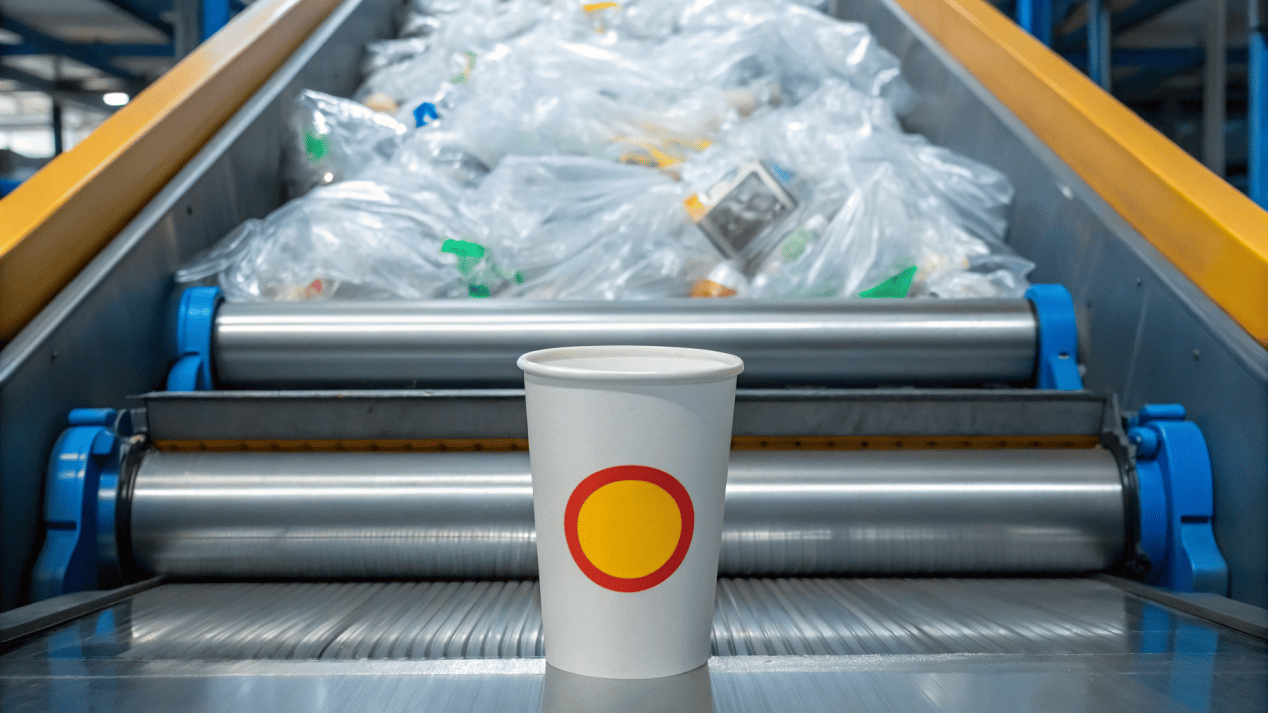
I once visited a standard paper recycling facility. The manager showed me the giant screens they use to filter the paper pulp. They were completely gummed up with thin plastic films, and he pointed to paper cups as one of the main culprits. It's a simple science problem. Standard recycling mills submerge paper in water to turn it back into a soupy pulp. The paper fibers dissolve, but the PE plastic lining does not. It floats around, contaminates the pulp, and can ruin the entire batch of recycled material. For a PE-lined cup to be recycled, it must be sent to a special, advanced facility that has the technology to forcibly separate the paper fiber from the plastic lining. These facilities do exist, but they are very rare. So, for the vast majority of communities around the world, PE-lined paper cups are not recyclable in practice and end up in the landfill.
Is Composting the Perfect Answer for Paper Cups?
You've heard that PLA-lined cups are "compostable," so you think you can just toss one in your backyard compost pile. But after months, you dig it up and it looks almost the same.
Composting only works for PLA-lined cups, and they MUST go to an industrial composting facility8. They need the high heat of a commercial pile9 to break down; they will not decompose in a garden compost bin.
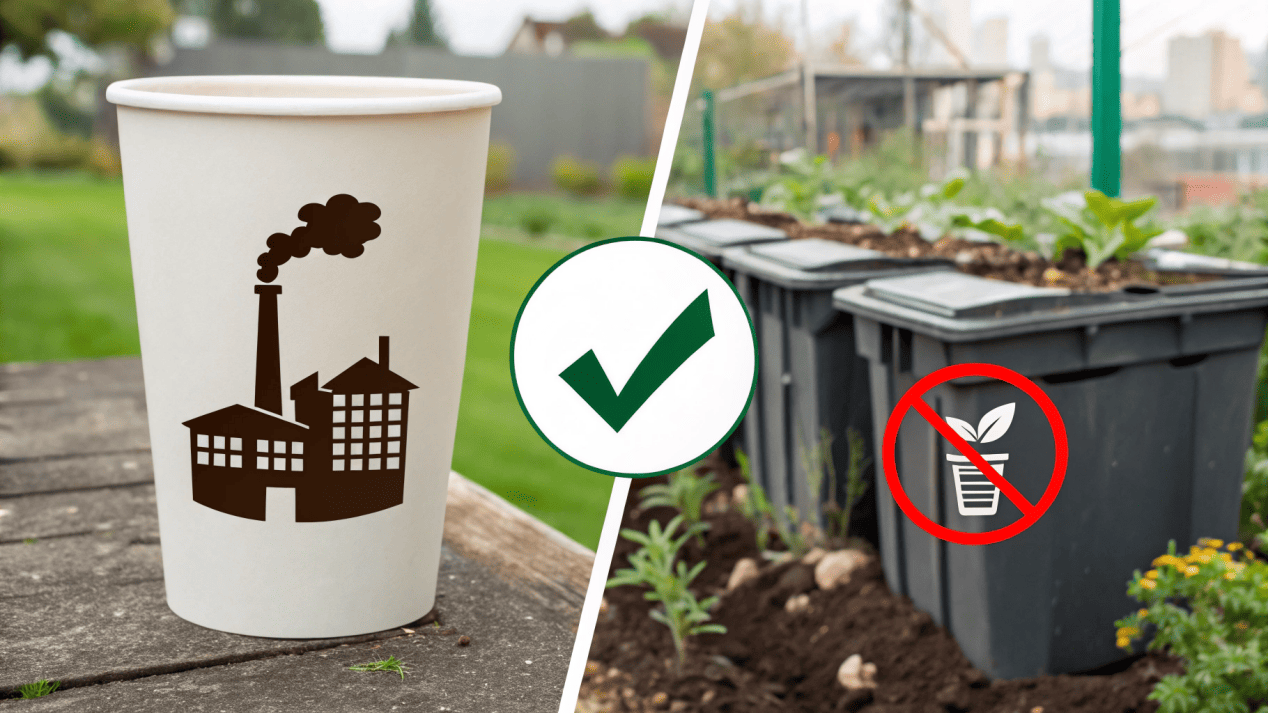
This is the most common misunderstanding I see. "Compostable" has a very specific technical meaning. A PLA-lined cup is designed to break down, but it needs a special environment to do so. That environment is an industrial, or commercial, composting facility. These large-scale operations create huge piles that generate sustained high temperatures, often over 60°C (140°F). This intense heat, combined with specific microorganisms, is what allows the PLA lining and paper to break down together into healthy soil, usually within 90 to 180 days. Your backyard compost pile simply does not get hot enough for long enough to do the job. A PLA cup in your garden will just sit there for a very long time. And it's critical to remember: a traditional PE-lined cup is a contaminant in any compost system. The plastic will never break down. So, a PLA cup is only a perfect solution if your city has a commercial composting program that accepts it.
So, Which Cup is Actually the Most Eco-Friendly for Me?
You now understand the science of PE versus PLA, recycling versus composting. But now you're even more confused about which cup to actually order for your business.
The most eco-friendly cup is the one that can be properly disposed of in your specific city. You must check your local waste management services10 before you choose a cup for your business.
This is the final, most practical step. The "greenest" cup is not a universal product; it's a strategic choice based on your local reality. Before you make a decision, you must do your homework. Go to the website for your city's waste department or your commercial garbage hauler11. Look for two things:
- Do they operate or have access to a commercial composting facility that accepts food-soiled paper12 and compostable packaging? If yes, a PLA-lined cup is your best choice.
- Do they have a rare, specialized recycling facility13 that specifically states they accept paper coffee cups? If yes, a PE-lined cup could be an option. If the answer to both questions is "no," then sadly, both cup types will end up in the landfill. In this case, your choice might be based on brand messaging14. However, once you choose, you have a responsibility to communicate this to your customers. We print clear messages like "Commercially Compostable" on our PLA cups so customers know exactly what to do. The right choice is a partnership between manufacturing and local policy.
Conclusion
The fate of a paper cup depends on its lining and your local waste facilities. PLA-lined cups are for commercial composting; PE-lined cups for rare recycling centers. Check your city's rules first.
Understanding landfill waste can motivate better choices for sustainable practices. ↩
Learn about the crucial role of inner lining in determining a cup's recyclability. ↩
Understanding PLA can help you make eco-friendly choices for your business. ↩
Explore the meaning of commercially compostable to ensure proper disposal of your cups. ↩
Learn about PE lining to understand its environmental impact and recycling challenges. ↩
Discover the limitations of recycling paper cups and the facilities that can handle them. ↩
Explore the environmental implications of different cup materials for informed decisions. ↩
Understanding industrial composting can help you choose the right disposal method for cups. ↩
Learn why high temperatures are essential for effective composting of PLA cups. ↩
Explore how local policies impact your choice of eco-friendly cups. ↩
Learn about commercial garbage haulers and their role in waste disposal. ↩
Understanding food-soiled paper can help you choose the right composting options. ↩
Find out about specialized recycling facilities and their role in waste management. ↩
Discover how clear brand messaging can guide customers in proper disposal practices. ↩