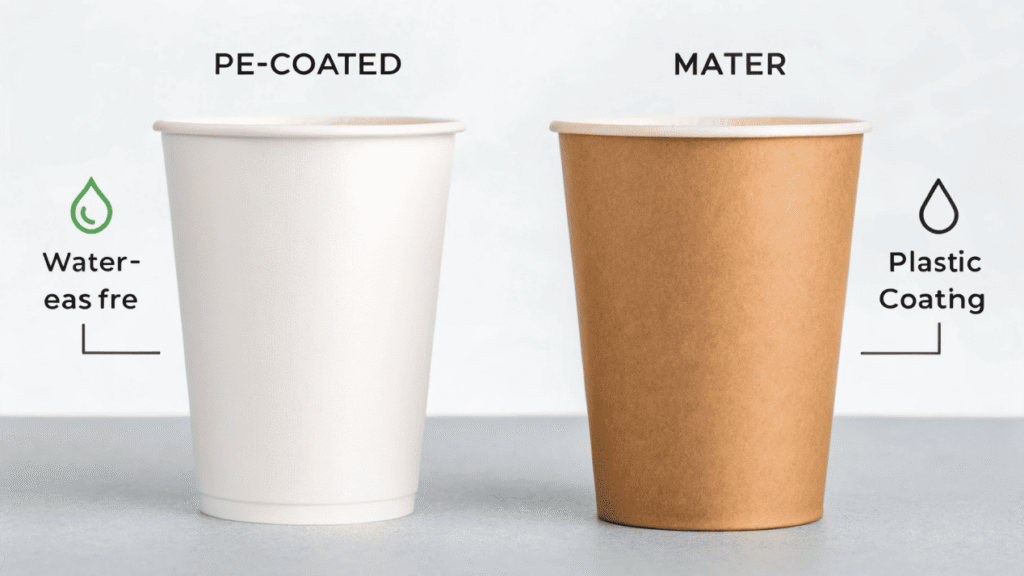
You want to offer an eco-friendly cup, but hear confusing claims. This makes it hard to know if you are truly helping the planet or just "greenwashing1" your brand.
Yes, truly plastic-free cups2 exist. They use a special water-based coating3 instead of a plastic lining, which allows them to be recycled like normal paper. Other eco-friendly options are compostable.
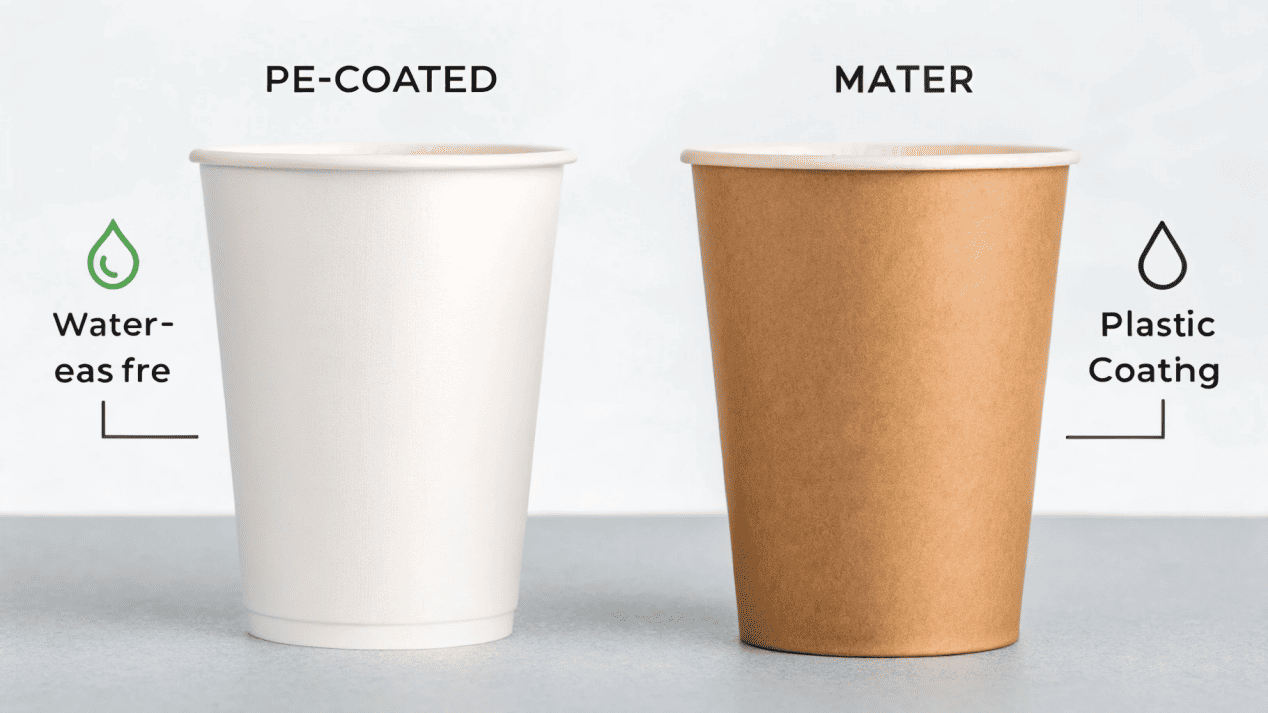
For decades, the paper cup had a secret: a thin plastic lining. This made cups waterproof, but also created a recycling nightmare. Today, a revolution is driven by new technology and customer demand. But what does "plastic-free" actually mean? As an engineer at the forefront of this innovation, I believe an informed partner is a successful partner. I want to clear up the confusion and show you how your business can navigate this new world to gain a competitive edge4.
What Are the Alternatives to a Plastic Lining?
You need a cup that holds liquid but isn't lined with traditional plastic. The technical terms are confusing, making it hard to choose the right path for your business.
The main alternatives are PLA (bioplastic) coatings5, which are commercially compostable6, and Aqueous (water-based) coatings, which are repulpable and can be recycled in standard paper streams alongside cardboard.
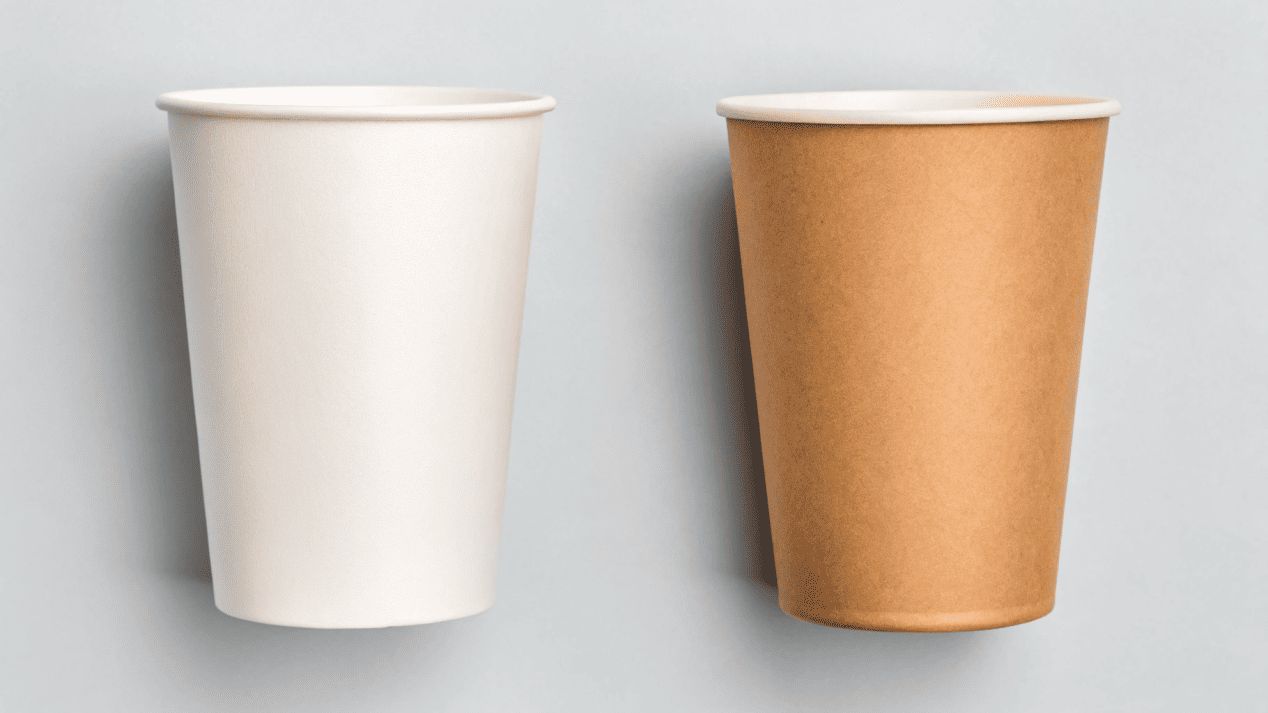
Creating a paper cup that holds liquid without a plastic barrier is a great achievement. In my experience, there are two leading solutions on the market today. It's important to understand the difference.
The Two Main Solutions
The first is PLA (Polylactic Acid) Coating. We often call this a "bioplastic." It's a special polymer made from renewable resources like corn starch. From a performance standpoint, it works just like the old PE plastic, creating a strong waterproof barrier. The key difference is its end-of-life: it is commercially compostable6. This means in a special industrial facility, it will break down into organic matter.
The second is Aqueous (Water-Based) Coatings. This is the technology that I see gaining massive traction. It is what many consider the "true" plastic-free solution. Instead of a plastic film, a special water-based barrier is applied to the paper. Its main benefit is that it is repulpable. This means the cup can be processed in standard paper recycling facilities just like cardboard.
| Feature | PLA Bioplastic Coating | Aqueous (Water-Based) Coating |
|---|---|---|
| Material Source | Renewable (e.g., corn starch) | Water-based dispersion |
| End-of-Life | Commercially Compostable | Recyclable in paper streams |
| Key Benefit | Circular, from plant to soil | Integrates with existing recycling |
Why Is the Market Demanding Plastic-Free Cups Now?
You notice the 'plastic-free' trend but wonder if it's just talk. Ignoring this shift could mean losing customers and being unprepared for new laws in the future.
The market is shifting due to three main forces: strong consumer demand for sustainability, increasing government regulations like the EU's SUP Directive, and brands wanting to show their commitment to the environment.
I talk to business owners across the world every day. The move away from plastic-lined cups is not a small trend; it is a global market shift. The reasons are very clear.
First, customers are more informed than ever. They actively choose to buy from brands that they believe in. When they hold a cup that says "I'm plastic-free," it creates a powerful connection and builds real loyalty. It shows you share their values.
Second, governments worldwide are taking action. The European Union's Single-Use Plastics (SUP) Directive7 is a famous example. It forces companies to reduce their use of plastic and puts a clear label on cups that contain it. Many smart brands I work with are adopting plastic-free solutions now to get ahead of future laws.
Finally, a plastic-free cup is not just packaging; it's a statement. It tells a story about your brand's commitment to social responsibility. It's a tangible thing you can show to your customers and investors to prove you care about the planet.
How Can You Prove Your Cups Are Truly Eco-Friendly?
You want to make a "plastic-free" claim for your business. But in a market that is tired of fake promises, words are not enough. You need real proof.
You must prove your claims with trusted, third-party certifications. Look for logos from BPI or TÜV Austria8 for compostability, and Flustix or paper mill endorsements for recyclability and plastic-free claims.
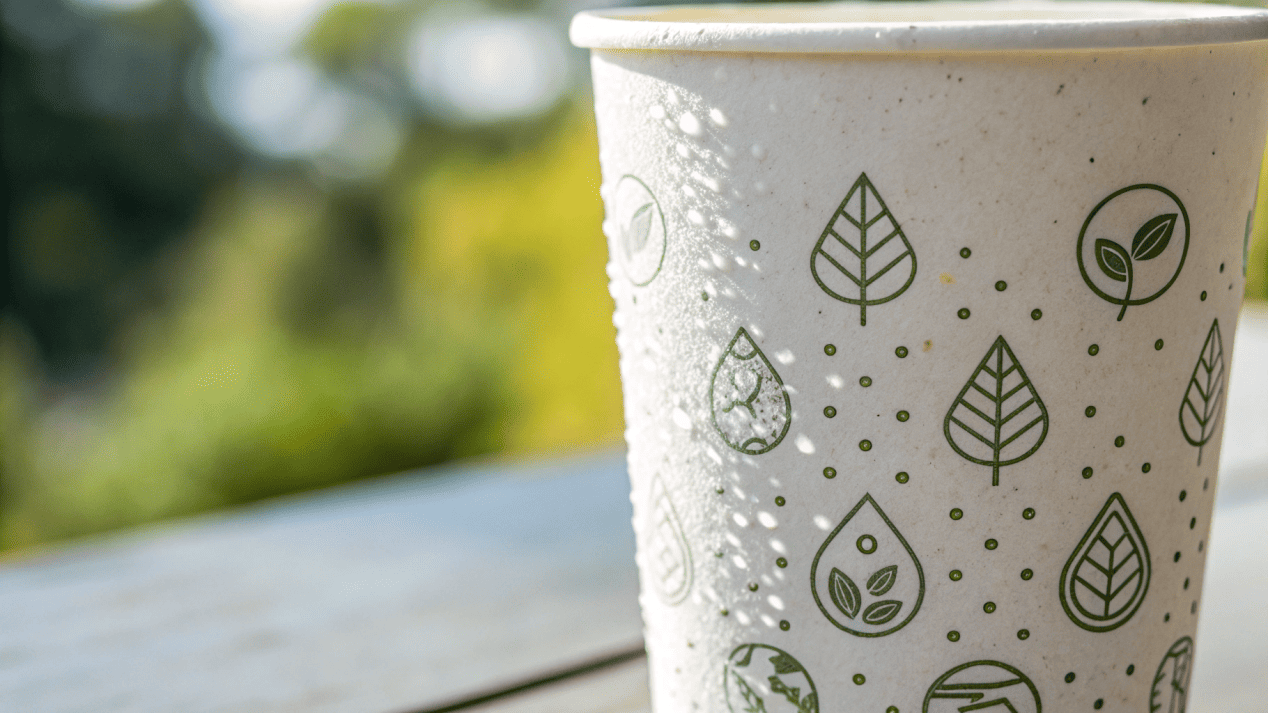
In today's market, customers are very wary of "greenwashing1." Making a claim is not enough. You must be able to prove it with trusted, independent certifications. These are the gold standards I tell my partners to look for.
If you choose a PLA-coated cup, you need Compostability Certifications. In North America, the main one is from BPI (Biodegradable Products Institute). In Europe, it's TÜV Austria8's "OK compost" logo. These logos verify that the product will safely break down in an industrial composting facility.
For Aqueous coatings, you need Recyclability & Plastic-Free Certifications. A great one is the Flustix "Plastic-Free" mark. Other endorsements from recycling institutes can confirm the cup can be successfully repulped.
And for any paper product, always look for an FSC® (Forest Stewardship Council) logo9. This ensures the paper itself comes from responsibly managed forests. At Haokelao, we make sure our products carry the right certifications to give our partners complete confidence.
What Challenges Exist When Exporting Plastic-Free Cups?
You want to use plastic-free cups2 for your global brand. But different countries have different rules and logistics can be complex, creating a risk of non-compliance or product failure.
Exporting brings challenges like varying international regulations, the need for a transparent and certified supply chain, and ensuring product integrity after a long journey. An experienced manufacturing partner is essential.
For my international partners, switching to plastic-free cups2 can introduce new challenges. This is where having an experienced partner becomes so important. The rules are not the same everywhere. As I mentioned, the EU has very strict rules. But a product that is compliant in Germany may not be compliant in Australia or the US without specific markings or materials. You need a partner who understands these details.
Next, you need to trust your supply chain. Sourcing certified raw materials and proving it every step of the way is complex. When we produce certified cups, we have to maintain a proven "chain of custody" that can be audited. This ensures the cup you receive is exactly what you ordered.
Finally, will the cup still work perfectly after a long journey at sea and in different climates? The glue, seams, and coating must remain perfect. This requires very strict quality control from start to finish. We test our products to handle these real-world conditions.
Conclusion
The shift to plastic-free cups2 is a huge opportunity. It builds a stronger, more sustainable brand story, and a trusted partner can make the transition seamless and successful.
Understand greenwashing and how to ensure your brand's claims are genuine. ↩
Explore the advantages of plastic-free cups and how they contribute to sustainability. ↩
Learn about the technology behind water-based coatings and their environmental benefits. ↩
Learn strategies for gaining a competitive edge through sustainable practices. ↩
Discover the benefits of PLA coatings and how they compare to traditional plastic. ↩
Understand the meaning of commercially compostable and its importance for eco-friendly products. ↩
Get informed about the EU's SUP Directive and its impact on plastic usage. ↩
Explore TÜV Austria's certifications and their significance for eco-friendly products. ↩
Understand the significance of the FSC logo in promoting sustainable forestry. ↩