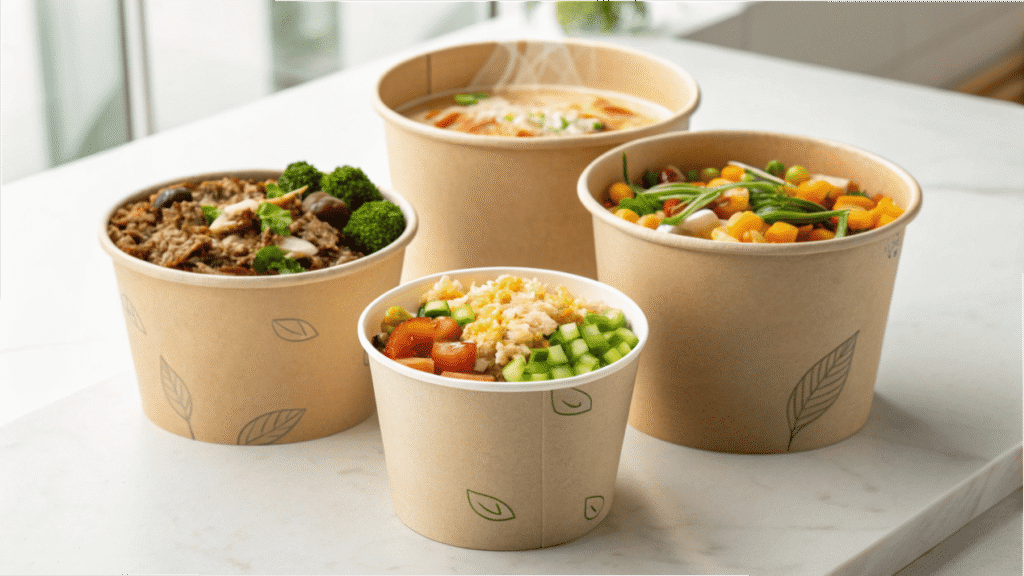
Choosing paper bowl sizes seems easy. But the wrong choice quietly drains your profits and disappoints customers with every single serving you make.
Match bowl sizes to your menu for portion control (small for sides, medium for mains). Ensure they stack well to save space. Prioritize a 'one-lid' system for transport efficiency and lower inventory costs.
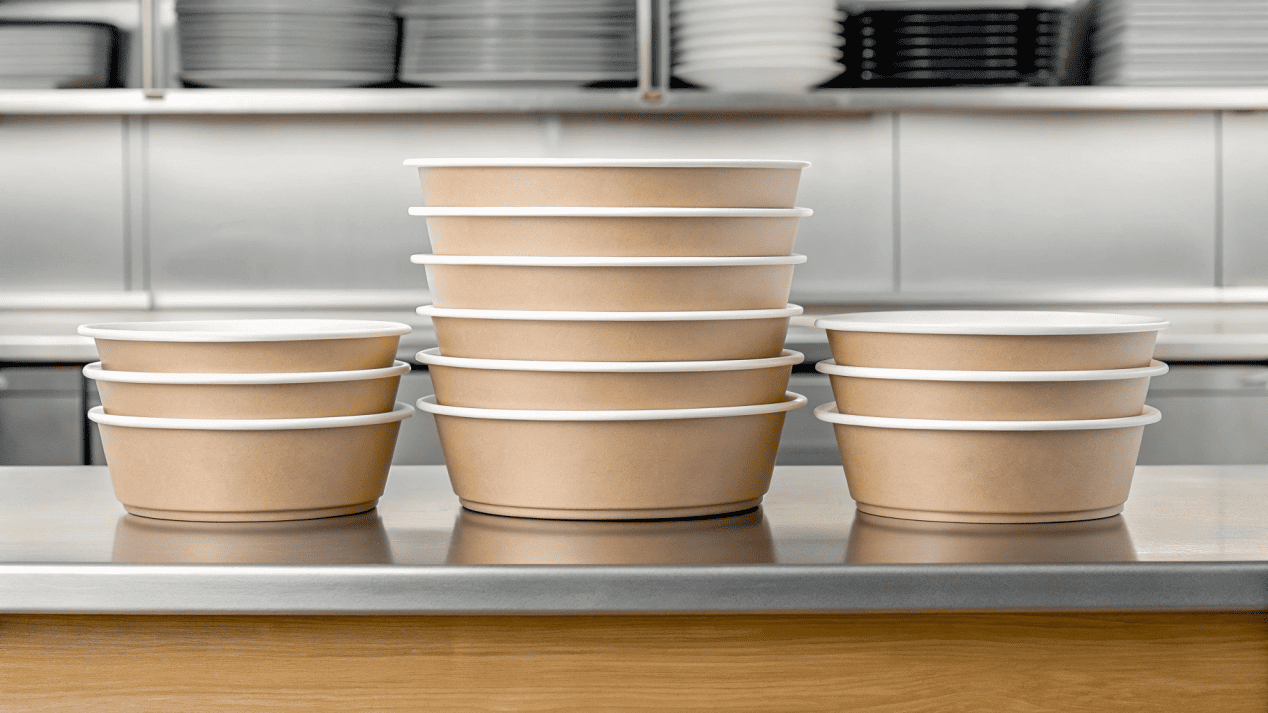
As a packaging manufacturer, I have walked through hundreds of commercial kitchens. The most successful ones have one thing in common: every detail is optimized for success. And one of the most overlooked details is the size of their paper bowls. Choosing the right sizes is not just about making sure the food fits. It is a strategic decision that impacts your food costs, your kitchen's speed, and even your customer's feeling of value. Let's break down how to build the perfect bowl system for your business.
How Do You Match Bowl Size to Your Menu?
Over-portioning food is like giving money away. This common mistake directly hurts your food cost margins with every single bowl you fill.
Use small bowls (8-12oz) for sides and desserts, medium (16-24oz) for standard main dishes like salads or noodles, and large (26oz+) for premium, high-value meals that justify a higher price.
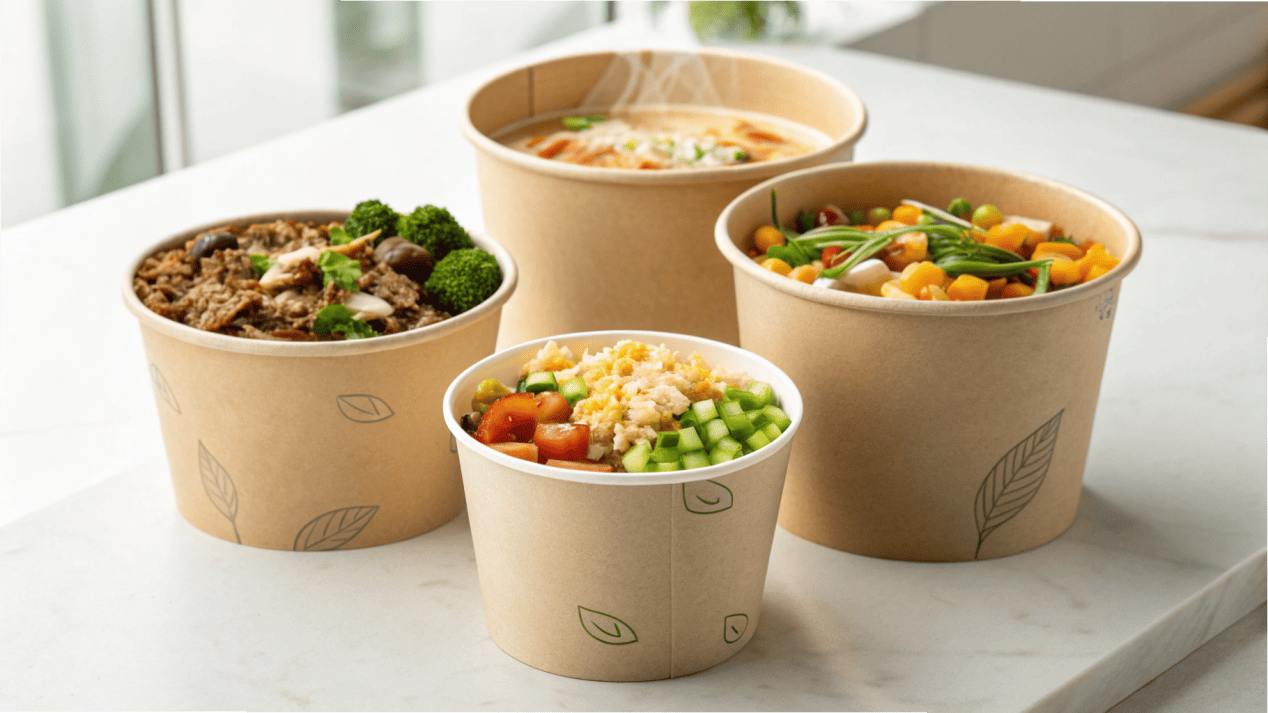
This is the foundation of your entire sizing strategy. The right bowl helps you with presentation, but more importantly, it enforces portion control. Portion control is the cornerstone of profitability in the food business. I always tell my clients to think of their bowl sizes in three strategic tiers. This "Good, Better, Best" system provides clear options for customers and protects your margins. It prevents you from putting a low-cost side dish in a large bowl, which would be a huge waste of money. It also ensures your most expensive main dishes look abundant and full in a properly sized bowl, creating a feeling of great value for the customer.
The "Good, Better, Best" Sizing System
| Bowl Size Range | Best For | Strategic Purpose |
|---|---|---|
| Small (8-12oz) | Side soups, chili, desserts, fruit cups | Protects margins on lower-priced items and add-ons. |
| Medium (16-24oz) | Your standard salads, grain bowls, noodles | Your "workhorse" size that meets most customer needs. |
| Large (26-32oz+) | Large poke bowls, premium salads | Justifies a higher price point and maximizes revenue. |
Why Does the Way Your Bowls Stack Even Matter?
Kitchen space is always limited. Unstable, messy stacks of bowls waste valuable room and slow down your prep line during a busy rush.
Choose bowls with a uniform taper and rigid structure. They nest perfectly, creating stable, compact stacks that maximize storage and streamline workflow in tight spaces like food trucks.
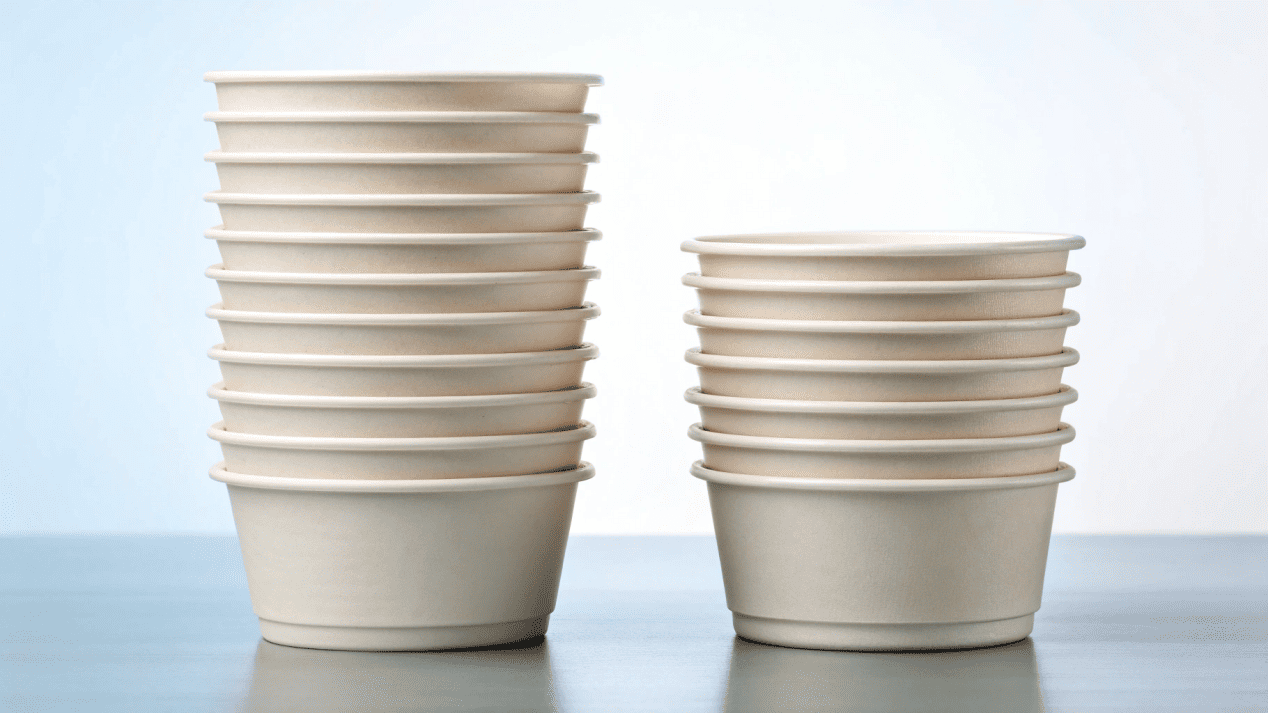
In any kitchen, but especially in smaller spaces like food trucks or ghost kitchens, space is a premium. As an engineer, I can tell you that not all bowls are created equal. The design of a bowl directly affects how it stacks. Poorly designed bowls with inconsistent angles create unstable, leaning towers that can fall over. They also trap air between them, taking up much more vertical space. We specifically engineer our bowls with a uniform taper and use high-quality, thick paperboard. This ensures two things. First, they nest perfectly inside one another, creating a very compact stack that saves precious shelf space. Second, the structural rigidity prevents the bowls at the bottom from being crushed or deformed by the weight above. A clean, stable stack makes your prep line faster, safer, and more organized.
Are Your Bowls Designed for Delivery and Takeout?
Delivery is a huge part of business now. But one leak can ruin a customer's meal, your reputation, and lead to terrible online reviews.
The bowl is only half the solution. A secure, tight-fitting lid is essential. The best strategy is 'lid consolidation,' where multiple bowl sizes (e.g., 16, 24, 32oz) all use the same lid.
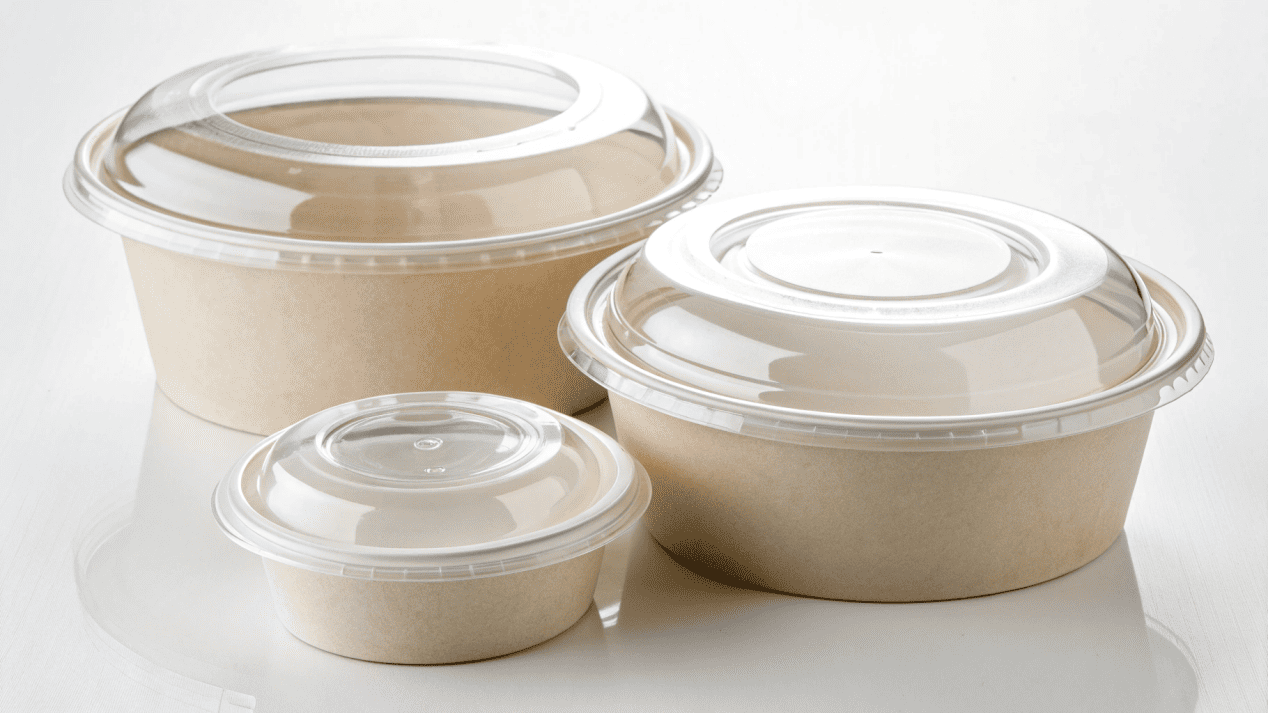
With the rise of delivery and takeout, your bowl's performance on the move is critical. A single leak can ruin a customer's meal and your brand's reputation forever. The bowl is only half the equation. You need a secure, tight-fitting lid that snaps on easily and stays on. For hot foods, vented lids are essential to let steam escape and prevent the food from getting soggy. But the real game-changer for operational efficiency is something I call the "lid consolidation strategy." We work with our clients to design their 16oz, 24oz, and 32oz bowls to all use the exact same lid diameter. This is a massive win for any busy kitchen.
Benefits of the "One-Lid" System:
- You have less inventory to manage and order.
- You tie up less money in stock.
- There is no confusion for your staff during a busy rush. They just grab one type of lid.
- Your order fulfillment becomes much faster.
What is the True Cost of Your Paper Bowls?
Focusing only on the price per bowl is a trap. This ignores hidden costs from food waste, slow service, and messy inventory that eat into your profits.
True cost efficiency isn't the cheapest unit price. It's the savings from reduced food waste (portion control), faster operations (stacking/lids), and lower inventory costs from stocking fewer SKUs.
The cheapest bowl is rarely the most cost-effective solution. This is because the unit price is only a tiny part of the total cost. True cost efficiency comes from optimizing your entire system. Let's think about this. When you use a strategic sizing system, you save money from reduced food waste because your portioning is precise. When your bowls stack perfectly and use a consolidated lid system, you save money on valuable staff time because your operations are faster and more streamlined. When you only have to order one or two types of lids instead of five, you save money on inventory costs and free up your cash for other parts of the business. The small amount you might save on a cheaper, poorly designed bowl is quickly lost to inefficiency and waste.
Conclusion
Choosing the right bowl sizes is a strategic decision. It saves you money, streamlines operations, and keeps your customers happy, building a stronger and more profitable brand.