
Profits melt from wasted ice cream and damaged packaging. This silent loss eats away at your margins. Master inventory with these four tips to protect your hard-earned profits.
Use the First-In, First-Out1 rule for stock, reduce waste with durable packaging2, master your ordering cycle3 to match demand, and use technology like your POS system to track everything accurately.

For an ice cream business, inventory is a delicate dance. On one hand, you have tubs of creamy delights that can lose quality or go to waste. On the other, you have the packaging—cups, lids, and spoons—that are essential for every single sale. If you mismanage either, your profits can melt away faster than a scoop on a hot day. I have spent over 15 years working with successful food brands. I know that smart inventory management is the secret ingredient to a healthy bottom line. Here are four crucial tips I share with my partners to master stock and maximize profitability.
How Should You Rotate Your Stock?
New deliveries arrive, but old stock sits in the back of the freezer. Serving icy, freezer-burned ice cream damages your reputation. Always use the First-In, First-Out1 (FIFO) method.
Always place new stock behind older stock in your freezers and storage areas. This applies to both your perishable ice cream and your packaging to ensure you always use the oldest items first.
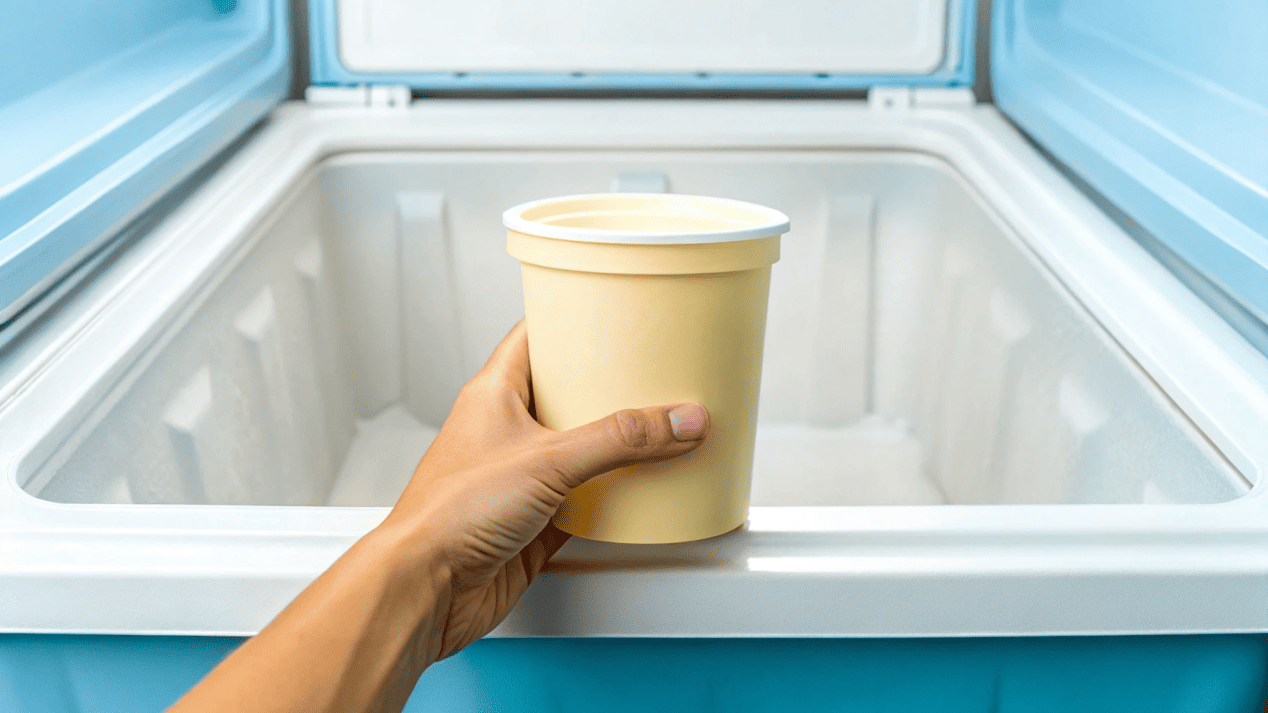
FIFO is the golden rule of food service. It is a simple name for a simple action: the first products that come into your business are the first ones to be sold.
For Your Ice Cream
This is non-negotiable. I tell all my partners this. Even in a perfect freezer, ice cream can develop ice crystals and "freezer burn4" over time. This degrades its creamy texture and rich flavor. When a new delivery arrives, your staff must move the older tubs to the front and place the new ones in the back. This ensures you always serve your ice cream at its peak quality, protecting your reputation.
For Your Packaging
The same rule applies to your cups and lids. Environmental factors like high humidity can affect paper cups over a very long period. But more importantly, think about your branding. If you launch a seasonal or promotional cup design, you need to use up the old design before you switch. You do not want to be stuck with a pile of Christmas-themed cups in February. At Haokelao Packaging, I often suggest to my partners that we incorporate a subtle batch code into the cup design. This makes it visually simple for staff to identify older boxes of cups and practice FIFO flawlessly.
| Item | Reason for FIFO |
|---|---|
| Ice Cream | Prevents freezer burn4, ensures peak flavor and texture. |
| Packaging | Prevents waste of old promotional designs, protects from long-term environmental effects. |
How Can You Reduce Inventory Waste?
You throw away expired ice cream and crushed, unusable cups. Every item tossed in the trash is pure profit you are losing. You can stop this by protecting your products better.
Reduce waste by maintaining proper freezer temperatures and practicing stock rotation5 to prevent spoilage. Also, invest in high-quality, durable packaging2 that resists crushing and damage during shipping and storage.

Waste is the biggest enemy of profit. As an engineer, I see waste as a system failure. It comes from two main sources: spoilage of your ice cream and damage to your packaging.
Spoilage is a direct result of two things: poor stock rotation5 (not using FIFO) or bad temperature control in your freezers. Both of these are operational issues that can be fixed with better training and processes.
Packaging damage is different. Flimsy cups that get crushed in storage, lids that do not fit right, or plastic containers that crack when they are cold are all sources of waste. A crushed cup is not just a cup; it is a lost sale and a direct hit to your profit margin. This is why I am so focused on quality. We engineer durability into every product we make. Our paper cups are made from high-quality, rigid paperboard that resists crushing during shipping and stacking. Our PP and PET plastic cups are designed to be resilient, even at freezing temperatures. By investing in quality packaging6 upfront, you drastically reduce waste from product damage. You ensure that every single cup you buy is a cup you can sell.
How Often Should You Order New Supplies?
You either tie up cash in excess inventory, or you run out of cups on a busy Saturday. Both scenarios hurt your profitability and cause immense stress. Master your ordering cycle3.
Analyze your sales data7 to understand your daily and weekly needs. Factor in seasonality8 and promotional events9. Aim for a lean ordering cycle3 where supplies arrive just as you need them.

Finding the right rhythm for ordering supplies is a balancing act. If you order too much, you tie up your cash in boxes that sit in a back room. You also use up precious freezer and storage space. If you order too little, you risk running out of your most popular cup size on the busiest day of the year. I have seen this happen, and it is a disaster for a small business.
The key is to use data. Look at your sales information. Do you sell more medium cups on weekends? Do sales of large take-home tubs spike before holidays? Your data will tell you the story of your business. You must also factor in seasonality8. Your ordering cycle3 in hot July will be very different from your cycle in cold January. Plan ahead for your peak seasons. Finally, plan for promotions. If you are launching a new flavor or running a special, you will need more packaging.
This is where a flexible partner is so important. At Haokelao, our advanced production lines can cater to smaller-scale orders. This means you do not have to commit to a massive, cash-draining inventory. You can order what you need, when you need it. This allows you to run a much leaner business.
What Technology Can Help Manage Inventory?
You are still tracking inventory with a messy clipboard and pen. This old method is full of errors and leads to costly mistakes in ordering. Leverage simple technology to fix this.
Use your Point of Sale (POS) system10's built-in inventory features to track sales of specific cup sizes. For larger operations, dedicated inventory management software11 can automate reordering and forecasting.

Managing inventory with a pen and clipboard is a recipe for errors. In today's world, it is completely unnecessary. Modern technology makes the process simpler, more accurate, and much more powerful. You probably already have the tools you need.
Your Point of Sale (POS) system10 is more than a cash register. Most modern systems have built-in inventory tracking. You can program it to track not just a "sale," but a "sale of one medium cup." This provides invaluable, accurate data about what sizes are your bestsellers and how quickly you use them. This data is the foundation for mastering your ordering cycle3.
For larger businesses with multiple locations, dedicated inventory management software11 can be a game-changer. This software can automate reordering points, track stock across different stores, and even help forecast future demand based on your past sales data7.
Think of us at Haokelao as your human technology tool. My team and I provide a dedicated service to our partners. We can work with you to analyze your usage patterns and help you plan your ordering schedule. We are not just a supplier you order from; we are a partner you plan with.
Conclusion
Mastering inventory protects your profits. Choosing a packaging partner who understands this is a critical part of your strategy for success.
Understanding FIFO is crucial for minimizing waste and maximizing profits in your ice cream business. ↩
Explore how investing in durable packaging can significantly cut down on product damage and waste. ↩
Learn how to optimize your ordering cycle to ensure you have the right supplies at the right time. ↩
Understanding freezer burn is essential for maintaining the quality of your ice cream. ↩
Find out how proper stock rotation can prevent spoilage and enhance product quality. ↩
Discover the characteristics of quality packaging that can protect your products and profits. ↩
Understand the importance of analyzing sales data for better inventory decisions. ↩
Explore how to adjust your inventory strategy based on seasonal demand fluctuations. ↩
Discover strategies for managing inventory during promotional events to maximize sales. ↩
Discover the benefits of using a POS system for accurate inventory tracking and sales data. ↩
Learn how dedicated software can streamline your inventory processes and improve accuracy. ↩