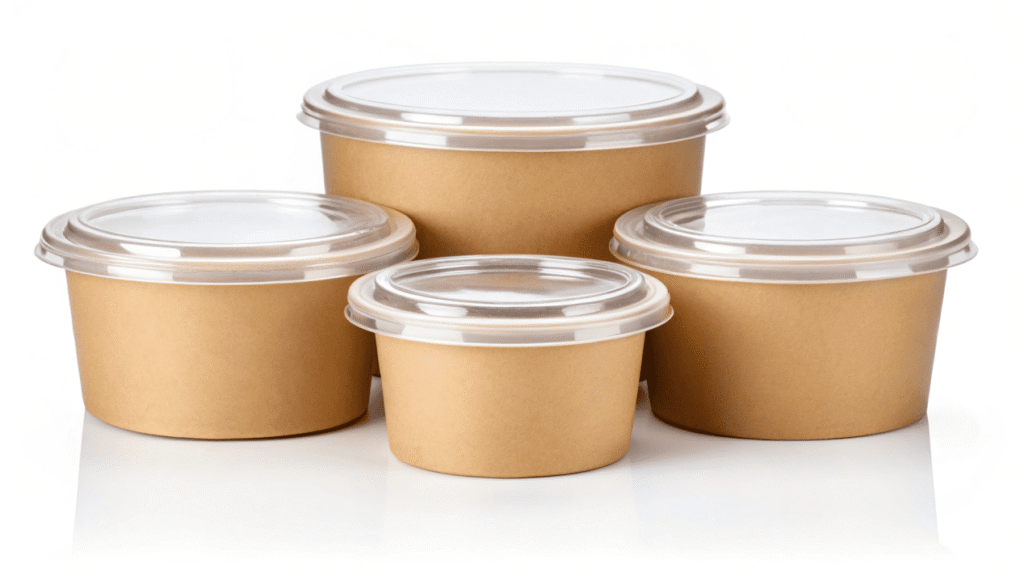
Your soup is perfect, but the container leaks. This ruins the customer's experience, creates a mess, and damages your brand's reputation with every disappointing delivery.
To choose the best soup container1, you must focus on four critical factors: the right material for your brand, a guaranteed leak-proof seal2, excellent heat resistance3, and strategic capacity for profitability4.
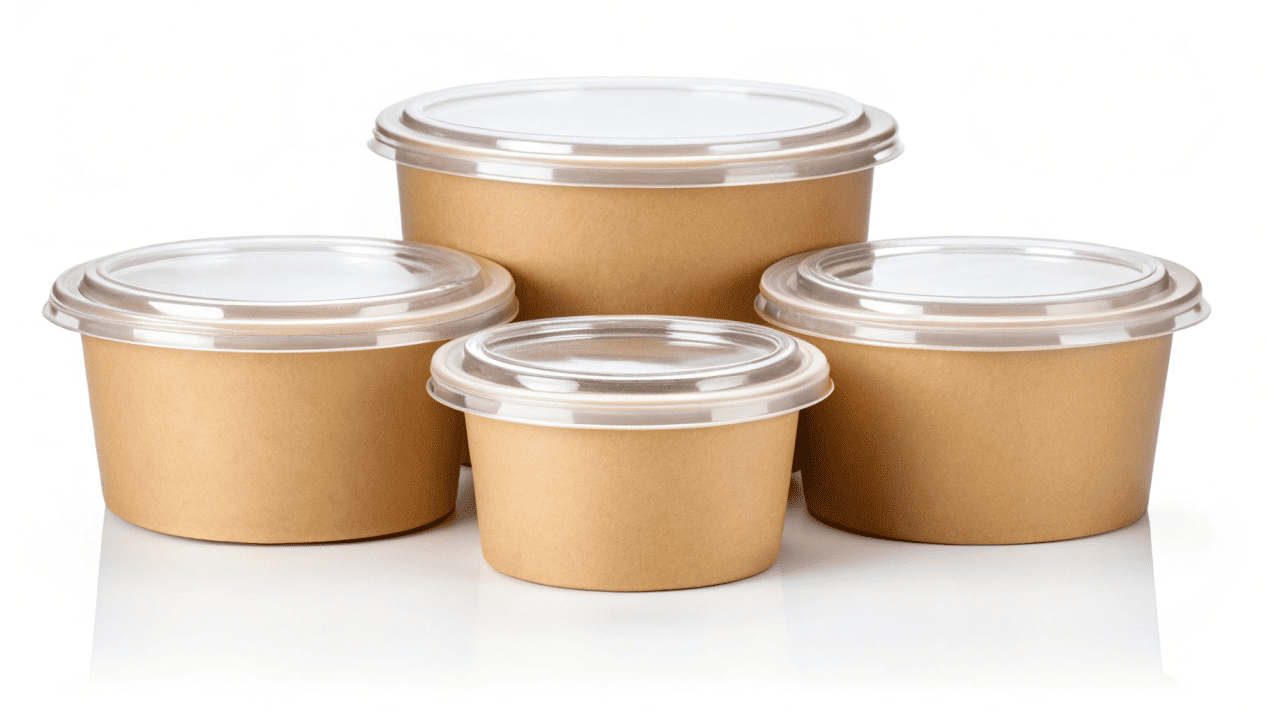
I've been in the food packaging industry5 for over 20 years, and I can tell you this: a soup container1 is one of the hardest-working packages in food service. It has to handle heat, grease, and liquid for an extended time. A minor failure here is a major failure for your customer. The good news is that getting it right is simple if you know what to look for. I'm going to walk you through the four things you absolutely cannot ignore when making your choice.
What Material Is Best for Your Soup Containers?
You see classic white and rustic Kraft containers, but you're unsure which is better. Choosing the wrong one could send a confusing brand message or fail to hold up to your product.
For your container's material, choose clean white paperboard6 for a professional look and vibrant printing, or natural Kraft paperboard6 for an artisanal, eco-conscious feel. Both require a strong inner lining.
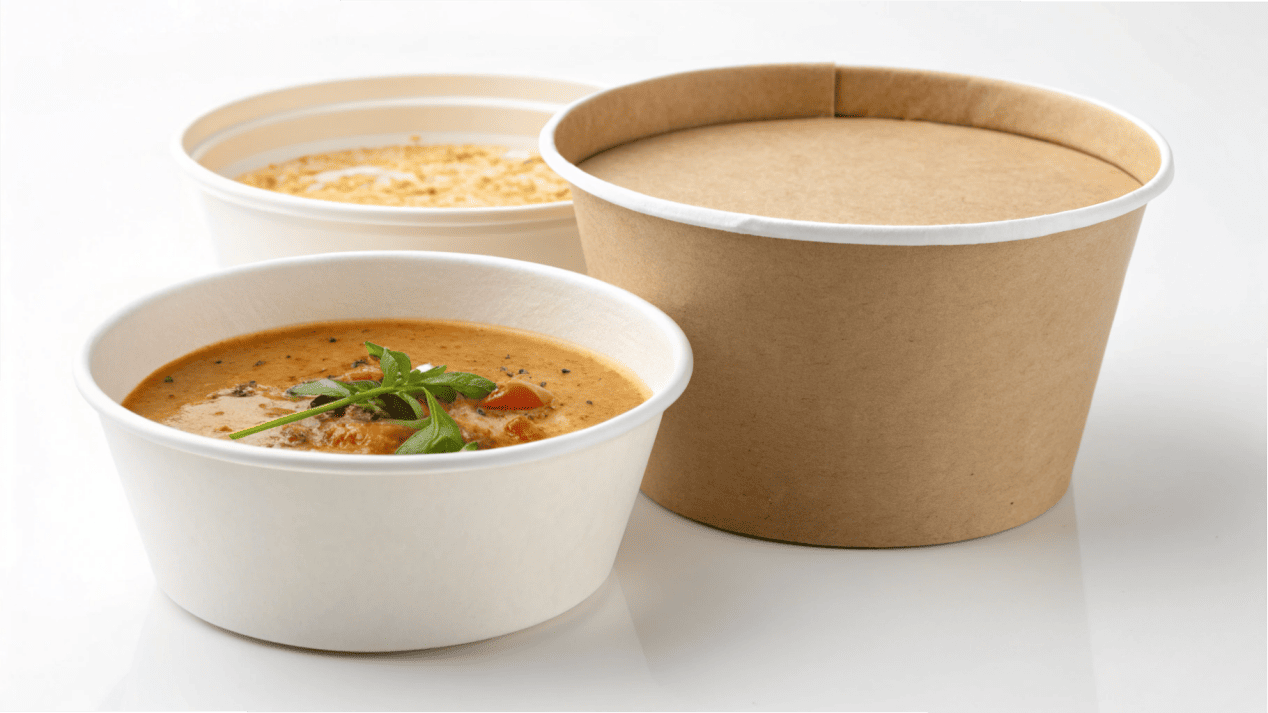
The material is the first thing your customer sees and touches. It sets the stage for the quality of the soup inside. Let's break down your main options.
The Paperboard: White vs. Kraft
Your choice of paperboard6 is a branding decision. White paperboard6 offers a clean, crisp, and professional look. It acts like a perfect canvas, making your logo and brand colors appear bright and true to life. It's the industry standard for a reason. On the other hand, Kraft paperboard6 has a natural, earthy brown color that instantly communicates concepts like "artisanal," "organic," or "farm-to-table." It’s a fantastic choice for brands with a wholesome, rustic identity.
The Inner Lining: The Unseen Hero
The paper itself isn't waterproof. It needs a high-performance inner lining to create a barrier against grease and liquid. This is what prevents the container from becoming soggy. For soups, I always recommend a Double PE (polyethylene) lining or a compostable PLA lining7. These create a robust, 100% effective barrier that can handle anything from thin, hot broths to thick, creamy stews for hours without failing. A single, thin lining just won't cut it for soup.
How Can You Guarantee Your Soup Containers Won't Leak?
A customer complains about soup spilling in their bag during delivery. This single negative experience can lose you a customer for life and lead to bad online reviews.
A guaranteed leak-proof container comes from a perfectly engineered lid and cup system. The lid must snap on tightly. For very hot soups, a vented lid8 is essential to release steam pressure.
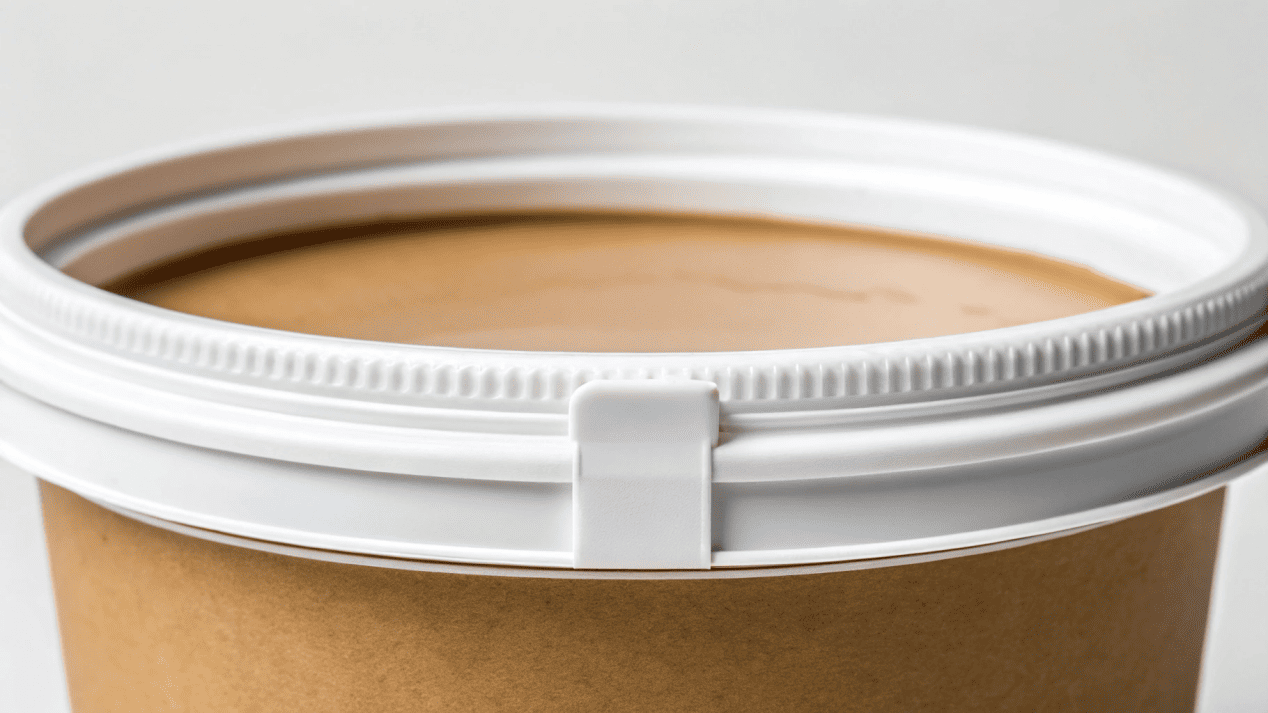
In my experience, about 99% of leaks are caused by a poor lid fit. This is the single most important factor for success.
The Lid and Cup System
I have seen countless restaurant owners try to save a few pennies by buying generic lids from a different supplier than their cups. This is a recipe for disaster. The cup's rolled rim and the lid's channel must be manufactured as a complete, integrated system. A proper lid should snap onto the rim with a secure, audible "click." This confirms a tight seal has been formed. At my company, we produce our lids and cups together, ensuring they are perfectly matched. We test them rigorously to guarantee they are 100% leak-proof, every single time.
To Vent or Not to Vent?
Physics is important here. Piping hot soup releases a lot of steam, which builds up pressure inside a sealed container. This pressure can pop the lid off or cause the container's side walls to soften and bulge. A vented lid8, which has small holes, is the simple solution. It allows steam to escape safely, maintaining the integrity of the seal and the container. I recommend vented lid8s for any thin, broth-based soups served very hot. For thicker stews or soups served warm, a non-vented lid8 is usually sufficient.
How Do You Keep Your Takeaway Soup Hotter for Longer?
Your soup leaves the kitchen piping hot, but the customer says it was lukewarm by the time they ate it. A flimsy container that loses heat quickly undermines the quality you worked so hard for.
To keep soup hot, you must use a container made from thick, heavyweight paperboard6 (measured in GSM9). A higher GSM9 provides superior insulation, keeps the soup hotter for longer, and feels sturdier.
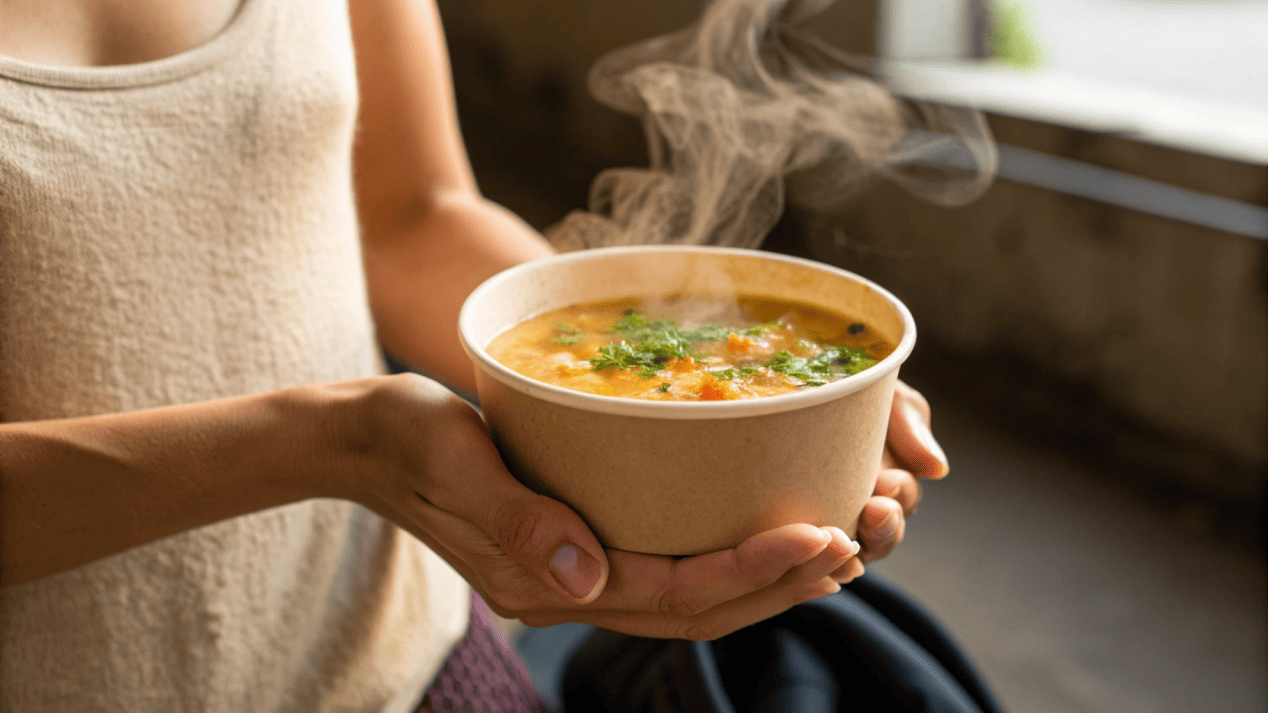
The customer's perception of quality is directly tied to the temperature of their food. A container's ability to retain heat is a critical feature.
Paper Weight (GSM9) Matters
The insulation quality of a paper container comes from its thickness and density, measured in Grams per Square Meter (GSM9). A thin, low-GSM9 paperboard6 (under 250gsm) feels flimsy and loses heat very quickly. For soup container1s, I never recommend anything less than 300gsm, and our premium containers go up to 330gsm. This heavyweight paper provides excellent insulation, keeping the soup hot inside while the outside remains cool enough to hold comfortably without a sleeve. It also gives the container a substantial, high-quality feel in the customer's hand, which communicates value.
Quality Construction
Beyond just the paper's weight, the overall construction contributes to heat retention. A tightly and uniformly rolled rim, a solid base, and sturdy walls all work together to lock in warmth. A poorly constructed cup will have weak points where heat can easily escape. Think of it like a well-built house versus a drafty shack. A premium container is engineered to be a small, insulated vessel that protects its contents.
What Are the Most Profitable Soup Container Sizes?
You're offering five different soup sizes10. This complicates inventory, slows down your kitchen line, and makes it almost impossible to control portion costs, silently eating away at your profit margins.
Focus on a strategic trio of sizes: an 8oz for sides, a 12oz for standard lunch servings, and a 16oz for larger meal portions. This simplifies operations and maximizes profitability.
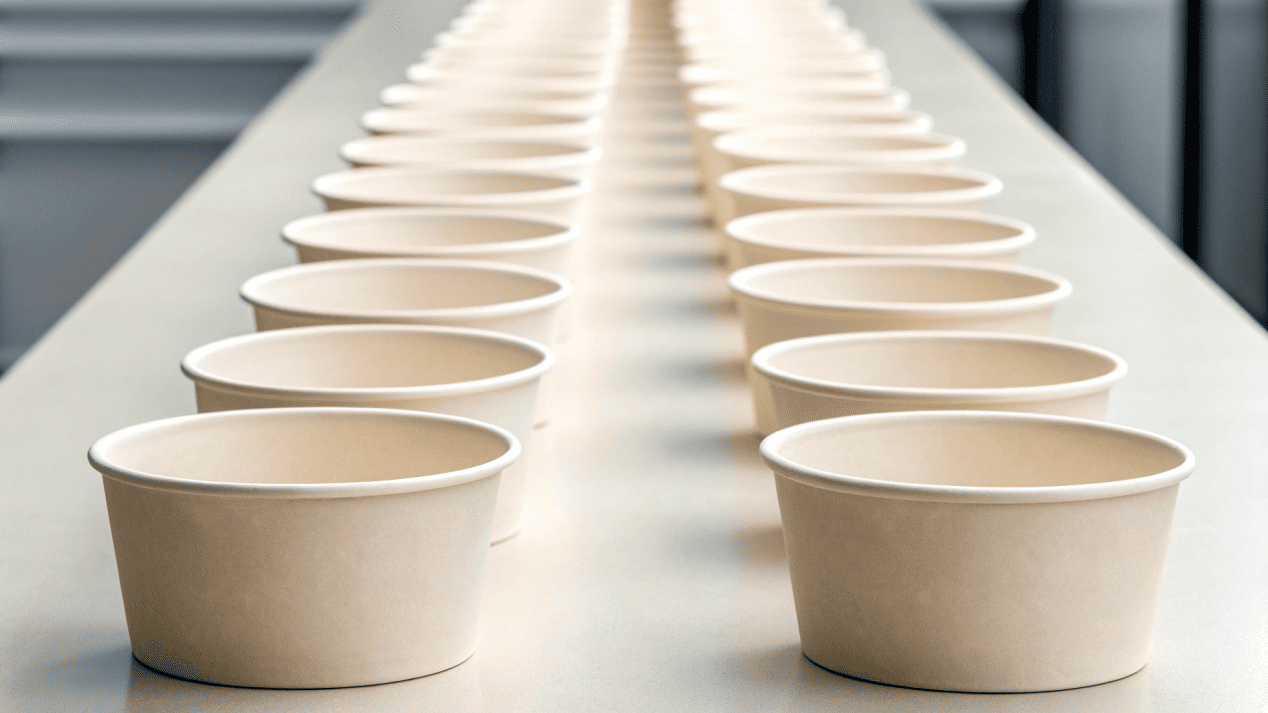
More choices are not always better. From a profitability standpoint, simplicity and consistency are key. I advise my clients to analyze their menu and choose a few key sizes that do the job perfectly. This allows you to standardize recipes and control costs with precision.
Here are the most common and effective sizes:
| Size (oz) | Approx. Volume (ml) | Common Use Case |
|---|---|---|
| 8 oz | 240 ml | Side soup, appetizer portion, child's meal |
| 12 oz | 360 ml | Standard Individual Serving: Lunch special, soup of the day |
| 16 oz | 480 ml | Large / Meal-Sized Portion: Hearty stews, noodle soups |
| 26 oz | 750 ml | Extra-large or "to-share" portions, family size |
| 32 oz | 950 ml | Bulk takeaway, "soup for two," broth sales |
For most businesses, the 8oz, 12oz, and 16oz sizes are the core of a profitable strategy. The larger 26oz and 32oz sizes are excellent for creating new revenue streams, like family meal deals or selling your signature broth in bulk for customers to use at home. Many of our size ranges also share a common lid size, further simplifying your inventory.
Conclusion
Choosing the right container is critical. It protects your delicious soup, strengthens your brand image, and safeguards your profits. Focus on these four pillars and you'll ensure a perfect customer experience11.
Explore this link to discover the ideal materials for soup containers that enhance quality and brand image. ↩
Learn about the engineering behind leak-proof seals to prevent customer complaints and protect your brand. ↩
Find out how to keep your soup hot longer with the right container materials and construction. ↩
Discover the optimal container sizes that maximize profitability and simplify your operations. ↩
Stay updated on the latest trends in food packaging to keep your business competitive. ↩
Discover the differences between white and Kraft paperboard and how they impact your brand's image. ↩
Explore eco-friendly options like compostable PLA lining that appeal to environmentally conscious consumers. ↩
Learn when to use vented lids to prevent pressure build-up and ensure safe delivery of hot soups. ↩
Understand how GSM affects the insulation and quality of your soup containers for better customer satisfaction. ↩
Find out which soup sizes are most effective for profitability and customer satisfaction. ↩
Discover the impact of packaging choices on customer satisfaction and brand loyalty. ↩