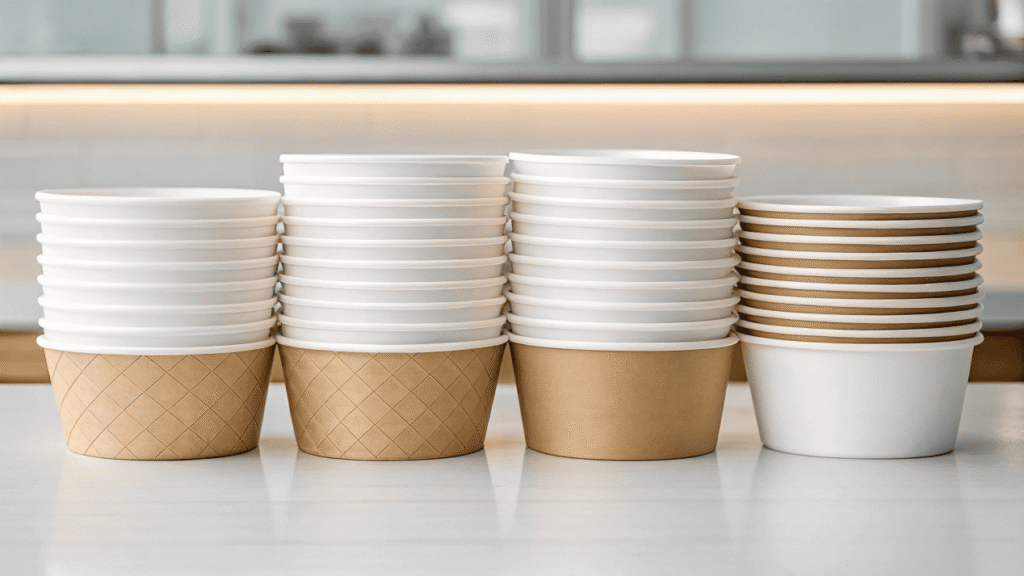
Choosing the wrong bowl size1 wastes food and money. It can create messes and unhappy customers. I will guide you through four simple factors to pick the perfect sizes.
To choose the right bowl size1s, match the bowl to your portion size for cost control2. Also, consider the type of food, how to save money on lids, and the customer's experience.
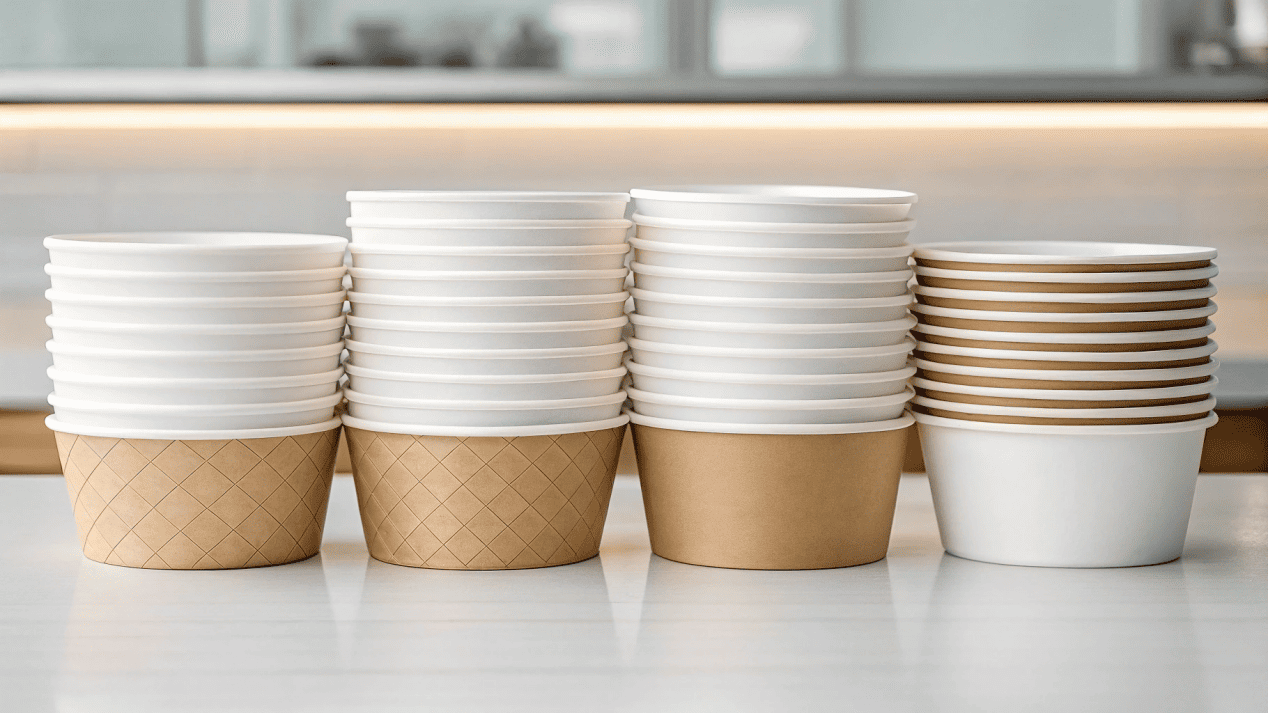
I have spent over 15 years in the food packaging industry3. A common mistake I see is business owners overlooking their bowl size1s. Get it right, and your operations are smooth, your customers are happy, and your profits are protected. Get it wrong, and you could face overflowing messes and wasted product. It is about more than just listing ounces or milliliters on your menu. At Haokelao Packaging, I have helped countless partners find their "perfect fit." Let me walk you through the four factors I always share with them.
How Does Bowl Size Affect Your Portion Control?
Your staff overfills large bowls to make them look full. This wastes hundreds of dollars in expensive ingredients. Always match the bowl size1 to your exact portion to protect your profits.
The bowl itself is your best tool for portion control4. Choosing a bowl that your intended portion fills perfectly prevents over-serving. This protects your profits and ensures every serving is consistent.
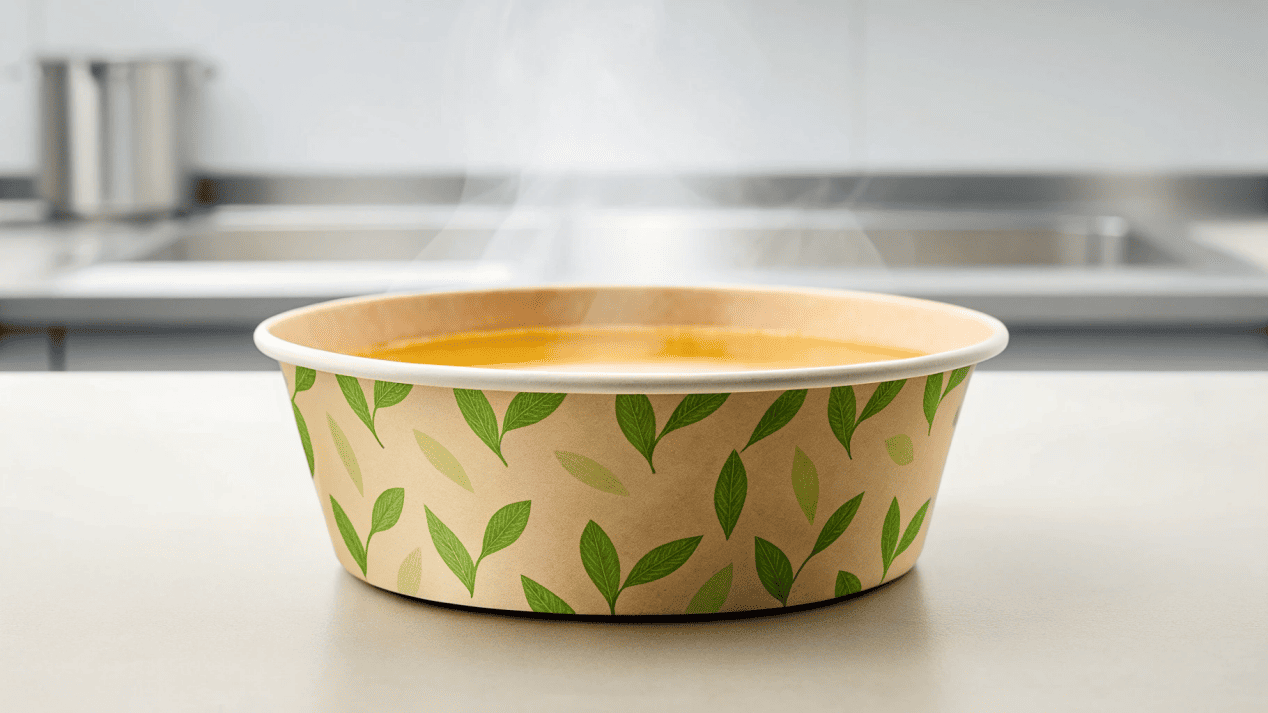
This is the non-negotiable starting point. The bowl itself is your most effective tool for ensuring portion consistency. And portion consistency is the foundation of profitability. The problem is simple. If your "Large" soup is 20oz, but you serve it in a 24oz bowl, your staff will inevitably overfill it. They want the bowl to look full for the customer. That extra 4oz, multiplied by hundreds of servings, is pure profit walking out the door. The solution is to choose a bowl size1 that your intended portion fills comfortably. It should leave just enough room to prevent spills but look generous. A full bowl has a higher perceived value than a larger, half-empty one. This is the first test I have my partners do. I send them samples and tell them to measure their exact portion and put it in the bowl. Does it look good? Is there space for a lid? This simple test is the single best way to protect your profit margins.
Should Different Foods Go in Different Shaped Bowls?
Serving soup in a shallow salad bowl is a recipe for disaster. It gets cold fast and spills everywhere. You must match the bowl's shape to the food it contains.
Yes. Deeper bowls are better for hot soups to retain heat and prevent sloshing. Wider, shallower bowls are ideal for salads and grain bowls, allowing for beautiful presentation and easy mixing.
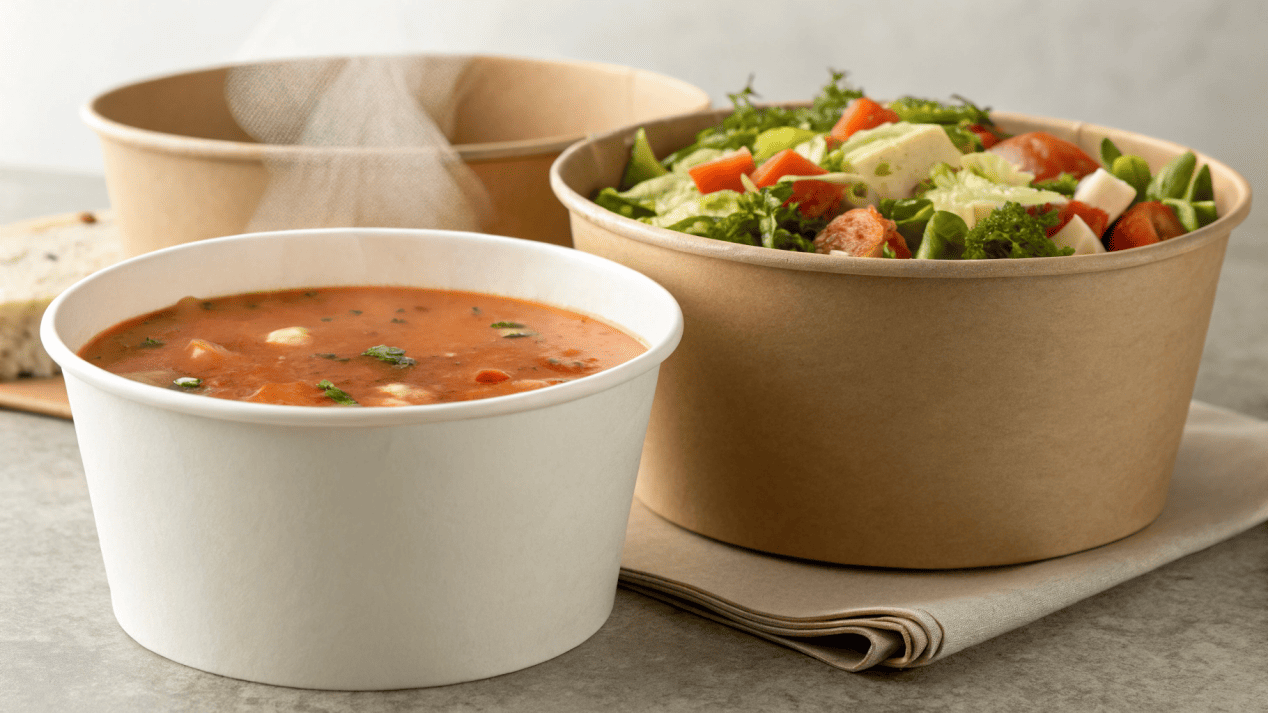
Not all foods are created equal, and neither are bowls. As an engineer, I think about how the shape of the container affects the product inside. The bowl's shape should enhance the food it contains.
For Soups, Stews, & Hot Liquids
These require deeper, sturdier bowls. A deeper profile has less surface area, which helps retain heat. It also prevents the liquid from sloshing around and spilling during transport. The last thing a customer wants is a wide, shallow bowl of soup that is impossible to carry without making a mess.
For Salads, Grain Bowls, & Poké
These dishes need room to be seen and mixed. A wider, shallower bowl is ideal here. It allows you to beautifully arrange all the colorful ingredients on top. This creates a great visual for the customer and makes the food "Instagram-worthy." It also gives the customer space to toss their salad with dressing without it ending up on the table.
| Food Type | Recommended Bowl Shape | Reason |
|---|---|---|
| Soup, Stew, Ramen | Deep, Narrower Profile | Retains heat, prevents spills |
| Salad, Grain Bowl | Wide, Shallower Profile | Better presentation, easy to mix |
| Ice Cream, Dessert | Small, Compact, Rigid | Withstands scooping, resists condensation |
How Can Choosing the Right Bowl Size Save You Money?
Your stockroom is a mess of different bowl and lid sizes. This ties up cash and confuses your staff. You can save money and simplify operations by consolidating lid sizes.
You save money by not paying to ship and store empty space in oversized bowls. More importantly, you can choose a "family" of bowl size1s that all use the same lid diameter for huge efficiency gains.
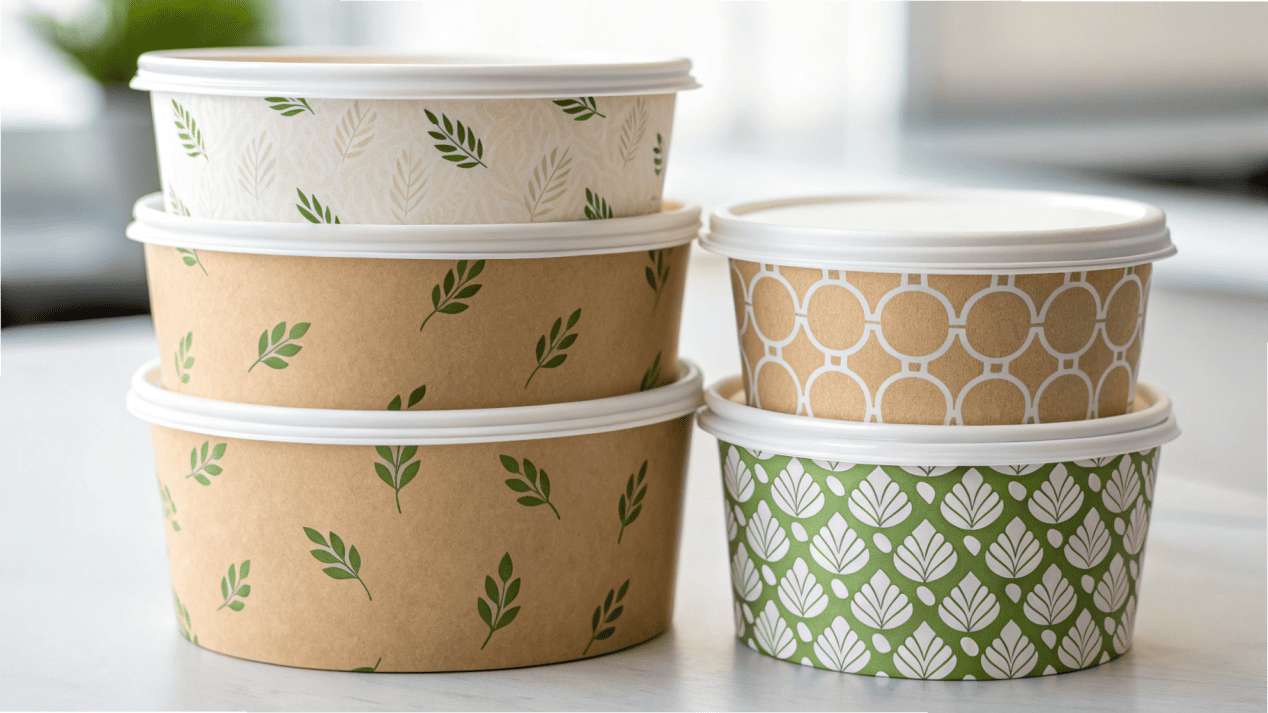
Choosing the right sizes is a powerful cost-control strategy. It goes far beyond the unit price of the bowl. This is where I help my partners think like an operational expert5. A big mistake is only looking at the price per bowl. You must look at the entire system. First, do not pay to ship and store air. Using a bowl that is too large for the portion is literally paying to ship empty space from my factory to your business. Optimizing your sizes reduces your packaging cost per serving. But the real secret is what I call "lid consolidation6." This is a pro-level operational hack. Can you select a range of bowl size1s that all use the same lid diameter? For example, your 16oz, 22oz, and 26oz bowls could all fit a single lid size. This dramatically simplifies your inventory, reduces your storage needs, and makes your team's workflow faster and less prone to error. This is where my team acts as your consultant. We analyze your menu to recommend a "family" of bowl size1s to maximize this benefit.
How Does the Bowl Size Affect the Customer Experience?
A customer struggles with a bowl that is too hot to hold or awkward to eat from. This bad experience means they might not return. Think about how they physically use the bowl.
The customer's experience is critical. The bowl must be comfortable to hold, stable on a surface, and easy to eat from. The right size also makes the food look more appealing.
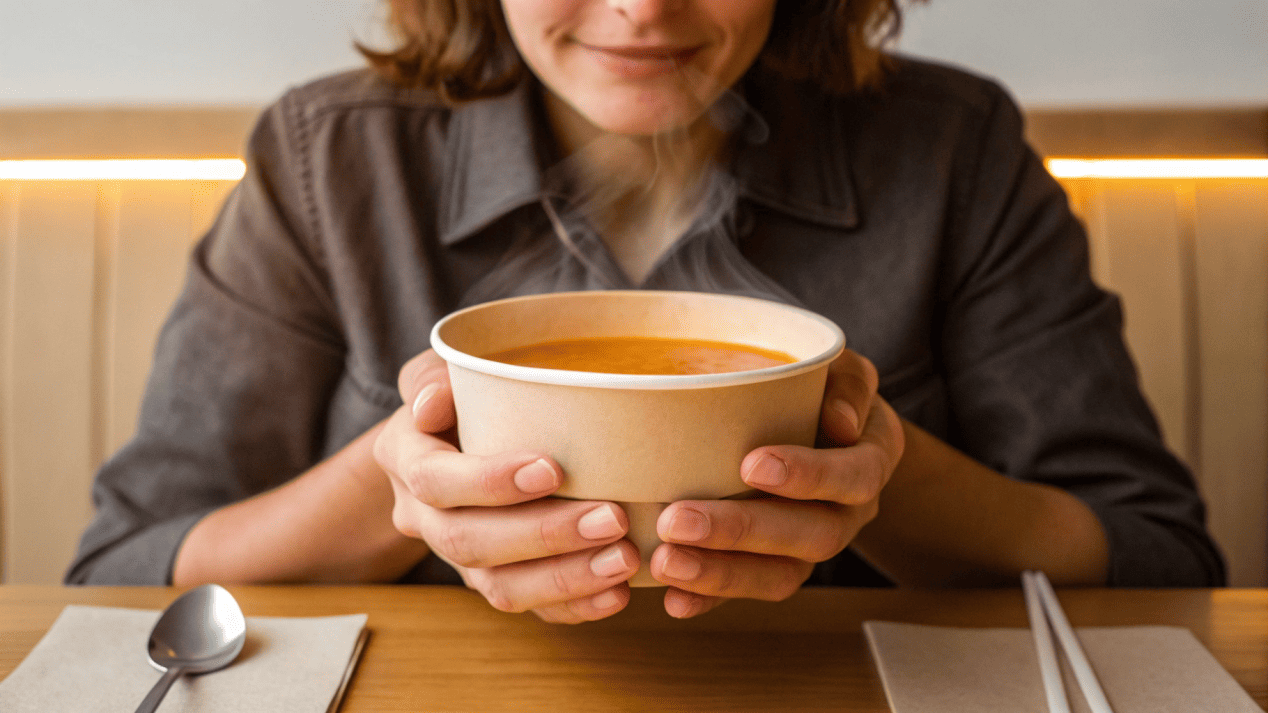
Finally, you must see the bowl through your customer's eyes. How will they physically interact with it? Their experience is just as important as your profit margin. A happy customer is a repeat customer.
Ergonomics (How it Feels)
Is the bowl comfortable to hold? If you serve very hot soup, can they hold it without the sides becoming too hot? As an engineer, I think about heat transfer. For very hot foods, I often recommend our double-wall bowls7 to my partners. They provide an extra layer of insulation that protects the customer's hands. Also, is the base stable enough to sit on a desk or even their lap?
Ease of Use (How it Works)
Can a customer easily get their spoon or fork to the bottom of the bowl? A bowl that is too narrow and deep for a thick stew can be awkward to eat from. The customer experience8 should be effortless.
Visual Appeal (How it Looks)
The bowl is the frame for your culinary creation. Does the food look abundant and appetizing? The right size bowl makes the portion look generous and attractive. In the age of social media, a good-looking meal is free marketing.
Conclusion
Choosing the right bowl size1s is strategic. By considering portion, product, cost, and customer experience8, you will run a more efficient and profitable business your customers love.
Understanding bowl size is crucial for portion control and customer satisfaction, ensuring efficient operations. ↩
Implementing effective cost control strategies can significantly boost your profit margins and operational efficiency. ↩
Staying updated on food packaging trends can enhance your business operations and customer appeal. ↩
Effective portion control directly impacts food costs and customer experience, making it essential for business success. ↩
Thinking like an operational expert can streamline processes and improve profitability in your business. ↩
Lid consolidation simplifies inventory and reduces costs, enhancing operational efficiency in food service. ↩
Double-wall bowls provide insulation, enhancing customer comfort when serving hot foods. ↩
A positive customer experience leads to repeat business, making bowl design a key factor in restaurant success. ↩