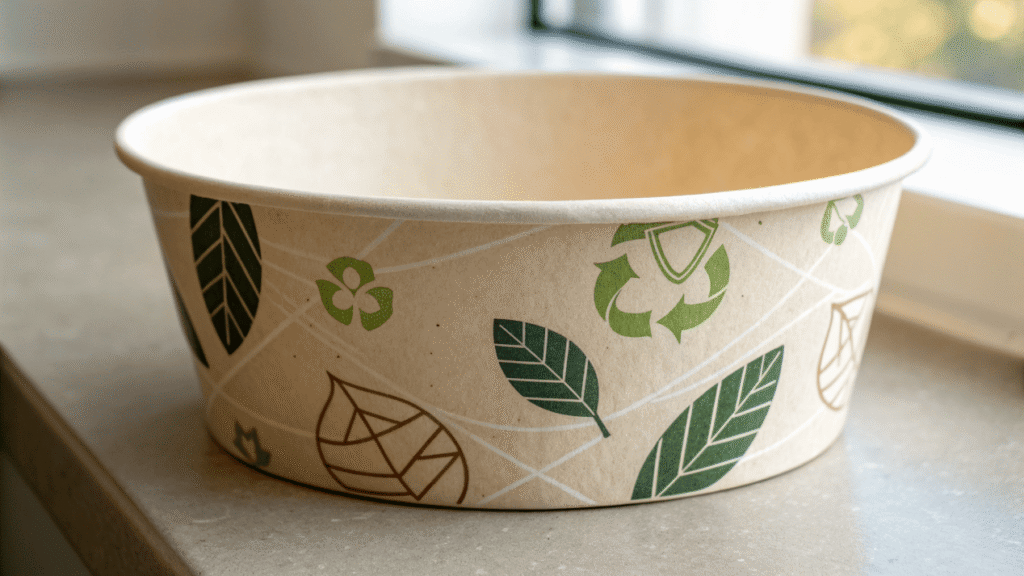
Everyone claims their paper bowl is "eco-friendly," but the term feels meaningless. You want to make a sustainable choice1 for your business but don't know who to trust.
A truly eco-friendly bowl2 is a system. It starts with FSC-certified paper3, uses a plant-based PLA coating4 instead of plastic, is branded to communicate its eco-values, and has a clear end-of-life plan for composting.
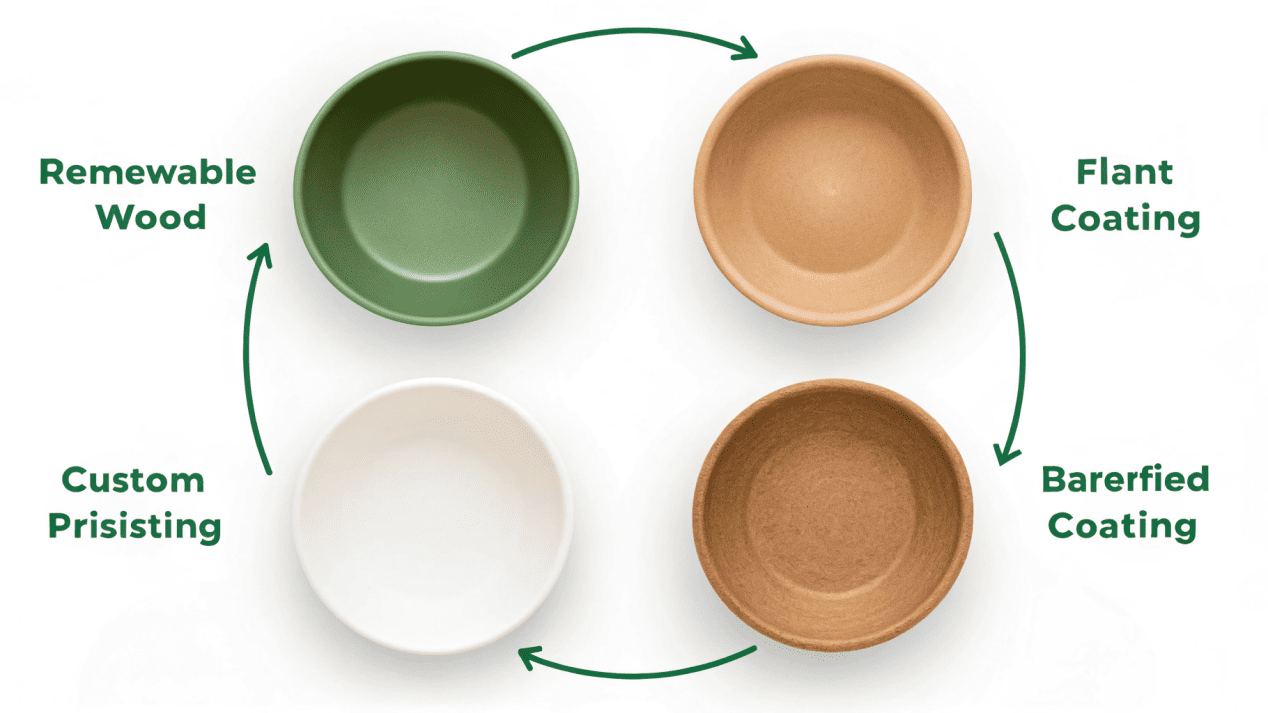
As an engineer, I like to look beyond the marketing claims and into the very fiber of the product. The truth is, a sustainable paper bowl is the result of four critical choices made during its manufacturing. It is a commitment to responsible sourcing5, innovative technology, and a clear plan for what happens after your customer finishes their meal. I believe in full transparency, so let me show you exactly how a modern, truly eco-friendly paper bowl is made.
Where Does the Paper for an Eco-Bowl Come From?
You assume that paper is just paper, so any paper bowl is a good start. But you worry that the paper could come from an unsustainable source, undermining your entire "green" effort.
The journey of a great eco-bowl begins in a responsibly managed forest6. The paperboard must be FSC-certified to guarantee it is sourced in a way that protects the environment and local communities.

The paperboard is the body of the bowl. Its quality and its origin story are the foundation of any credible eco-claim. For food packaging, there are two non-negotiable rules here. First, the paperboard must be made from 100% virgin wood pulp7. This is a critical safety measure. Using recycled materials could introduce unknown contaminants into the paper, which is a risk I am not willing to take with food products. Second, and most importantly for sustainability, we must know where that virgin pulp comes from. The highest global standard for this is the FSC (Forest Stewardship Council) certification. This is an independent guarantee that the wood was harvested from forests that are managed to preserve biodiversity and benefit the lives of local people and workers. I made a decision many years ago that FSC certification would be the mandatory starting point for every single product we create. It builds responsibility into the very fiber of the bowl.
| Paperboard Type | Source Verification | Sustainability Claim |
|---|---|---|
| Standard Paper | Unknown | Weak, unverified "eco-friendly" claims. |
| FSC-Certified Paper | Independently verified | Strong, credible claim of responsible sourcing5. |
How Does a Paper Bowl Hold Hot Soup Without Leaking?
You need a strong bowl that will not get soggy or leak, especially with hot liquids. You are concerned that an "eco" bowl might be weaker than a traditional plastic-lined one.
A truly eco-friendly bowl2 uses a bio-based PLA8 (Polylactic Acid) coating as its waterproof shield. This plant-based lining is just as strong as plastic but is designed to be compostable.
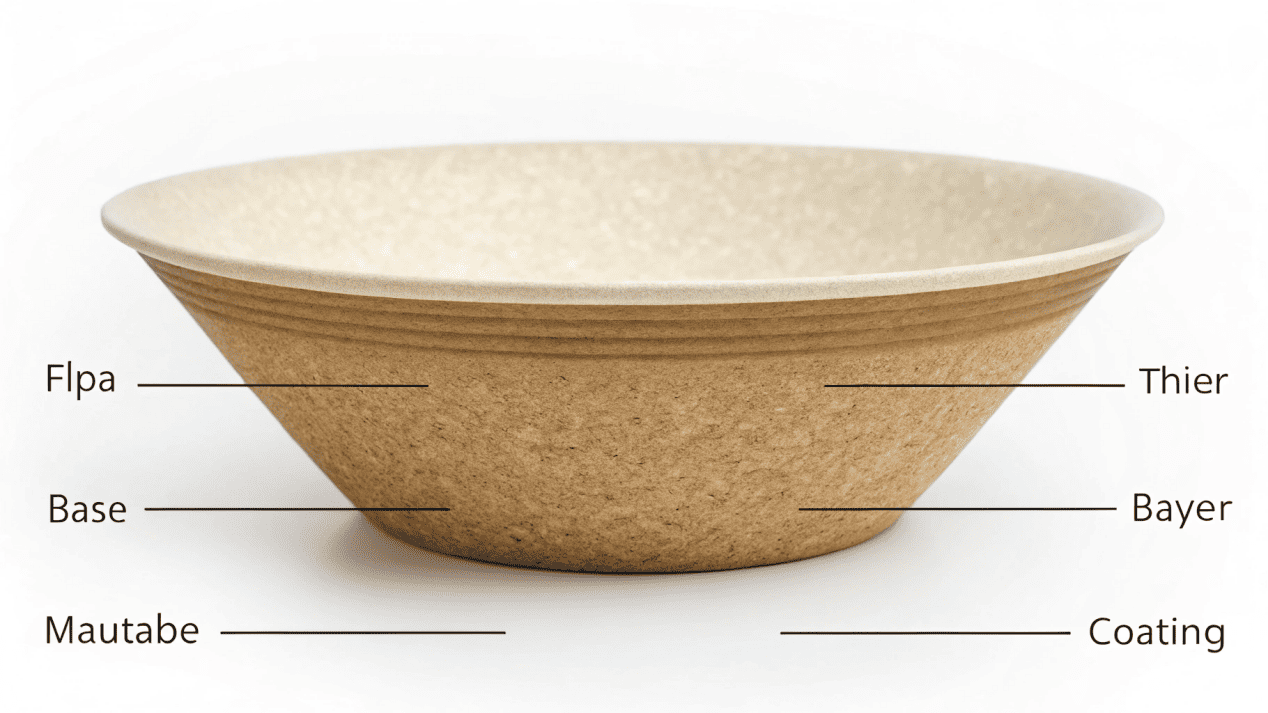
For decades, the answer to this problem was a thin layer of petroleum-based plastic called Polyethylene (PE). It worked well, but it was still plastic. The real innovation in modern eco-bowls is replacing this shield with a much smarter, plant-based alternative called PLA (Polylactic Acid). PLA is a bioplastic made from renewable resources like corn starch. As an engineer, I can tell you that this material is fantastic. It provides a tough, leak-proof barrier that works perfectly for both hot soups and cold salads. The revolutionary part is what happens after it is used. Unlike a PE plastic lining, the PLA lining is designed to break down in a commercial composting9 facility. This brilliant piece of science is what turns the entire bowl, from its paper body to its protective shield, into a single, fully compostable unit. My factory has invested heavily in mastering the technology to apply this PLA coating flawlessly, ensuring every bowl we make is both high-performance and truly sustainable.
How Can Your Bowl Tell Your Customers You Care About the Planet?
You have invested in a superior, sustainable product. But if the bowl looks plain, customers will never know about the responsible choice you made on their behalf.
You must use your bowl's design as its voice. Clear branding, with simple icons and phrases like "100% Compostable," turns your packaging into an instant statement about your brand's values.
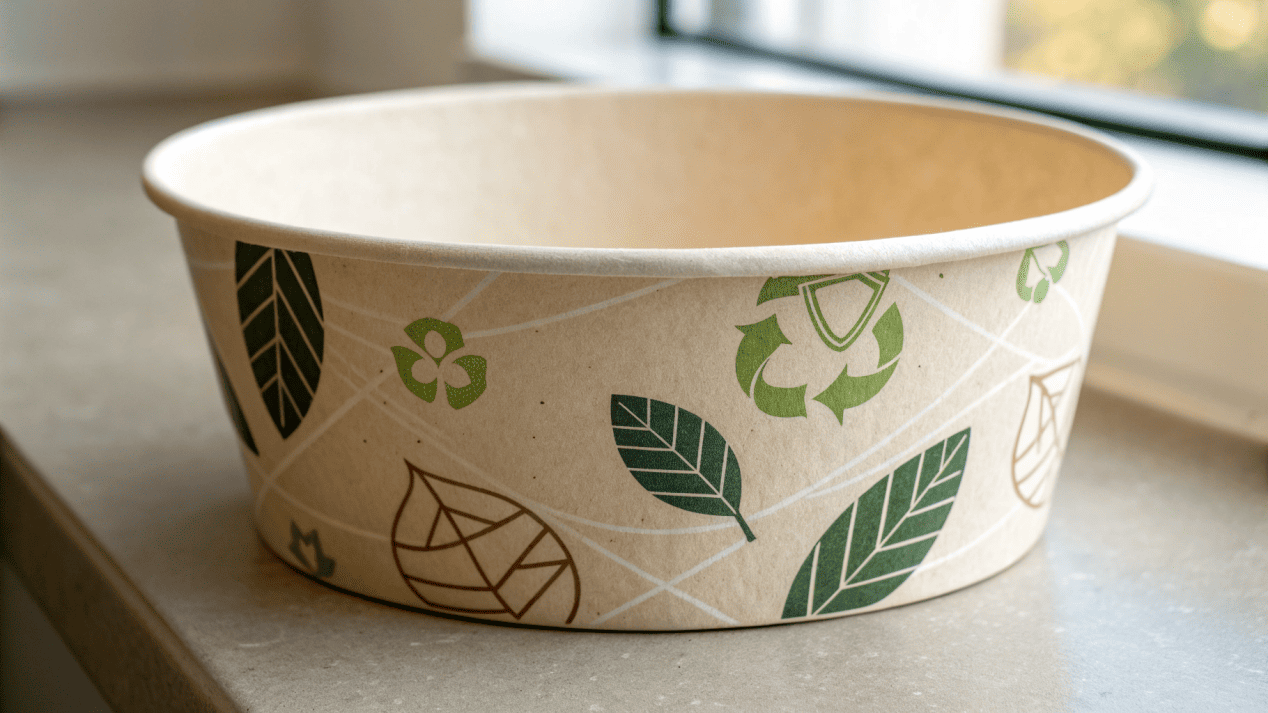
A sustainable bowl is one of your most powerful marketing tools, and it should look the part. Branding for the eco-conscious market10 is about showing authenticity. Designs that work best often use clean lines, natural colors, and very clear messages. A simple phrase like "Plant-Based Bowl" or the official compostable logo11 tells a fast and effective story. It elevates the packaging from just a container to a public statement. It shows your customers that you share their values, which can help justify a premium price and build incredible loyalty. As a manufacturer, I believe every business deserves to tell their story beautifully. That is why we use world-class Heidelberg printing presses with food-safe inks12 to make your sustainable branding13 look premium and professional. To help smaller businesses, we have also engineered our production lines to offer custom printing with low Minimum Order Quantities (MOQs)14. You do not need to be a huge corporation to have professionally branded, eco-friendly bowl2s that look amazing.
| Branding Approach | Customer Perception | Marketing Impact |
|---|---|---|
| Plain Eco-Bowl | Neutral, unnoticed. | Missed opportunity. |
| Custom-Branded Eco-Bowl | Positive, brand seems responsible. | Powerful tool for loyalty and sales. |
What Is the "End-of-Life" Plan for Your Bowl?
You have sourced the right paper and used the right coating. But where does the bowl actually go after it is thrown away? Without a good plan, it is still just waste.
The plan is commercial composting9. This is the only way for a PLA-lined bowl to fully break down into valuable compost. The brand's job is to guide customers toward this option.
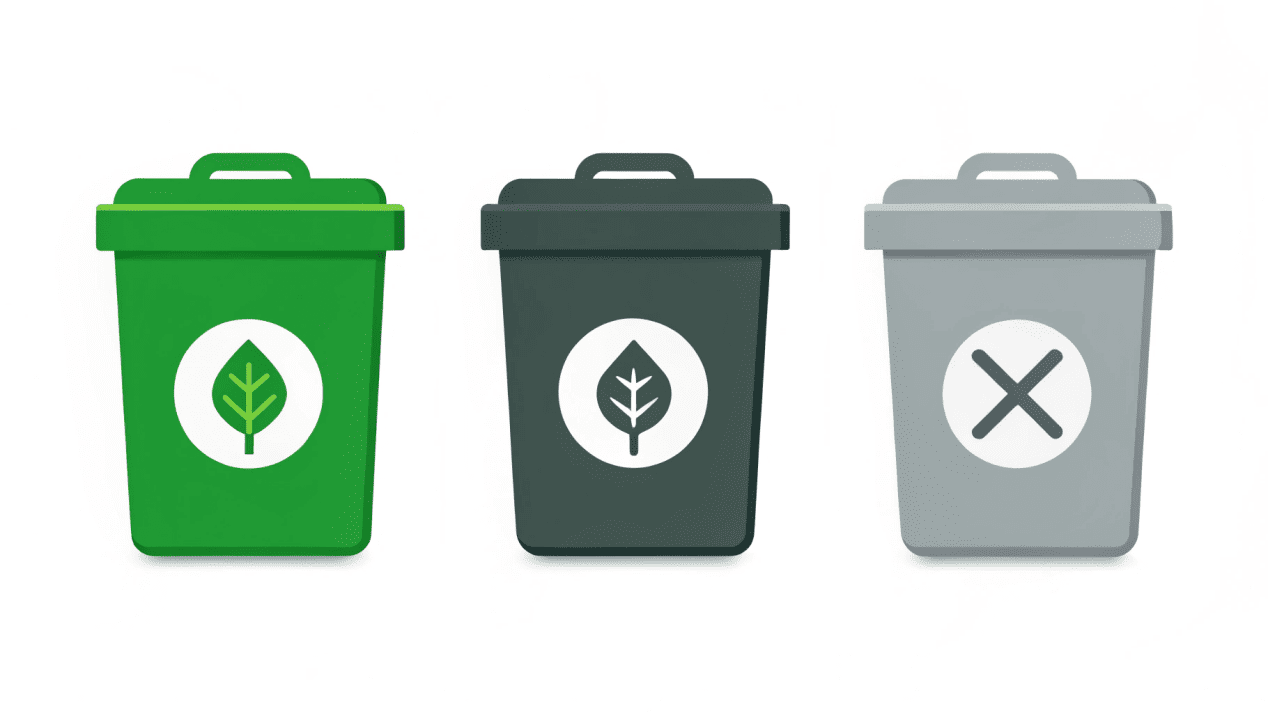
A product is only truly sustainable if it has a responsible plan for its end of life. For a compostable PLA-lined bowl, this means "closing the loop" by sending it back to the soil. It is very important to understand that "compostable" specifically refers to commercial or industrial composting. These large facilities provide the perfect mix of high heat, moisture, and microbes needed to break down the paper and PLA into healthy compost in about 90 to 180 days. The bowl will not break down properly in a landfill or a small backyard compost bin. As a manufacturer, I see it as my responsibility to be honest with my partners about this. My "Good Client" service includes consulting on these issues. I always encourage clients to investigate the waste recovery options15 in their local area. By producing a bowl that is technically perfect for this ideal end-of-life journey, we are giving you the best possible tool to participate in a truly circular economy16.
Conclusion
Manufacturing a truly eco-friendly bowl2 is a process of science and responsibility. By choosing the right partner, you are not just buying a bowl; you are investing in a complete sustainability solution.
Explore strategies for businesses to adopt sustainable practices in their product offerings. ↩
Discover the key features that make a bowl truly eco-friendly and sustainable. ↩
Explore the significance of FSC certification in ensuring responsible sourcing and environmental protection. ↩
Learn about the innovative PLA coating that makes eco-friendly bowls leak-proof and compostable. ↩
Learn about the importance of responsible sourcing in creating sustainable products. ↩
Understand the principles of responsible forest management and its impact on sustainability. ↩
Find out why using virgin wood pulp is crucial for safety in food packaging. ↩
Explore the production and advantages of bio-based PLA as a sustainable material. ↩
Get insights into the process of commercial composting and its benefits for sustainability. ↩
Gain insights into the eco-conscious market and what drives consumer choices. ↩
Understand the meaning behind compostable logos and their importance for eco-conscious consumers. ↩
Learn about the significance of using food-safe inks in sustainable packaging. ↩
Learn how effective branding can communicate sustainability values to consumers. ↩
Understand how MOQs can affect small businesses in sustainable product manufacturing. ↩
Discover the various waste recovery options available for compostable products. ↩
Discover the concept of a circular economy and its role in promoting sustainable practices. ↩