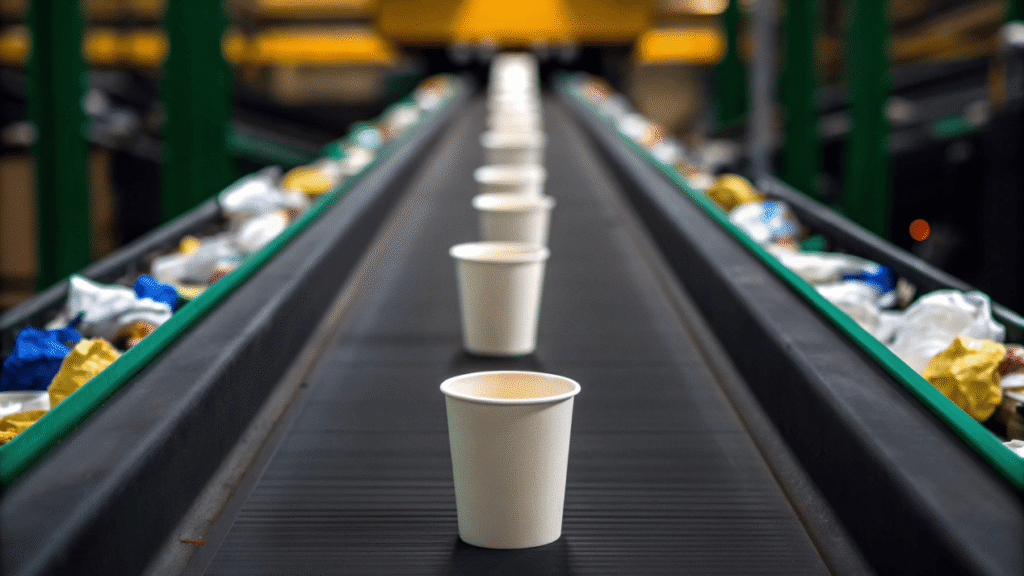
You choose paper over plastic, feeling you’ve made a responsible choice. But then you hear most cups end up in landfills, making your good intentions feel wasted.
A standard paper cup with a plastic (PE) lining is rarely recycled and has a high carbon footprint1. However, cups with modern, plastic-free coatings2 are genuinely recyclable3 and have a much lower environmental impact4, making them a truly sustainable choice.
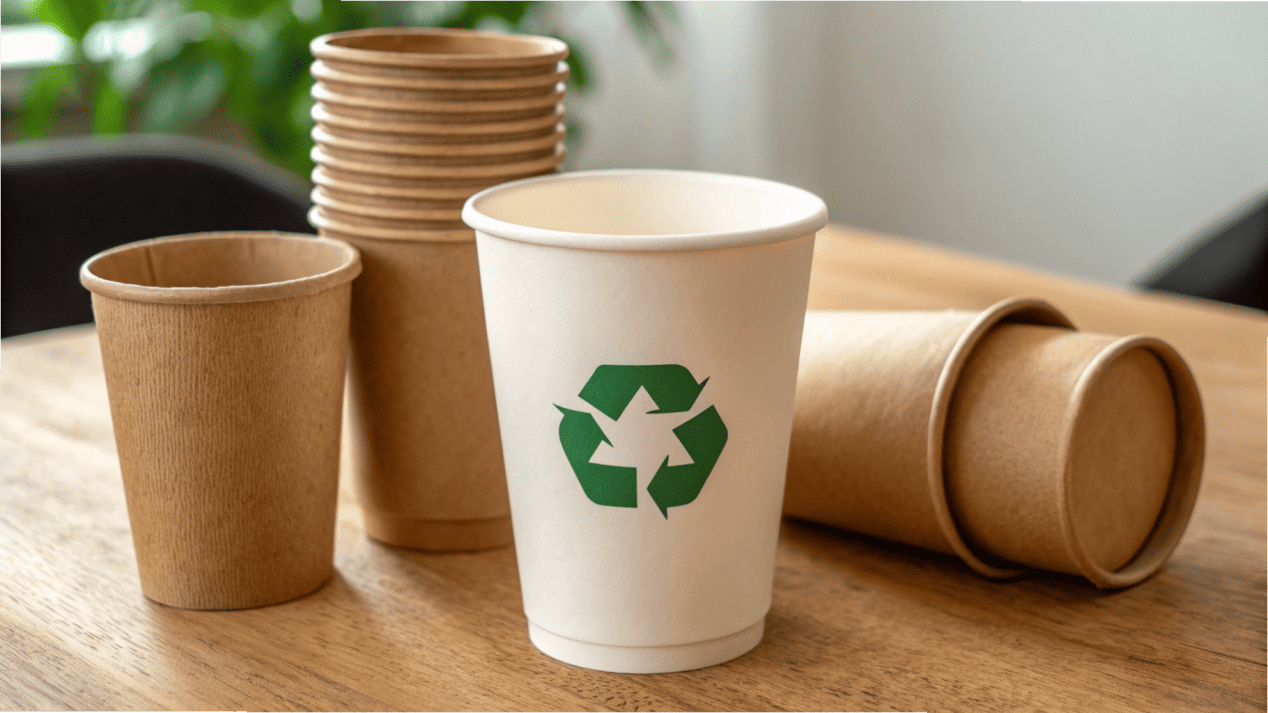
As an engineer in the packaging industry for over 15 years, this question is personal for me. I see people everywhere trying to do the right thing. The problem isn't the consumer; it's that for decades, the industry has given them a product that is designed to fail at the recycling plant. The story of a cup's environmental impact4 is complex. It involves its creation, its disposal, and the materials used. To make a real difference, we have to look at the whole picture. Let's break down the four key factors.
What Is a Paper Cup's True Carbon Footprint?
You see a simple paper cup. But its journey from a forest to your hand uses a lot of hidden energy, adding to its overall carbon cost.
A cup's footprint comes from the paper and, crucially, the plastic (PE) lining, which is made from fossil fuels. Choosing cups with innovative, plastic-free coatings2 significantly lowers this footprint from the start.
My engineering background taught me to always look at the entire process, from start to finish. A cup's carbon footprint1 begins long before you use it.
The Problem with Traditional PE-Lined Cups
The standard paper cup is not just paper. It is paper with a thin layer of polyethylene (PE) plastic melted onto it to make it waterproof. This PE plastic is made from fossil fuels, which immediately adds a significant carbon cost to the cup's creation. On top of that, the process of bonding that plastic to the paper is very energy-intensive5. From the very beginning, this design has a heavy environmental footprint before it is even used.
A Better Solution: Plastic-Free Coatings
This is where technology provides a better answer. We start by using paperboard only from FSC-certified6, responsibly managed forests. But the real breakthrough is our plastic-free Aqueous Coating7. This is a water-based barrier that makes the cup waterproof without using any fossil-fuel-derived plastic. By eliminating the plastic and the energy-heavy bonding process, we immediately lower the cup's inherent carbon footprint1. It's a smarter design from the very first step.
Why Don't Most Paper Cups Get Recycled?
You toss your paper cup into the recycling bin, hoping for the best. But you have a nagging feeling it might not make it, and you're right to be skeptical.
Standard paper cups have a plastic (PE) lining that is tightly bonded to the paper. Most recycling facilities cannot separate these two materials, so the cups are treated as trash and sent to landfills.
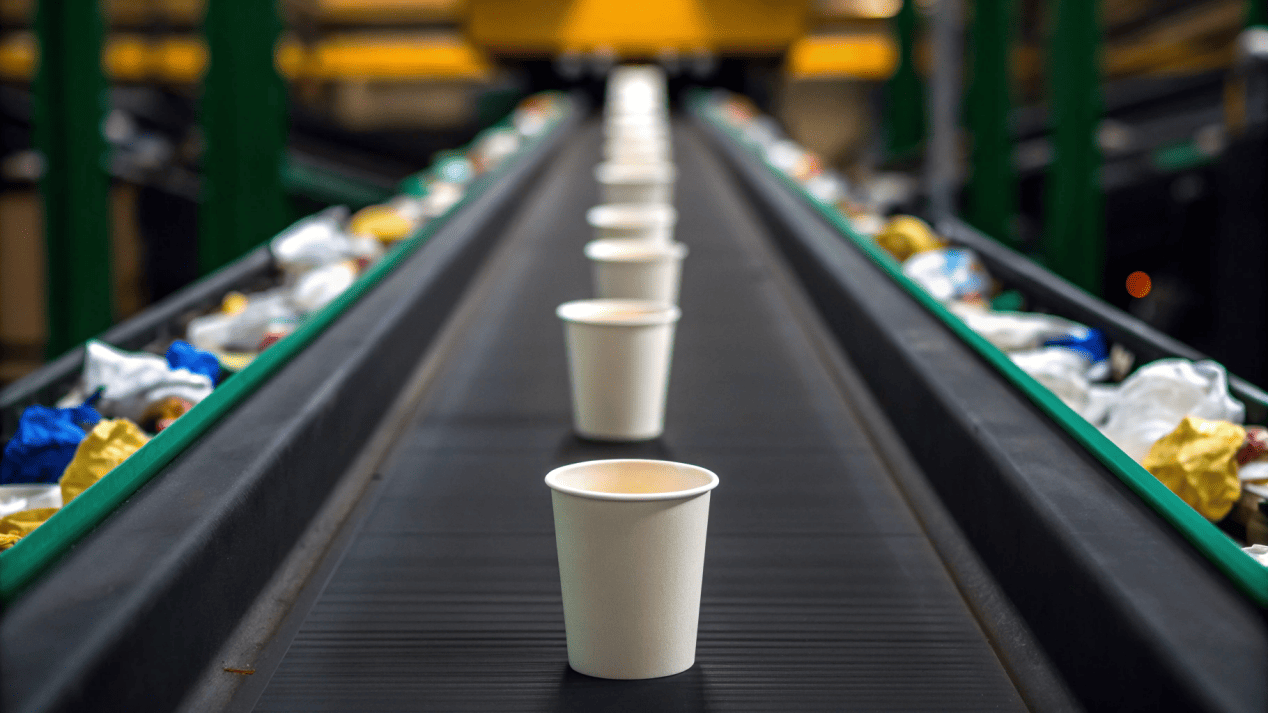
This is the most critical and misunderstood part of the cup's life. A product is only as green as its end-of-life reality. This is where the paper cup industry has failed consumers for years.
The Great Recycling Myth
Can you technically recycle a standard coffee cup? Yes, but it requires a special, expensive, and rare type of facility. The plastic lining is so tightly attached that standard paper recycling plants can't process it. The machines see it as a contaminated product. As a result, an estimated 99.75% of these cups are not recycled. They are sorted out and sent to a landfill, where they can release methane8, or to an incinerator. The traditional paper cup is, by its very design, a disposable item destined for the dump.
How Technology Solves the Waste Problem
This is the problem my team and I dedicated ourselves to solving. Our Aqueous Coating7 is specifically engineered to break down right along with the paper fibers in a standard paper recycling process. There is nothing to separate. This means our cups are not just recyclable3 in theory—they are fully recyclable3 in practice through the recycling systems9 that already exist everywhere today. They don't contaminate the process; they become part of it. This simple change in chemistry transforms a piece of waste back into a valuable raw material.
Are "Compostable" Cups a Better Choice?
You see a cup labeled "compostable" or "PLA10" and think it must be the best option. But the reality of their disposal is far more complicated and often worse.
Not usually. PLA10 or "compostable" cups require industrial composting facilities, which are very rare. They contaminate paper recycling streams and often end up releasing methane8 in a landfill.
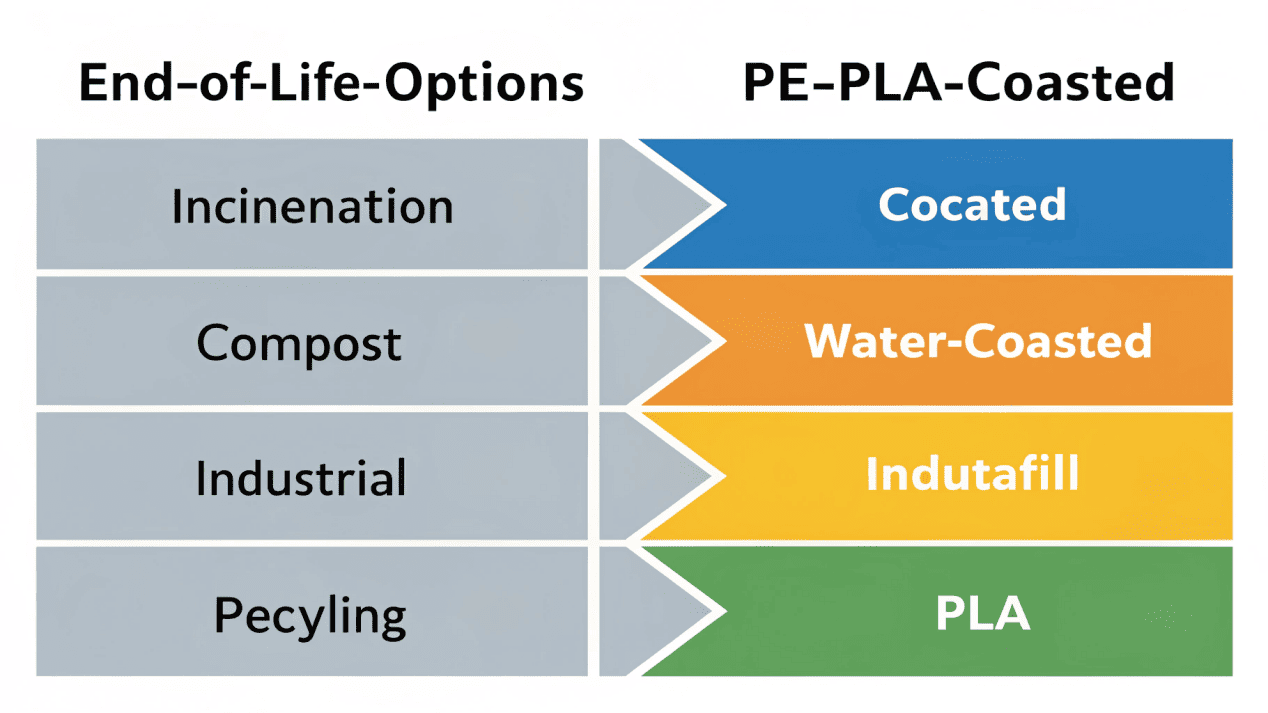
As awareness about the PE-lining problem has grown, new materials have appeared. But as an engineer, I always look for the hidden trade-offs.
The "Compostable" PLA10 Trap
Cups made from PLA10, a plant-based plastic, are often marketed as "compostable." Here’s the catch: they only break down in an industrial composting facility with very specific high-heat conditions. They do not compost in your backyard. Worse, if they end up in a standard paper recycling bin, they are a major contaminant and ruin the whole batch. Since most cities don't have these special facilities, the vast majority of PLA10 cups end up in a landfill, where they can release methane8, a potent greenhouse gas.
The Reusable Cup Reality
For a dedicated individual a reusable cup is an excellent choice. However, studies show you must use a ceramic or steel mug hundreds of times to offset its much higher manufacturing footprint. For a business serving hundreds of on-the-go customers, relying only on reusables is often not a scalable or hygienic solution.
| Cup Type | Recyclable? | Compostable? | Reality Check |
|---|---|---|---|
| PE-Lined Cup | Only in theory | No | 99.75% end up in landfills. |
| PLA10 "Compostable" Cup | No (contaminant) | Only industrially | Most end up in landfills, facilities are rare. |
| Aqueous Coated Cup | Yes, widely | Yes, slowly | Genuinely recyclable3 in existing systems. |
How Can Consumers Make a Real Difference?
You want to make a choice that is truly sustainable. But confusing labels and "greenwashing11" from companies make it hard to know who to trust.
You can make a real difference by supporting brands that use verifiably sustainable packaging12. Look for clear, honest messages like "100% Plastic-Free & Fully Recyclable" on the cup itself.
Ultimately, a positive impact requires both responsible production and informed consumers. My job is to give brands the tools to empower their customers to do the right thing.
Fighting Greenwashing with Clarity
Consumers are getting smarter. They recognize vague claims and confusing green symbols that don't mean anything. This "greenwashing11" hurts everyone because it creates mistrust. The most effective message is simple, direct, and honest. A message like "This Cup is Plastic-Free & Fully Recyclable" leaves no room for confusion. It gives the consumer confidence in their choice and clear instructions on how to dispose of the product correctly.
Making Every Cup a Statement
For a business, choosing packaging that is truly sustainable is no longer just about cost—it's a powerful marketing tool. When you partner with us, you can confidently tell a true sustainability story. You can put that clear, honest recycling message on your cup because our technology backs it up. You empower your customers to make a real difference, and you turn every cup you sell into a statement about your brand's leadership and commitment to the environment.
Conclusion
The paper cup doesn't have to be a villain. By embracing innovative, plastic-free cups that are verifiably recyclable3, we can enjoy convenience with a clear conscience.
Understanding the carbon footprint of paper cups helps consumers make informed choices about their environmental impact. ↩
Explore how plastic-free coatings can significantly reduce environmental impact and improve recyclability. ↩
Learn about the recyclability of paper cups and the challenges they face in recycling facilities. ↩
Gain insights into the overall environmental impact of paper cups and how to mitigate it. ↩
Learn about the implications of energy-intensive processes in the production of paper cups. ↩
Find out why FSC certification is important for sustainable forestry and responsible sourcing. ↩
Discover how Aqueous Coating technology makes paper cups more environmentally friendly and recyclable. ↩
Understand the environmental impact of methane emissions from landfills and waste. ↩
Understand the mechanics of recycling systems and their role in waste management. ↩
Explore the implications of using PLA in cups and its effect on recycling processes. ↩
Learn how greenwashing affects consumer trust and the importance of transparent labeling. ↩
Learn about the key characteristics of sustainable packaging and its importance for the environment. ↩