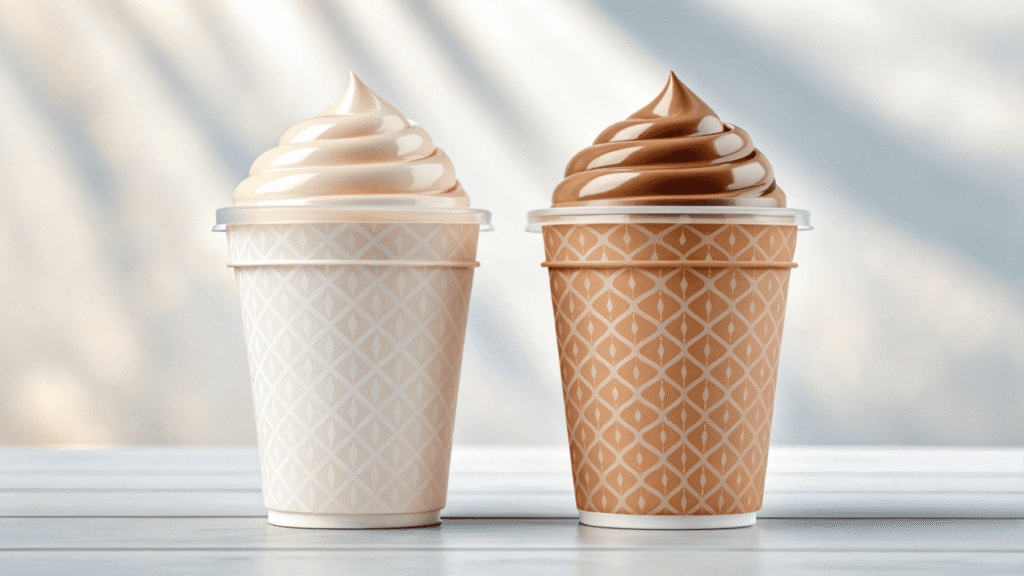
Your ice cream is perfect, but the cup feels wrong. This simple choice between plastic and paper impacts your budget, brand image, and even your customer's experience.
Choose plastic cups for durability, lower cost, and to visually showcase your ice cream. Choose paper cups for a premium brand feel, superior insulation, and powerful branding opportunities.
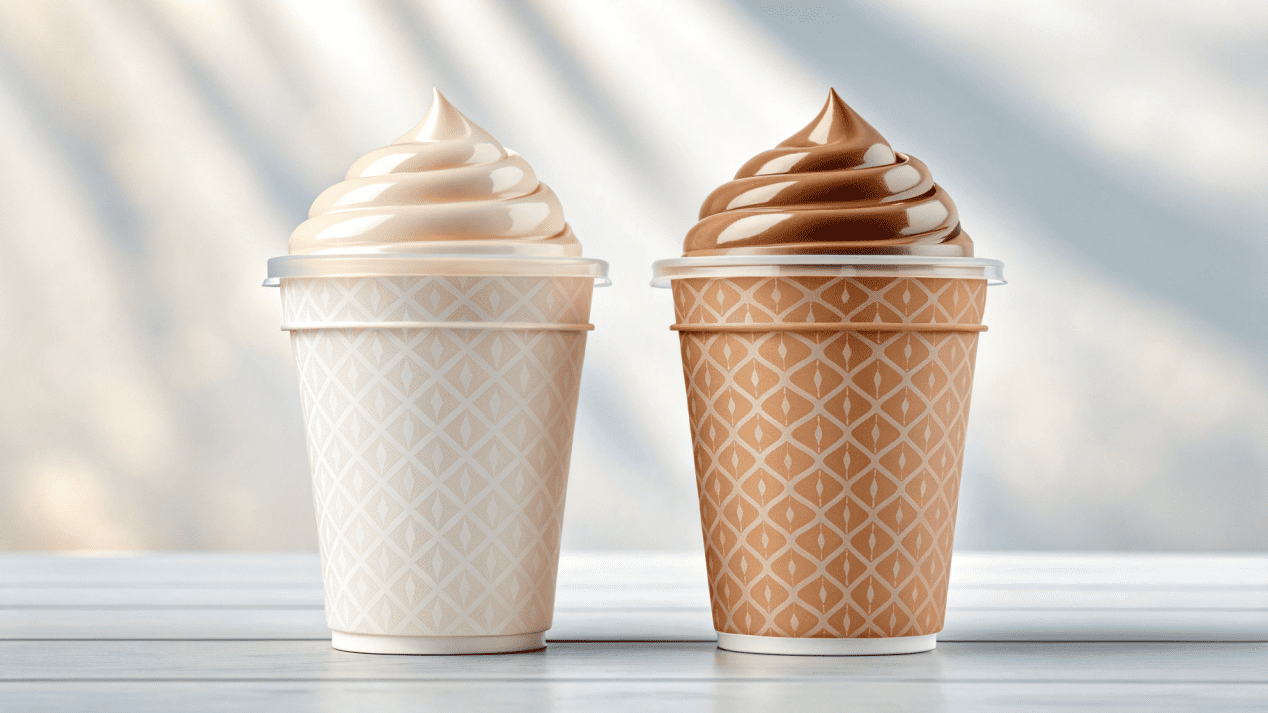
The perfect scoop of ice cream is a moment of pure joy. But before the customer even takes their first bite, their experience begins with the cup they hold. That cup is a statement about your brand, your quality, and your values. As an expert who has manufactured both plastic and paper packaging for over 15 years, I know their unique strengths. This isn't about which one is "better" in general. It's about which one is better for you. Let's break down the four key factors to help you decide.
Which Cup Can Handle the Meltdown Test Best?
Ice cream melts and creates condensation. A flimsy, soggy cup can ruin a customer's treat and your shop's reputation. You need a cup that won't fail.
Plastic cups1 offer unbeatable water resistance that guarantees no sogginess. High-quality paper cups provide excellent sturdiness and better insulation, making them more comfortable to hold.
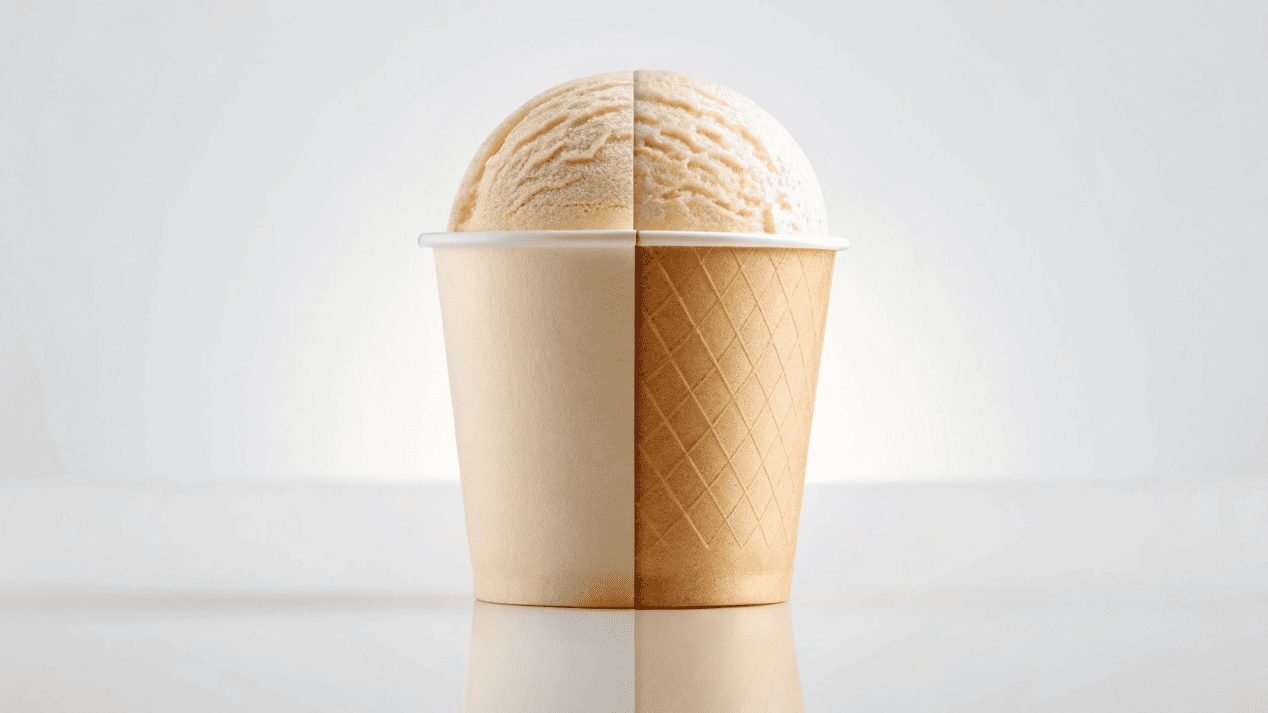
Ice cream is a challenging product to contain. It is cold, wet, and people often eat it slowly on a hot day. The cup's main job is to survive this challenge. From an engineering perspective, here is how they compare.
How Each Material Performs
Clear plastic, like PET, is completely non-porous. This means there is zero chance it will get soggy or weak from moisture. It is also rigid and performs very well in freezers, which is great if you sell pre-packaged treats. The main weakness I've seen is that some plastics can become brittle in extreme cold and might crack if dropped. On the other hand, modern paper cups are very strong. We make them from high-quality paperboard with a waterproof lining. They feel sturdy in the hand. The paper also provides some natural insulation, so the outside of the cup doesn't get freezing cold. This makes it more comfortable to hold. The only weakness is that a poorly made paper cup can get soft at the seams over time. That's why quality control is so important, something we take very seriously.
| Factor | Plastic Cups (PET) | Paper Cups (Coated) |
|---|---|---|
| Waterproofing | Excellent / Guaranteed | Very Good (depends on quality) |
| Feel When Cold | Can be very cold to the touch | More comfortable due to insulation |
| Rigidity | Very rigid, but can be brittle | Sturdy and substantial feel |
Which Cup Is Better for Your Bottom Line?
Packaging costs are a real expense that can eat into your profits. You need to understand the cost difference to make a smart business decision.
Plastic cups1 are generally the more cost-effective choice due to simpler production. Paper cups2 are a premium-priced option because their manufacturing process is more complex.
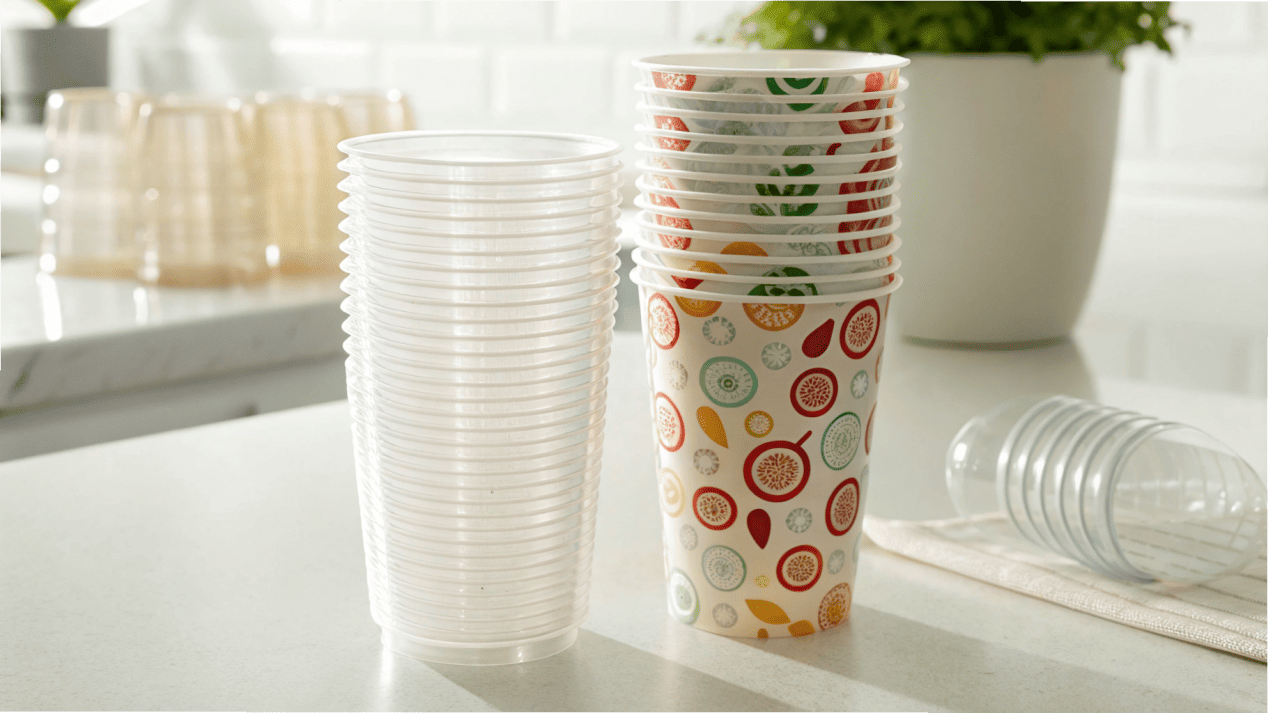
Every business decision comes down to the budget. I always tell my clients to look at the cost-per-unit, because the difference between plastic and paper can be significant, especially when you buy in large volumes. Let's look at why the prices are different.
Plastic cups1 are usually made through a process like thermoforming. This process is very fast and highly efficient, which keeps the cost down. The raw material, plastic resin, is also often cheaper than the high-grade, food-safe paperboard needed for paper cups. So, if your main goal is to minimize your cost for each scoop you sell, plastic is often the winner.
Paper cups2, however, are a more premium product, and their price reflects that. The manufacturing is a multi-step process. First, we print the brand's design on a flat sheet of paperboard. Then, we apply the coating, cut the shapes, form the cup walls, and finally attach the bottom piece. Each step adds time and cost. I advise my clients to see paper cups not as a cost, but as a strategic investment in their brand. The higher price buys you a more premium feel and better branding.
Which Cup Gives Your Brand the Best Look?
Your cup is a blank space. Using a plain cup is a missed opportunity to attract customers and reinforce your brand's identity right in their hands.
Clear plastic cups perfectly showcase visually appealing ice cream and toppings. Paper cups2 are the ultimate canvas for wrap-around, full-color branding that tells your unique story.
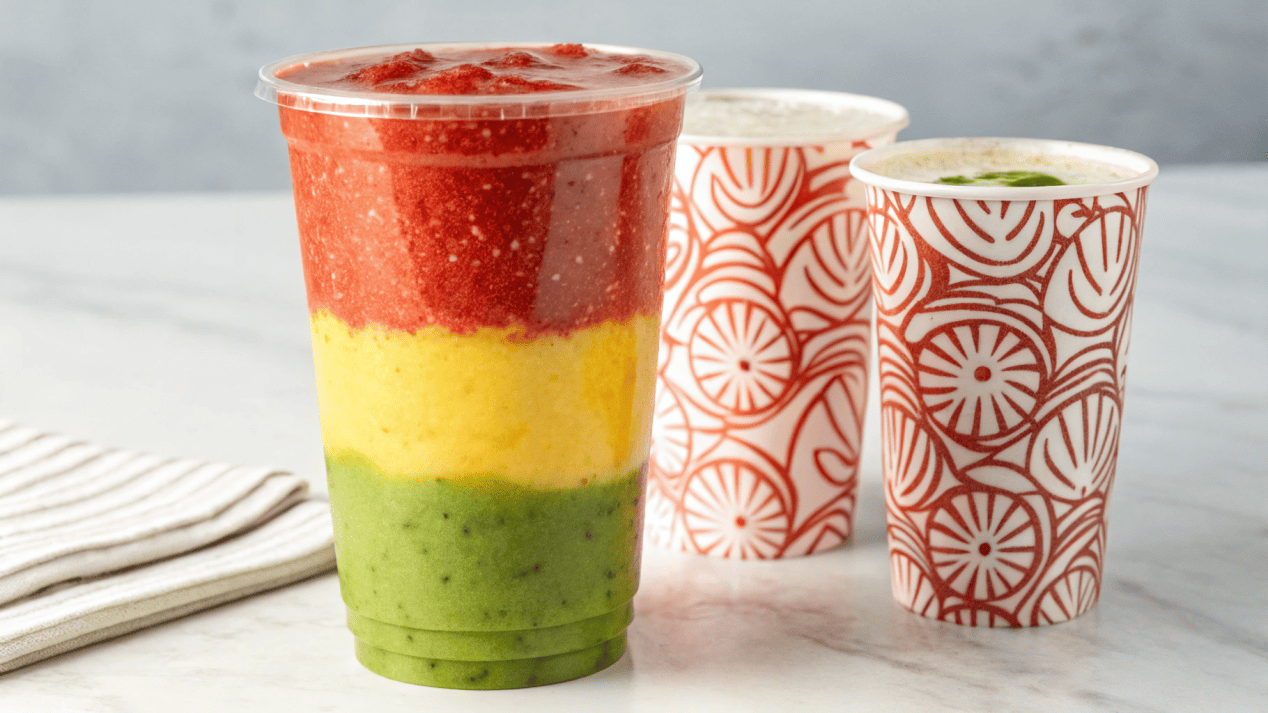
Your cup is a miniature billboard. Its look and feel directly influence how customers perceive your product before they even taste it. This is where plastic and paper offer two very different strategies.
The killer feature for plastic is transparency. I always recommend clear PET plastic cups to my partners who have beautiful products. If you sell vibrant sorbets, create amazing swirls of frozen yogurt, or layer your ice cream with colorful toppings and fruit, a clear cup lets the product sell itself. It creates an immediate visual appeal that encourages impulse buys. The aesthetic is clean, modern, and focused on the product inside.
Paper, however, is the ultimate blank canvas for your brand. It offers amazing print quality. You can use full-color graphics that wrap all the way around the cup. You can choose different textures and finishes. You can tell a fun, playful story for a family-friendly shop, or create an elegant, artisanal feel for a high-end gelateria. The opaque surface of the paper forces the customer's eye directly to your logo and branding. It makes your brand the star of the show.
Which Cup Has a Better Environmental Footprint?
Customers care about sustainability. The environmental impact of your packaging is now a huge part of your brand story, and the choice is not as simple as it seems.
PET plastic is widely recyclable and valuable. Paper comes from a renewable resource and offers compostable or plastic-free options, but its eco-benefit depends on local disposal facilities.
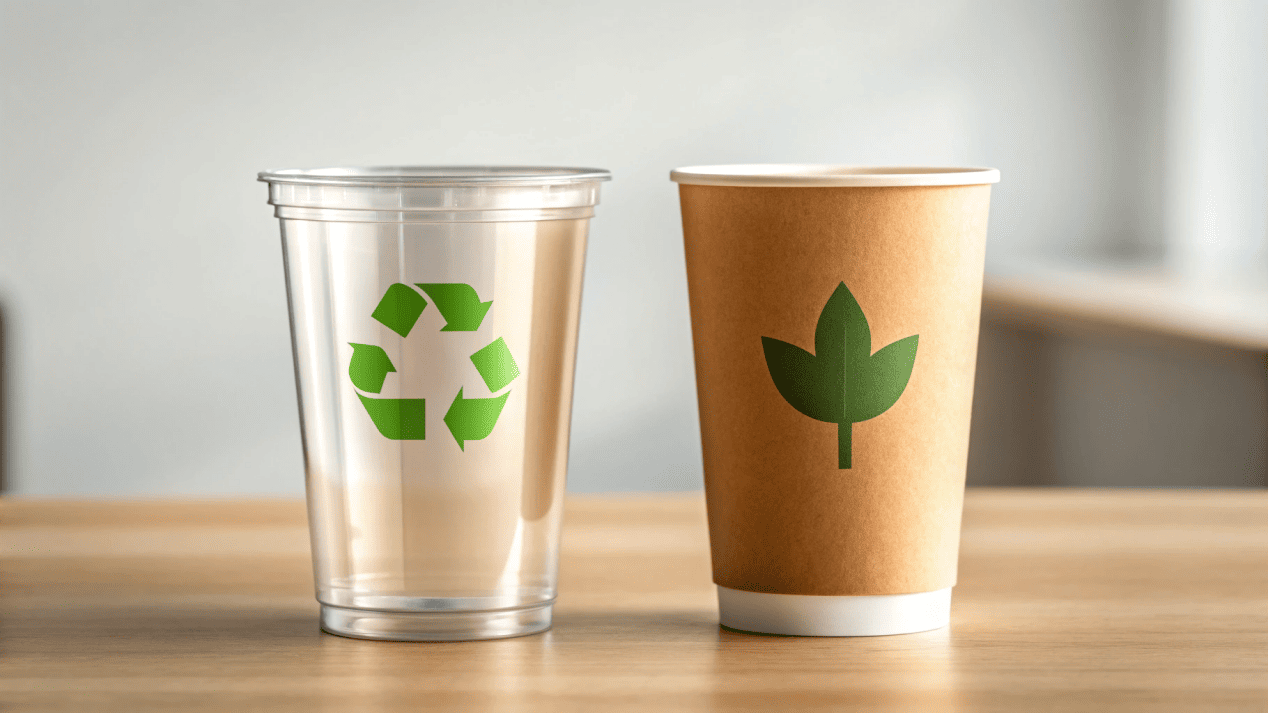
This is one of the most common questions I get, and the answer is complex. The "greener" choice depends heavily on your local recycling and composting infrastructure.
The Real Eco-Story
Let's start with PET plastic, which is plastic #1. Its big advantage is that it is widely recycled in many parts of the world. It has a high value as a recycled material and can be efficiently turned back into new products. The downside is that it is made from fossil fuels, and if it is not put in the correct recycling bin, it will pollute the environment for hundreds of years.
Now let's look at paper. Its biggest advantage is that the paperboard comes from trees, which are a renewable resource. This is a powerful marketing message. However, the end-of-life story is tricky. Standard paper cups with a PE plastic lining are very difficult to recycle. Newer options are much better. A PLA-lined paper cup is commercially compostable, which is great, but it requires an industrial composting facility that many communities don't have. A water-based coated paper cup is "plastic-free" and can be recycled with regular paper, but it is a newer and more premium technology. The real environmental benefit of any paper cup depends entirely on your customer having access to the right disposal system.
| Factor | Plastic Cups (PET #1) | Paper Cups |
|---|---|---|
| Resource | Fossil Fuels (Non-renewable) | Trees (Renewable) |
| Best End-of-Life | Widely Recyclable3 | Compostable4 (PLA) or Recyclable3 (Aqueous) |
| Eco-Challenge | Pollution if not recycled; negative perception | Relies heavily on local disposal infrastructure |
Conclusion
The best cup for your ice cream balances cost, durability, branding, and your environmental story. The right choice is the one that perfectly fits your unique business needs.
Explore the advantages of plastic cups, including durability and cost-effectiveness, to enhance your ice cream business. ↩
Discover how paper cups can elevate your brand image and provide a premium feel for your ice cream products. ↩
Learn about the recyclability of plastic cups and how it affects your brand's sustainability efforts. ↩
Discover the benefits of compostable paper cups and how they can enhance your brand's eco-friendly image. ↩