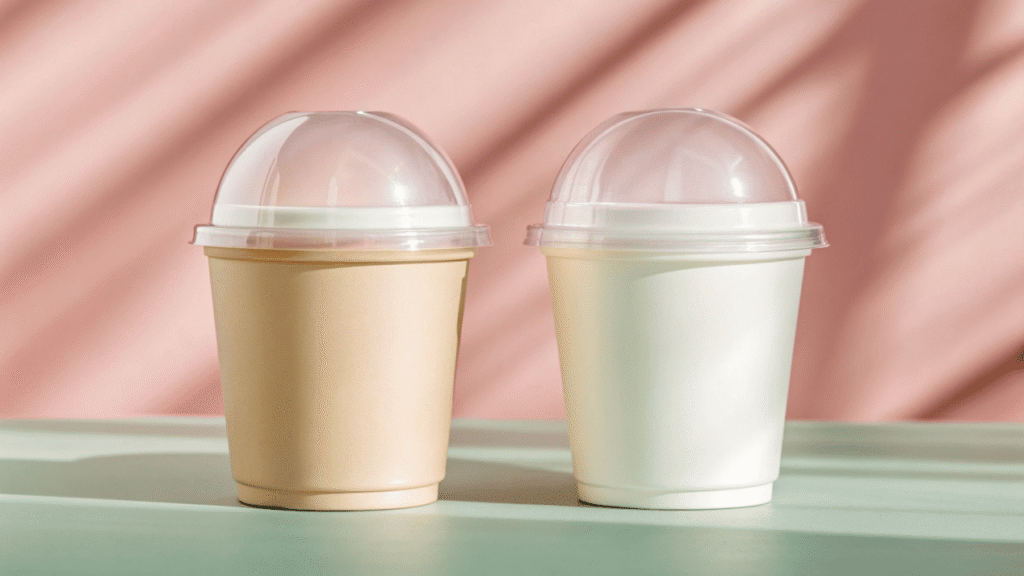
You need to choose a cup for your ice cream shop. This simple choice feels overwhelming because it impacts your brand, your budget, and the customer's entire experience.
Choose plastic cups for unbeatable durability1, lower costs, and visually showcasing your ice cream. Opt for paper cups for powerful branding2, a premium feel3, and a sustainability story4 based on renewable resources.
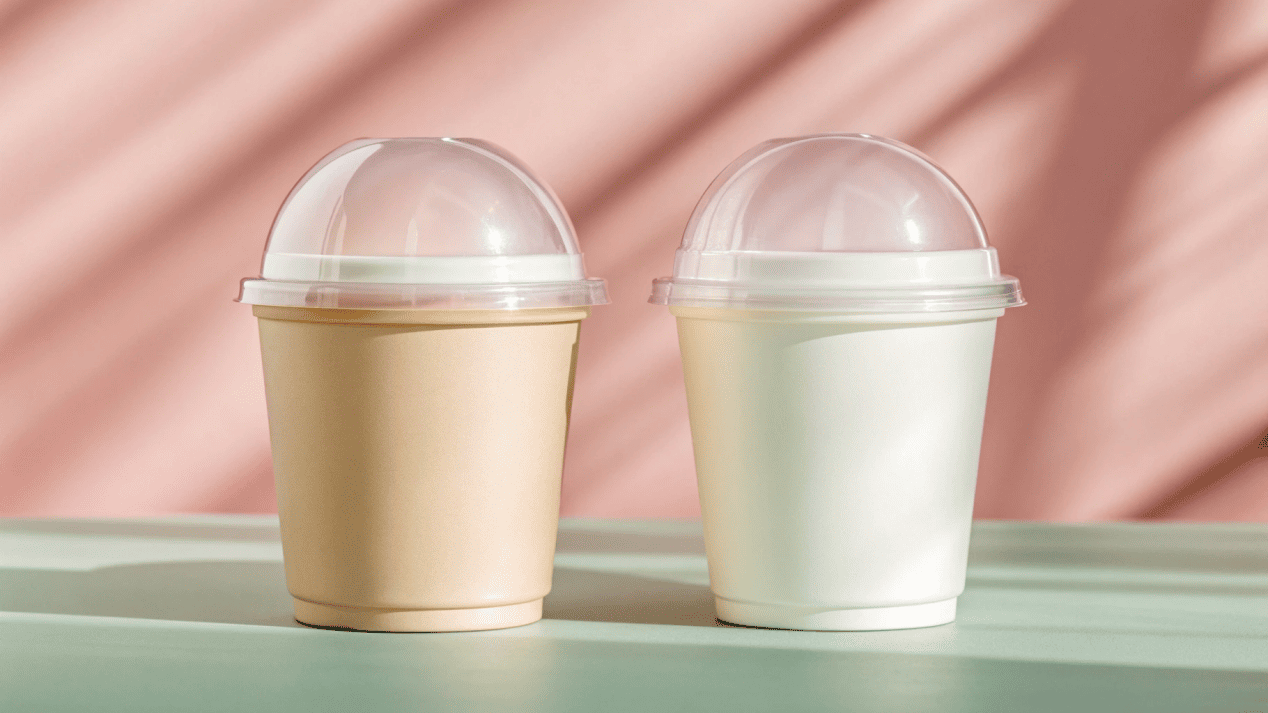
Choosing the right cup for your ice cream, gelato, or frozen yogurt is more than a simple supply order. The cup is the first thing your customer touches. It is part of the sensory experience, a mobile advertisement for your brand, and a statement about your values. The classic debate is Plastic vs. Paper. As a packaging engineer with over 15 years of experience, I know there is no single "better" option. There is only the right option for your specific business. Let's break down the four key factors to help you decide which is right for you.
Which Cup Is More Durable Against the Cold?
Ice cream melts and creates condensation. A soggy, weak cup leads to a sticky mess and a very unhappy customer, which can damage your shop's reputation.
Plastic is naturally waterproof, guaranteeing it will not get soggy. A high-quality paper cup is engineered to be leak-proof and offers better insulation, making it more comfort5able to hold.
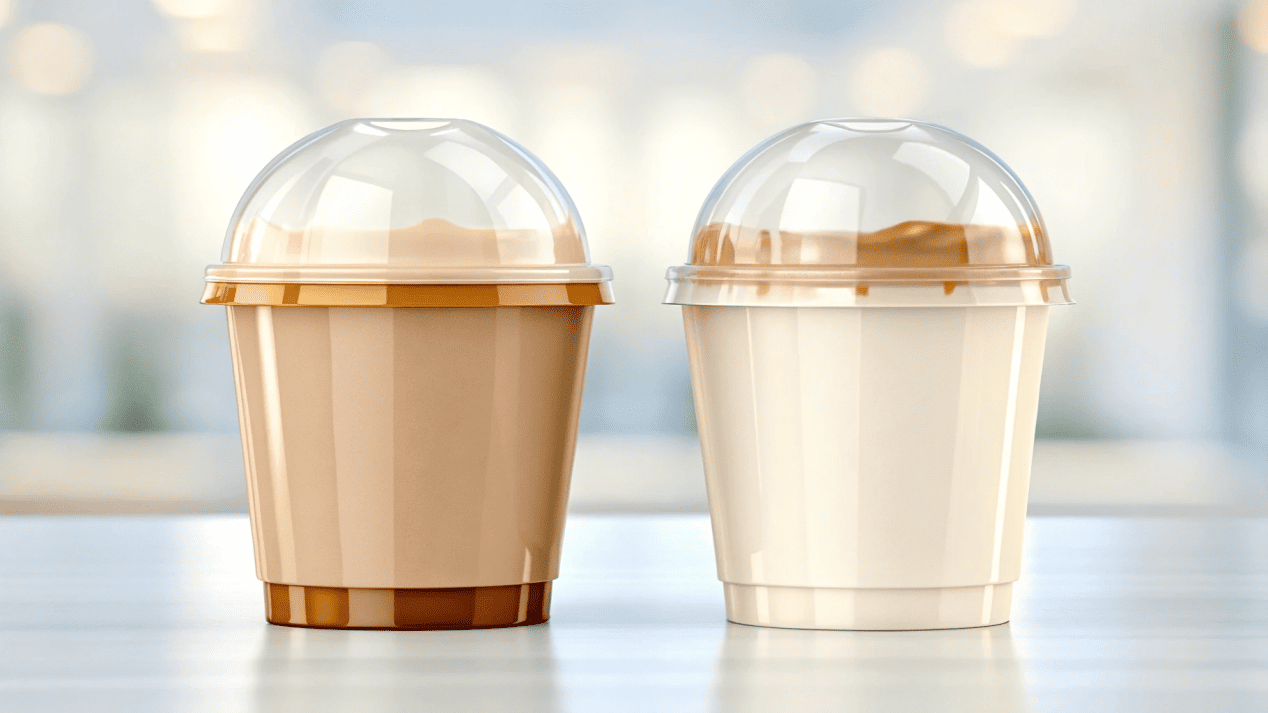
Ice cream is the ultimate packaging test. It is cold, it is wet, and it creates a lot of condensation. A cup failure is not an option. From my engineering background, I can tell you that both materials are designed to handle this, but they do it in different ways.
Plastic's greatest strength is that it is 100% waterproof. It is a solid barrier that liquid cannot pass through. This means it will not get soggy or weak, no matter how long it takes a customer to eat their treat. For businesses that pre-package ice cream for freezers, clear PET plastic is also great because it stays strong and doesn't get brittle in the cold.
Modern paper cups are also very strong. We engineer them specifically for cold and wet foods by lining them with a food-safe barrier6 like PE or PLA. This prevents leaks and keeps the cup's structure solid. A well-made paper cup feels substantial in the hand. It also offers some natural insulation from the paper fibers, which means the outside of the cup doesn't get as freezing cold. This makes it much more comfort5able for customers to hold.
| Feature | Plastic Cups | Paper Cups |
|---|---|---|
| Waterproofing | Excellent (Guaranteed) | Very Good (Engineered) |
| Hand-Feel | Can feel very cold | More comfort5able (Insulated) |
| Structural Integrity | Rigid and strong | Sturdy and substantial |
Which Cup Is Better for Your Budget?
Every business has to watch its expenses. Packaging is a recurring cost, and the price per cup can have a big impact on your overall profitability.
Plastic cups are generally the cheaper option due to a more efficient and simpler manufacturing process7. Paper cups are a premium-priced product because their production is more complex.
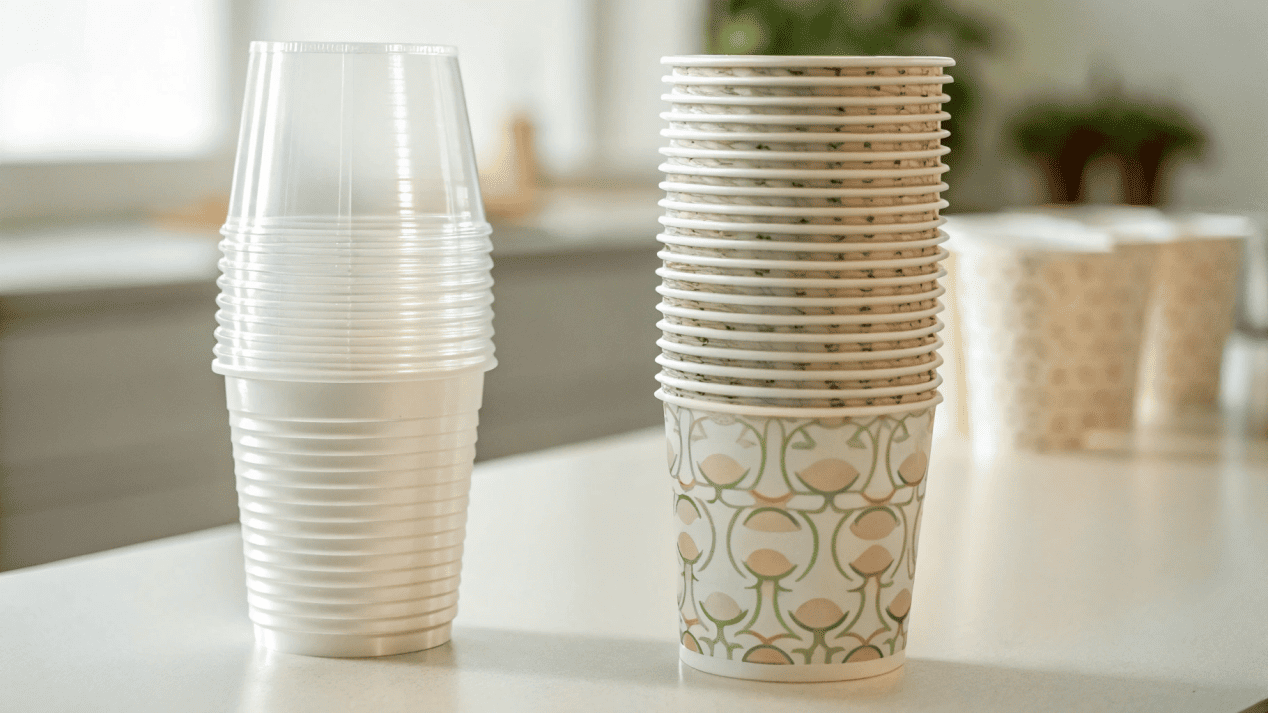
For any business, from a local shop to a national chain, the cost per unit is a critical factor. I always advise my partners to think about this carefully. The manufacturing process7es for plastic and paper are very different, and this difference is reflected in the price.
Generally, standard plastic cups are more cost-effective8 to produce. The raw materials are often cheaper, and the manufacturing process7, like injection molding or thermoforming, is highly efficient. Machines can produce a very large number of cups quickly, which brings the cost down for each individual cup. If your business model focuses on high volume and keeping the cost-per-serving as low as possible, plastic is usually the more economical choice.
Paper cups are a more premium product. Their manufacturing is a multi-step process. We have to print the design, apply the coating, form the cup walls, and attach the bottom. This complexity adds to the final cost. I encourage my clients to think of the higher cost of a paper cup not as an expense, but as a strategic investment in their brand's marketing and image.
Which Cup Is a Better Billboard for Your Brand?
Your cup leaves the store with your customer. A plain, unbranded cup is a wasted marketing opportunity9 that could be building brand recognition with every scoop you sell.
Clear plastic cups act as a window, showcasing the visual appeal10 of your ice cream itself. Paper cups are a blank canvas, offering unlimited creative control to display your brand's logo and story.
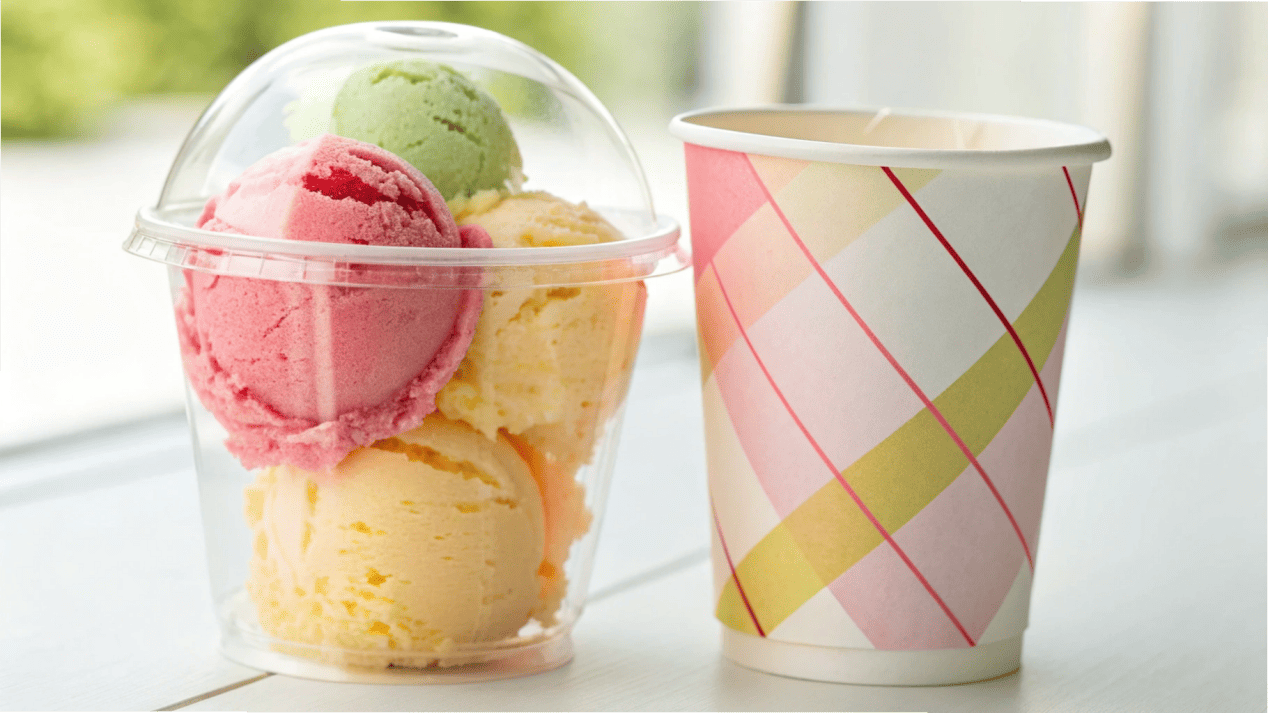
Your cup is a walking billboard. Its look is a key part of your brand identity. This is where plastic and paper offer two very different, but equally powerful, branding2 strategies.
The superpower of clear plastic is transparency. It allows you to showcase the beautiful colors, swirls, and layered toppings of your product. The ice cream itself becomes the star of the show. This creates powerful "shelf appeal" in a display freezer and can drive impulse buys11 by putting your delicious product on full display. I always tell my clients, if your product is a work of art, put it in a frame that shows it off. The vibe is modern and product-focused.
Paper, on the other hand, is the ultimate branding2 canvas. It gives you limitless possibilities for custom printing. You can have a simple, elegant logo or a full-color, wrap-around design that tells a story. You can use different finishes, like matte or gloss, to create a specific feel—from fun and playful to artisanal and luxurious. Paper puts your brand identity front and center. It forces the customer to see and remember your name.
Which Cup Has a Better Sustainability Story?
Today's customers care about the environment. Your packaging's impact is a crucial part of your brand's story, but the "green" choice is more complex than it seems.
PET plastic is highly and widely recycled, supporting a circular economy. Paper is a renewable resource and can be compostable with a PLA lining, but success depends on local waste facilities.
This is a very important topic, and I always make sure my partners understand the real story behind both materials. The "greener" choice is not simple and often depends on where your customers live.
The Case for Plastic
The main benefit of PET plastic (that's #1 plastic) is its recyclability12. It is one of the most widely recycled plastics in the world. When your customers put it in the right bin, it can be efficiently collected, processed, and turned back into new products. This is what we call a circular economy. The downside is that it's made from fossil fuels, and if it ends up as litter, it will stay in the environment for a very long time.
The Case for Paper
The main benefit of paper is that it comes from a renewable resource: trees from managed forests. This is a strong and positive message. For its end-of-life, the story depends on the lining. Standard paper cups with a PE plastic lining are very hard to recycle. However, cups with a compostable PLA lining offer a great solution in areas that have industrial composting facilities. The true eco-benefit of a paper cup is completely dependent on having the right disposal system available.
| Material | Sustainability Pro | Sustainability Con |
|---|---|---|
| Plastic (PET) | Widely and efficiently recycled | Made from fossil fuels; negative perception |
| Paper | Made from a renewable resource | Recyclability/compostability depends on lining & local infrastructure |
Conclusion
The right cup choice is strategic. It balances cost, performance, branding2, and your eco-story. Choose the one that best helps you serve a great product and build your brand.
Understanding durability can help you choose the best cup for your ice cream shop. ↩
Learn how to leverage your cup design for better brand recognition. ↩
Explore the tactile experience of different cup materials for your customers. ↩
Explore the sustainability aspects to make an informed choice for your brand. ↩
Discover how comfort can enhance the customer experience. ↩
Learn about the importance of food safety in cup materials. ↩
Understanding manufacturing can help you assess cost and quality. ↩
Discover the financial implications of choosing between plastic and paper. ↩
Explore ways to turn your cups into effective marketing tools. ↩
Find out how visual presentation can influence customer purchases. ↩
Discover strategies to increase sales through effective cup design. ↩
Learn about the recycling processes to make an eco-friendly choice. ↩