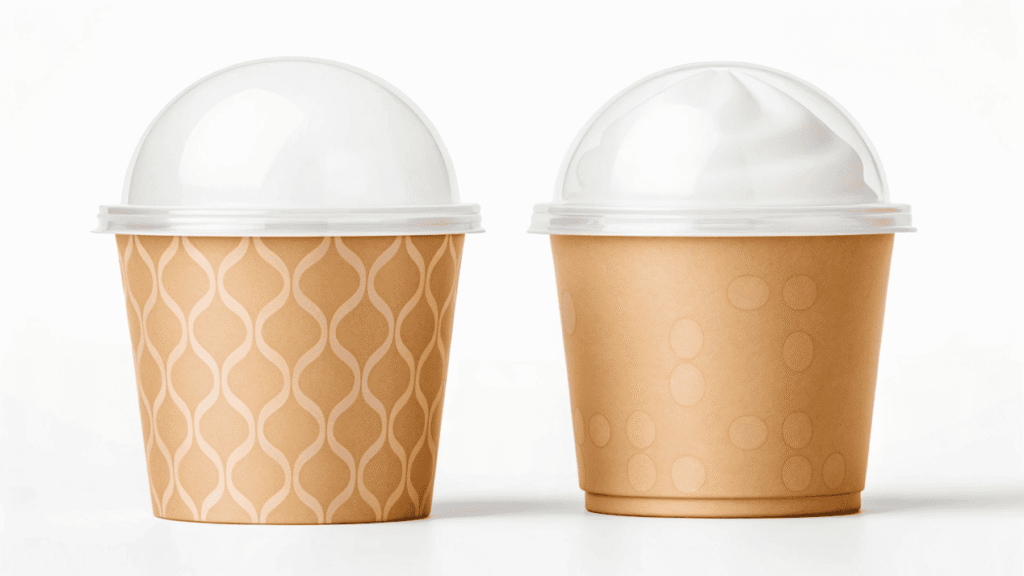
Your delicious ice cream is served in a generic cup. This cheapens the experience and sends a mixed message about your brand's values, especially regarding the environment.
Paper cups1 are better for building a brand, offering superior full-color printing and a strong eco-story with compostable options2. Plastic cups3 excel at showing off colorful product layers and can be cheaper, but have limited branding4 and a negative environmental perception.
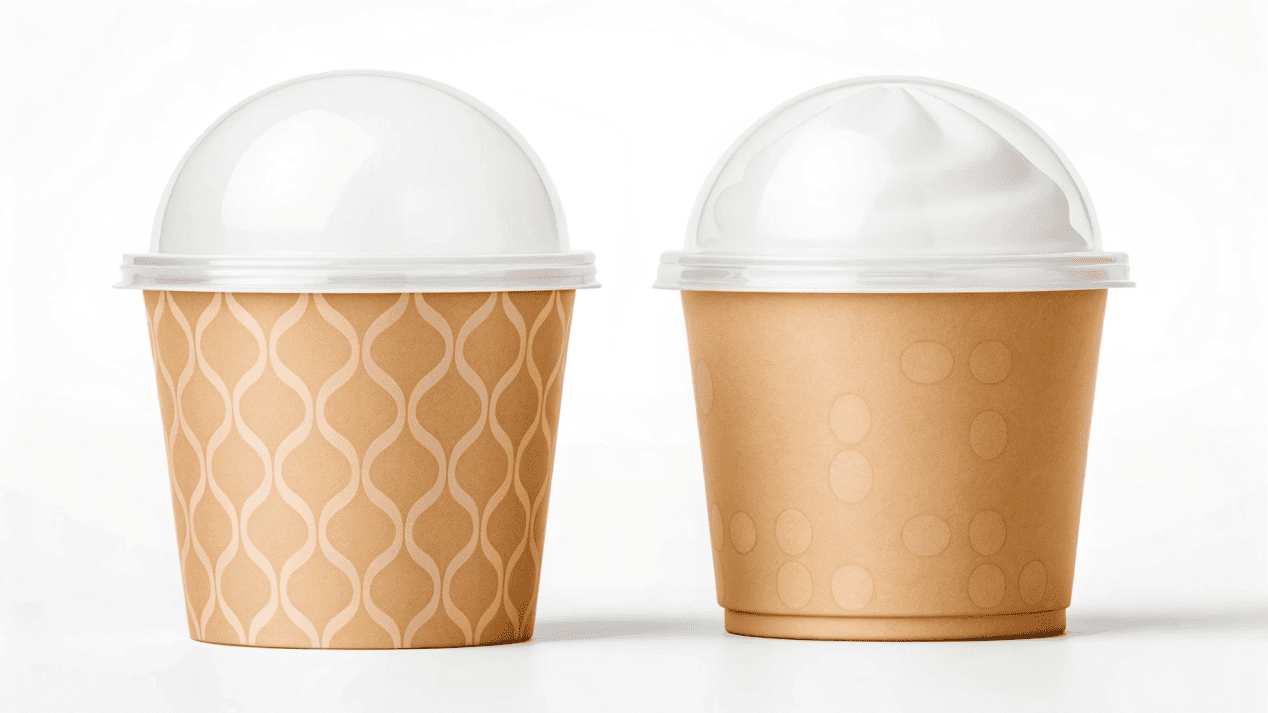
I've been manufacturing food packaging for 15 years, and this is a question I get every week. Many shop owners see a transparent plastic cup and think it's the only way to show off their beautiful product. But they are missing the bigger picture. The cup isn't just a window; it's a handshake with your customer. It tells them who you are as a brand before they've even taken a bite. Let’s look at the real differences, starting with the most important one today: the environment.
Which Cup Has a Better Environmental Story?
You want to be eco-friendly5, but single-use plastic is a major concern for today's customers. This can damage your brand's reputation and make you look out of touch.
Paper cups1 have a much better environmental story. They come from a renewable resource—trees—and can be made commercially compostable with a PLA lining6. Plastic is made from non-renewable fossil fuels and is rarely recycled effectively from food service7.

Customers today are smart, and they care about the planet. Having to throw a plastic cup in the trash can leave a bad taste in their mouth. This is plastic's biggest weakness. It's made from oil, a non-renewable resource. And while some plastics are technically recyclable, the reality is that food-contaminated containers almost never get recycled. On the other hand, paper offers a fantastic story. We make our cups from paperboard sourced from responsibly managed forests8 (FSC certified), meaning the trees are replanted. But the real game-changer is the inner lining. The standard lining is Polyethylene (PE), a type of plastic. But the superior, eco-friendly5 option is Polylactic Acid (PLA). PLA is a bio-plastic made from plant starches like corn. A PLA-lined paper cup is designed to be commercially compostable. This gives your brand a powerful, positive environmental message that customers truly appreciate.
| Feature | Plastic Cup (PET/PP) | Paper Cup (with PLA) |
|---|---|---|
| Source Material | Fossil Fuels (Oil) | Renewable (Trees, Plants) |
| End-of-Life | Landfill; difficult to recycle | Commercially Compostable |
| Customer Perception | Increasingly negative | Very positive |
Is a Branded Paper Cup More Expensive Than a Plastic One?
You see that generic plastic cups are very cheap. This tempts you to cut costs to protect your budget, but you suspect it might be a false economy.
Yes, a custom-printed premium paper cup often has a higher unit cost than a basic, unprinted plastic cup. However, its value as a powerful marketing tool9 provides a much better return on investment10 by strengthening your brand.
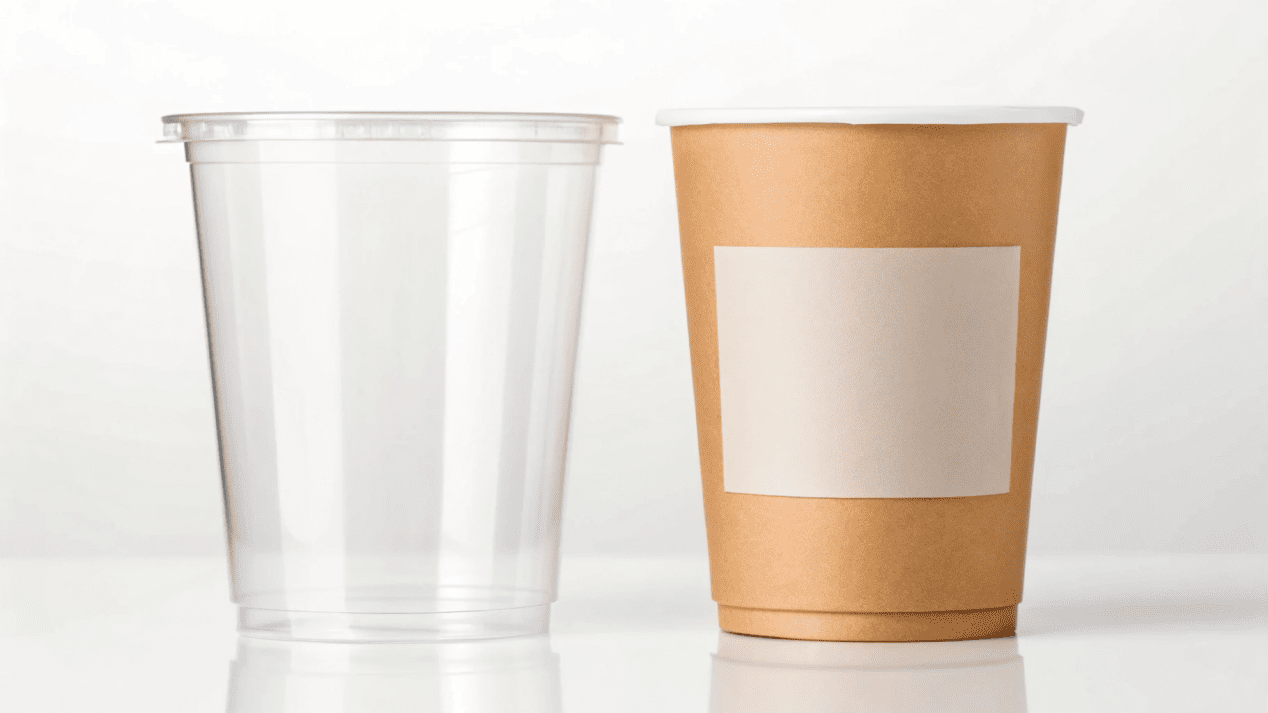
Looking only at the price per cup is a common mistake. You have to think about cost versus value. A plain, transparent plastic cup might be the cheapest single item you can buy. But what is its value? It does nothing for your brand. In fact, it makes your unique ice cream look generic. Now, consider a beautifully printed paper cup. Yes, the unit cost is higher. But you are not just buying a container; you are buying a marketing tool9. It’s a walking billboard. A few years ago, I helped a small gelato shop switch from plain plastic cups to fully branded paper cups with a cool, colorful design. They told me that within months, they saw customers taking pictures of the cups for social media. Their brand recognition in the local area skyrocketed. That's the return on investment10. The small extra cost per cup was tiny compared to the value of that free marketing. The "cheapest" option is rarely the one that makes you the most money in the long run.
Will a Paper Cup Get Soggy and Ruin the Experience?
You have seen flimsy paper cups from the past get weak and soggy. A leak can ruin a customer's day, make your product seem cheap, and damage your reputation.
No, a high-quality paper ice cream cup will not get soggy. They are made from heavy-duty, rigid paperboard with a moisture-proof11 PE or PLA coating, specifically engineered to handle frozen desserts without weakening.
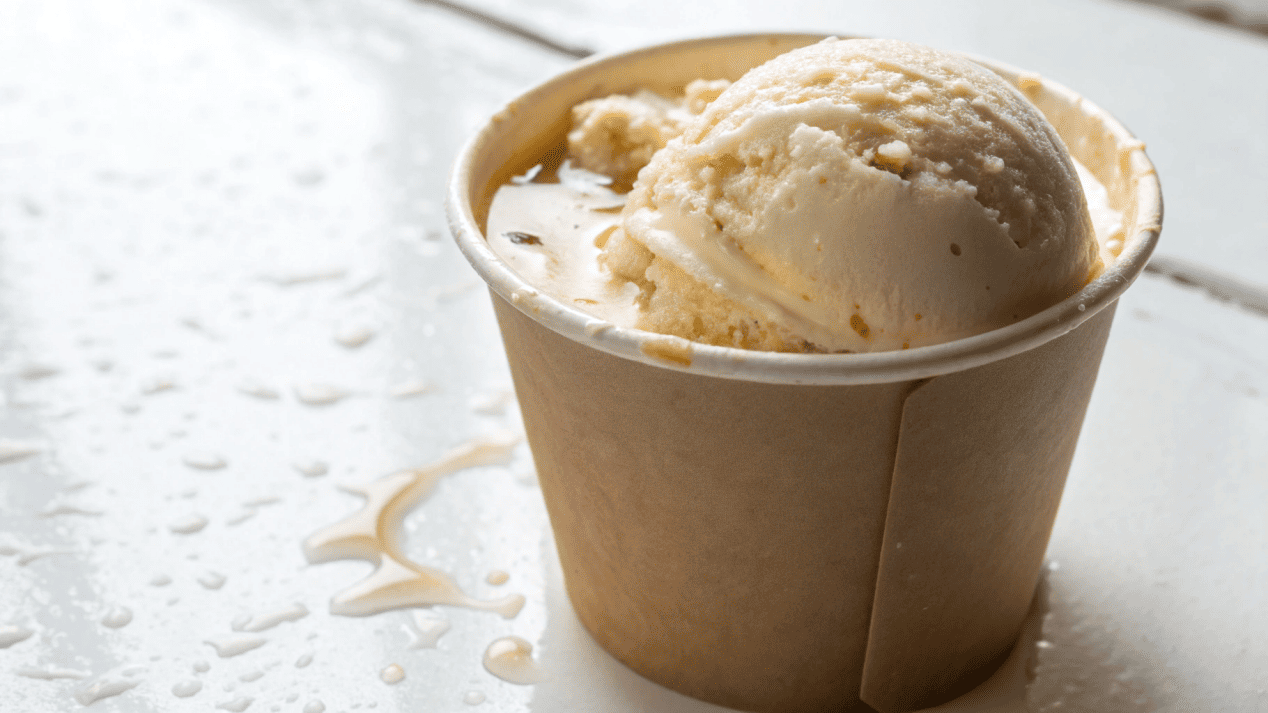
This is a fear I hear all the time, and it's based on outdated experiences with cheap, low-quality paper cups. Let me explain from an engineering perspective. The paper we use for ice cream cups is a thick, rigid paperboard, often over 300 GSM (grams per square meter). This dense material is already very strong. More importantly, the inside of the cup is sealed with a waterproof lining, either PE or PLA. This coating creates a complete barrier between the paper fibers and the melting ice cream. The paper never actually gets wet. Our manufacturing process ensures this lining is perfectly applied and the seams are heat-sealed, creating a container that is completely leak-proof. While a plastic cup is naturally waterproof, a well-made modern paper cup is specifically engineered to be just as reliable for holding a frozen dessert. We have tested our cups for hours with melting ice cream, and they stay strong and rigid. Your customers will finish their treat long before the cup ever shows any sign of weakness.
Which Cup Makes Your Brand Look Better?
You have a great brand, but a generic cup makes it invisible to potential customers. Your special, high-quality product looks just like everyone else's on the shelf or on the street.
Paper cups1 make your brand look infinitely better. They offer a 360-degree, full-color, high-resolution printing surface. Printing on plastic cups is very limited, often to just a simple one or two-color logo.
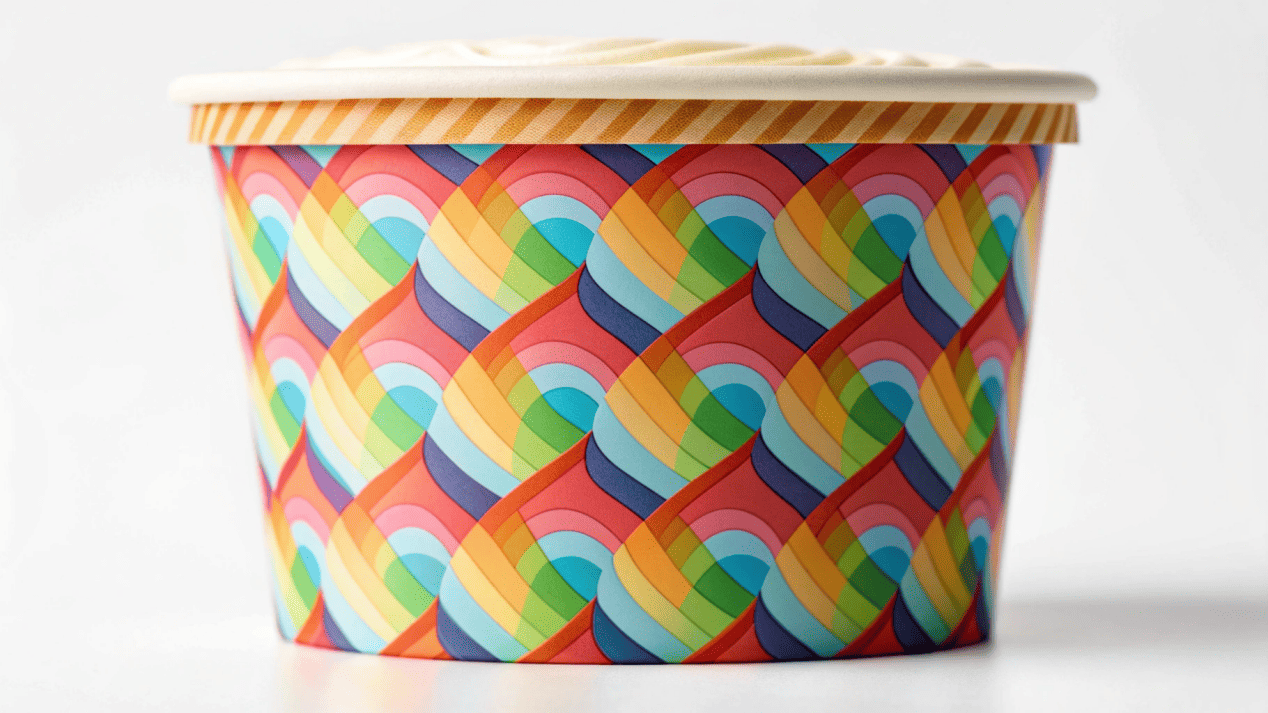
This is where paper cups are the undisputed champion. There is simply no comparison. A paper cup is a blank canvas for your brand's story. We print your design on a flat sheet of high-quality paperboard using advanced offset printing. This allows for millions of colors, sharp photos, and intricate designs. Your logo, your brand pattern, your social media handles—the entire surface is yours to command. When that flat sheet is formed into a cup, your branding4 wraps around it seamlessly. Now, compare that to plastic. Printing on a pre-formed, curved, slippery plastic surface is very difficult and limited. You are usually stuck with a simple "pad print" in one or two colors, often just on one side of the cup. Your beautiful brand is reduced to a small, simple stamp. The plastic cup is always the hero, not your brand. The question is, do you want to sell ice cream? Or do you want to build a memorable brand that sells ice cream? If you want to build a brand, the choice is clear.
Conclusion
For branding4, sustainability12, and a premium customer experience, paper cups are the clear winner. They turn your packaging from a simple expense into your best marketing tool9.
Explore how paper cups enhance branding and sustainability for ice cream businesses. ↩
Find out about the most effective compostable materials for food service. ↩
Learn about the negative perceptions and environmental impacts of plastic cups. ↩
Understand the crucial role of packaging in shaping brand identity. ↩
Discover strategies for adopting eco-friendly practices in food packaging. ↩
Learn about the advantages of using PLA lining in food containers. ↩
Explore best practices for packaging in the food service industry. ↩
Learn about the significance of responsibly managed forests for sustainability. ↩
Discover how effective packaging can enhance marketing efforts. ↩
Learn how effective packaging can lead to better ROI. ↩
Discover the best moisture-proof materials for food containers. ↩
Understand the significance of sustainability in modern packaging solutions. ↩