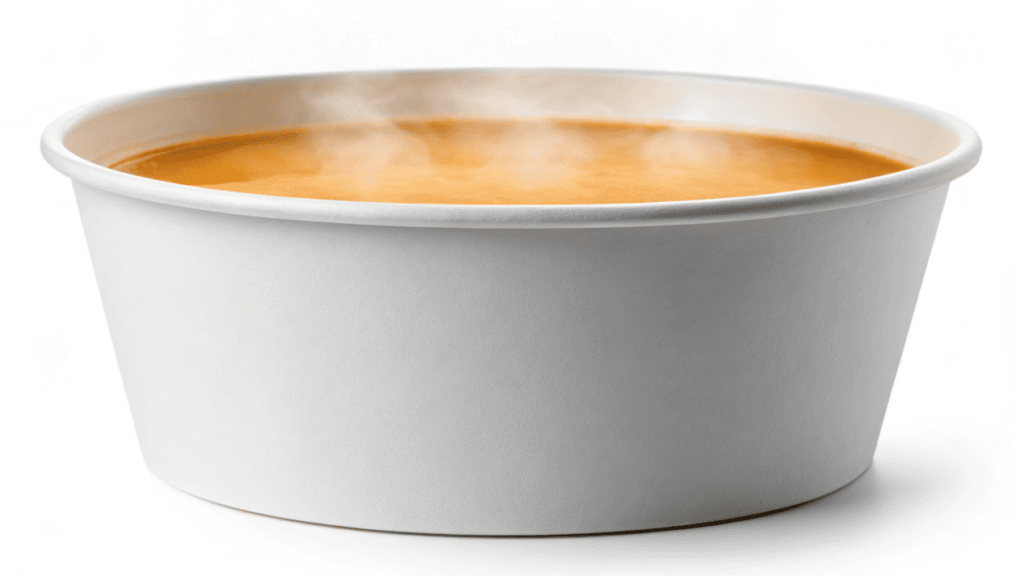
You serve a delicious, steaming soup, but worry the bowl you use might leak, become too hot to hold, or even contain harmful chemicals. This is a disaster waiting to happen.
The safest material is a high-quality, heavy-duty paperboard bowl1 with a food-safe lining2, sourced from a manufacturer with certifications like FDA and BRC. This combination ensures food safety, heat resistance3, and durability4 without compromises.
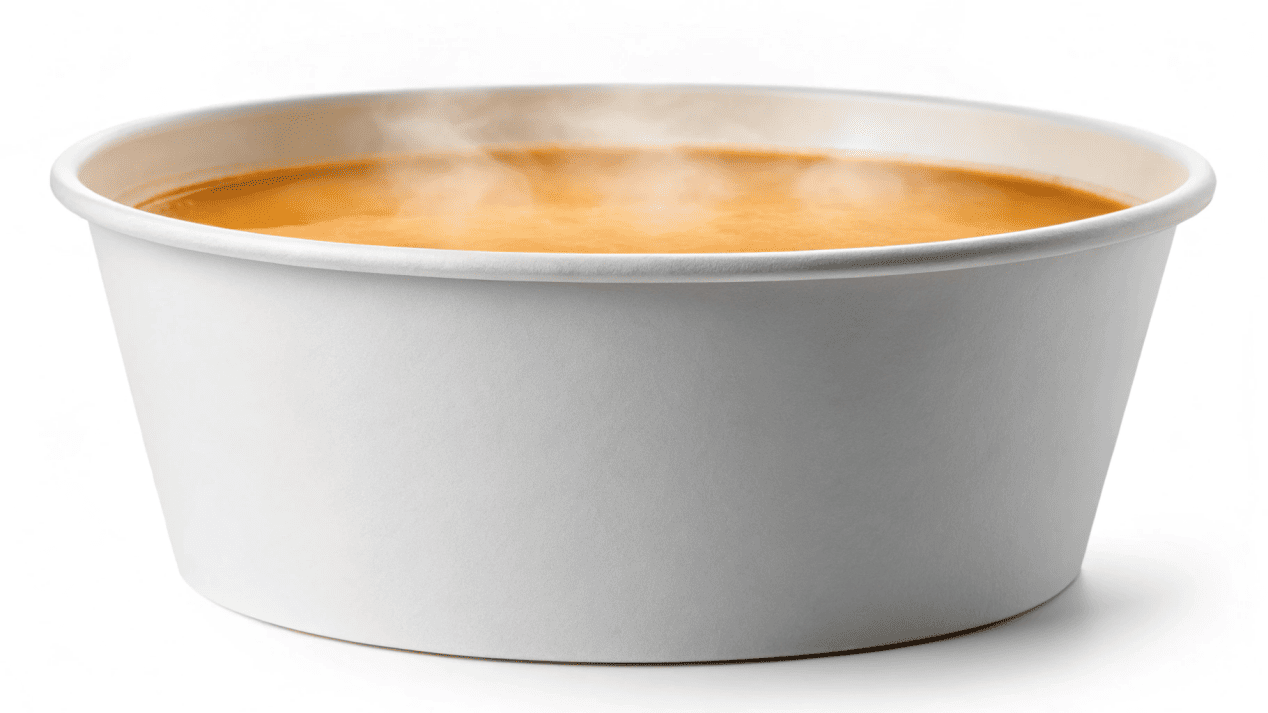
When a customer leaves your store with a hot soup, its safety and quality rest entirely on the bowl you put it in. A flimsy container is a liability. For over two decades, my company and I have engineered packaging solutions to meet these exact challenges. Your choice is a critical decision about safety, performance, and your brand's integrity. Let's analyze the common materials.
How Can You Be Sure Your Soup Bowl Is Food-Safe?
You hear troubling news about chemicals from packaging getting into hot food. You cannot risk your customers' health or your business's reputation on a container that might not be safe.
You must choose bowls from a manufacturer with global food safety certifications like FDA and BRC. These third-party audits are your documented proof that the paper, inks, and coatings are non-toxic5 and safe for contact with hot liquids.
This is the non-negotiable foundation of your choice. The material must not transfer any harmful substances into the food, especially when it is heated.
Comparing Materials on Food Safety
As an engineer, I've tested and evaluated these materials for years. Here is my direct assessment:
| Material | Safety Analysis | My Recommendation |
|---|---|---|
| Styrofoam (EPS) | A poor choice. When heated, it can potentially release styrene, a chemical that has raised health concerns. It's not suitable for hot or acidic liquids. | AVOID |
| Plastic (PP) | Generally safe. It is BPA-free and has a high melting point, making it suitable for hot liquids. However, you must ensure it's from a certified supplier. | ACCEPTABLE (with caution) |
| Coated Paperboard | The safest choice. It's a two-part system: food-grade paperboard and an inert inner lining (PE or PLA). The lining creates a barrier so soup never touches the paper fiber. | RECOMMENDED |
The safest bet is a paperboard bowl from a manufacturer like mine. My facilities operate under strict BRC Global Standards, and we use only FDA-compliant materials. This is not just a claim; it's a promise backed by rigorous, independent testing that I provide to all my clients.
Will Your Soup Bowl Prevent Burns and Leaks?
A customer tries to carry your soup, but the bowl is flimsy and burns their hand. They drop it, creating a hot, dangerous mess and a very public bad experience for your brand.
Yes, if you choose a well-designed system. A heavy-duty paperboard bowl provides natural insulation to protect hands. When paired with a perfectly matched, vented lid6, it creates a durable, leak-proof system that prevents spills during transport.
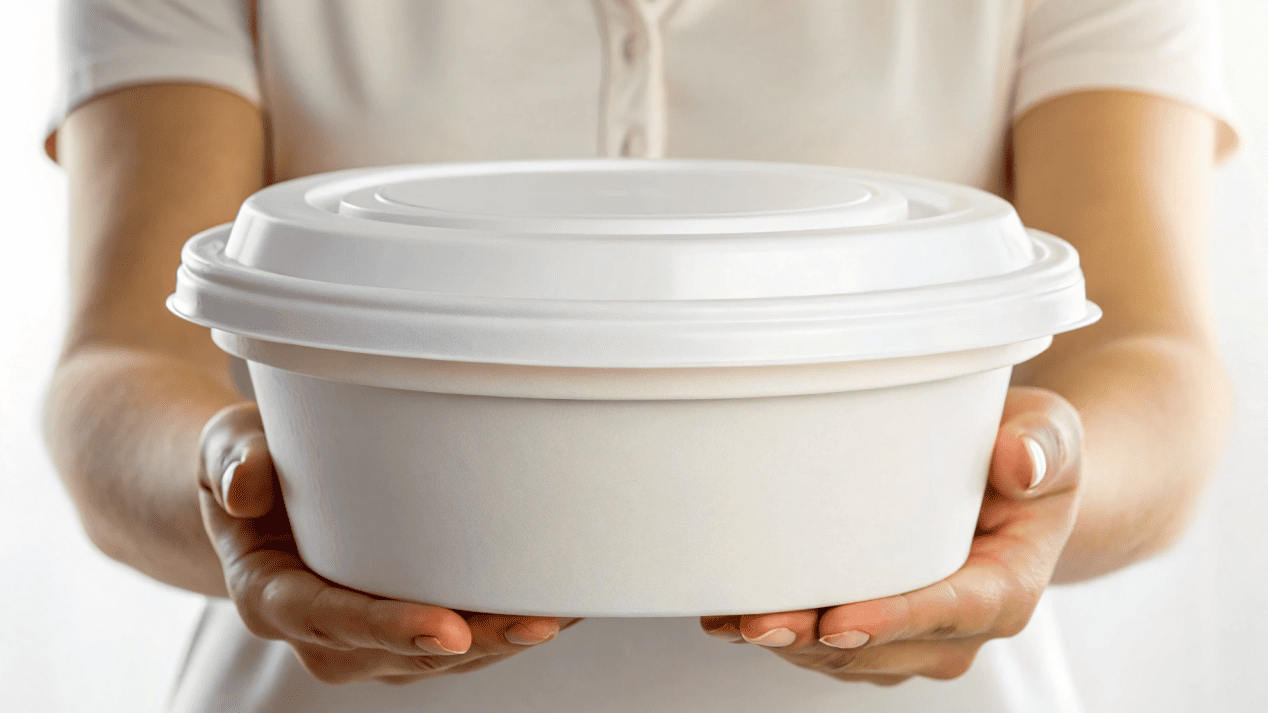
A soup bowl's journey is a dangerous one. It must be strong enough to handle boiling liquid and the bumps of travel. This requires both heat resistance3 and durability4.
Engineering for Heat and Strength
The bowl must keep its shape and be safe to handle, and it must not leak.
- Heat Resistance: Plastic (PP) bowls have good heat resistance3 (they won't melt), but they offer almost no insulation. The outside gets extremely hot, creating a burn risk. A thick paperboard bowl, however, acts as a natural insulator. The heat stays in the soup, and the outside of the bowl stays comfortable to hold. Double-wall paper bowls offer even more superior insulation.
- Durability and Leak Prevention: A paperboard bowl's strength comes from its construction. The waterproof inner lining prevents sogginess. The strong, rolled rim provides rigidity and creates a secure sealing surface for a lid. This is where the "system" concept is critical. The lid is just as important as the bowl. A vented lid6 is crucial to release steam. Without a vent, pressure can build up and pop the lid off. I engineer our soup bowls and vented lid6s as a complete system, guaranteeing a leak-proof seal.
Is There a Safe and Eco-Friendly Soup Bowl?
Your customers care about the planet. Using a material like Styrofoam that pollutes the environment can make your brand look irresponsible and out of touch.
Yes. The most responsible choice is a paperboard bowl made from FSC-certified paper7 and lined with PLA. The FSC logo proves the paper is from sustainable forests, and the PLA lining8 is a plant-based, commercially compostable9 bioplastic10.

Modern consumers expect brands to make responsible choices. Your packaging is a highly visible signal of your brand's values.
Comparing Environmental Impact
Let's be very clear about the eco-impact of each option.
| Material | Source | End-of-Life | My View |
|---|---|---|---|
| Styrofoam (EPS) | Petroleum | Pollutant. Never breaks down, fills landfills. | An environmental disaster. |
| Plastic (PP) | Fossil Fuels | Recyclable (#5), but global rates are low. | Better, but not ideal. |
| Coated Paperboard | Renewable (Trees) | Can be sustainable with the right choices. | The best option. |
The most sustainable path is a paperboard bowl that is responsible from beginning to end. That's why I offer my clients bowls made with FSC® (Forest Stewardship Council) certified paper. This proves the wood comes from forests that are managed responsibly. We then line these bowls with PLA (polylactic acid), a bioplastic10 made from plant starch. This makes the entire bowl commercially compostable9. This allows you to align your packaging completely with your brand's green values.
Conclusion
A high-quality, certified paperboard bowl is the clear winner. It offers the best combination of food safety, handling comfort, durability4, and environmental responsibility for your soup program.
Explore the advantages of using high-quality paperboard bowls for soup, ensuring safety and durability. ↩
Learn about food-safe linings and their crucial role in maintaining food safety in takeaway containers. ↩
Find out how heat resistance is vital for takeaway soup bowls to prevent burns and leaks. ↩
Explore the key factors that enhance the durability of takeaway soup bowls for safe transport. ↩
Discover which materials are non-toxic and safe for food contact, ensuring customer health. ↩
Learn why a vented lid is essential for preventing spills and maintaining safety during transport. ↩
Understand the importance of FSC-certified paper in promoting sustainable packaging solutions. ↩
Discover how PLA lining enhances the eco-friendliness of packaging materials. ↩
Learn about the benefits of using commercially compostable materials in food packaging. ↩
Explore the advantages of bioplastics in food packaging and their environmental impact. ↩