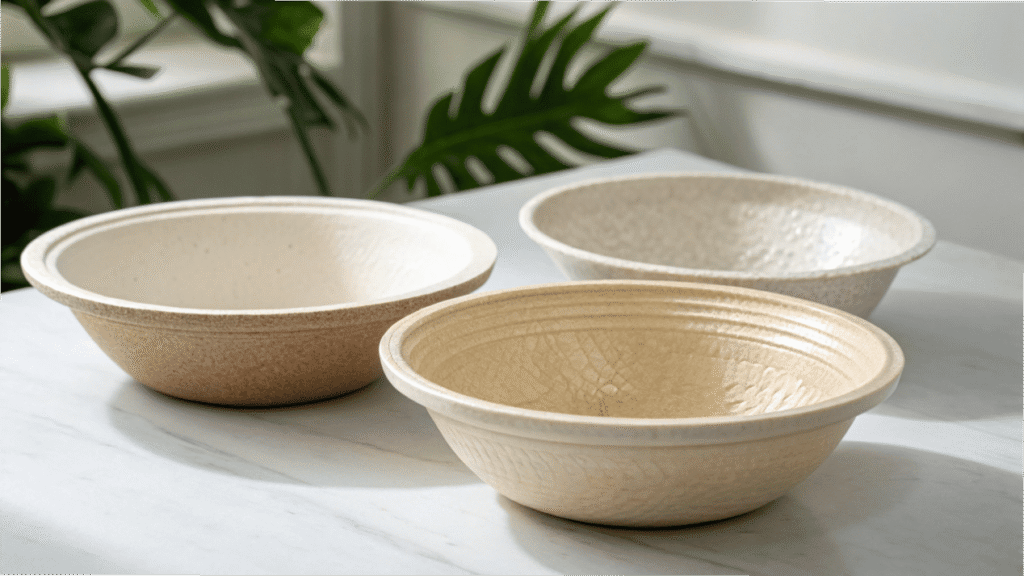
You serve food in paper bowls, but worry about what's separating the food from the paper. This invisible layer is critical for safety, yet often misunderstood.
A truly food-safe coating1 is one that meets strict health compliance2 from bodies like the FDA3, uses proven materials like PE, PLA, or Aqueous, and passes rigorous scientific testing for safety.
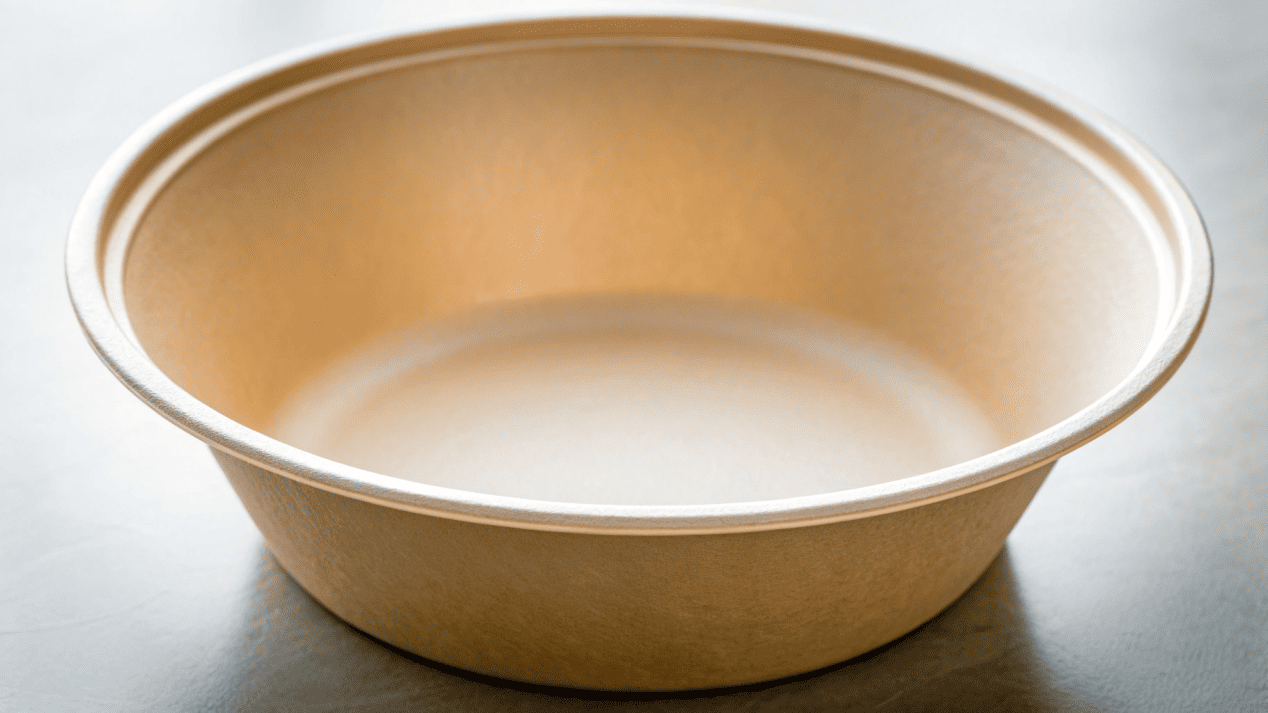
When a customer enjoys a hot soup or fresh salad from your shop, there's an invisible hero at work: the coating inside the paper bowl. This ultra-thin layer is the only thing separating your delicious food from the paper fibers. As an engineer in this industry for over 15 years, I can tell you it's one of the most critical components for food safety. But what is it really? And how can you be sure it's safe? At Haokelao Packaging, safety is the foundation of everything we build. This guide will pull back the curtain on the world of food-grade coatings4.
Why Is Health Compliance the First Step to a Safe Bowl?
You assume your bowls are safe. But one compliance failure could lead to legal trouble and completely ruin your customers' trust in your brand.
Health compliance is a legal and ethical requirement. It ensures no harmful chemicals transfer from the bowl's coating into the food, protecting both customers and your business's reputation.
Before we even talk about materials, we must talk about the rules. As an engineer, rules and standards come first. Any material that touches food is heavily regulated. The goal is to make sure that no harmful substances can "migrate," or transfer, from the packaging into the food. Global bodies like the U.S. FDA3 and the European EFSA set very strict guidelines for this. Certifications like BRCGS5 and ISO go even further. They audit our entire manufacturing process to guarantee consistent safety and quality, from the raw material we receive to the finished bowl we ship. Using non-compliant packaging is not just a legal risk. It is a direct threat to your customers' health and their trust in you. For us at Haokelao Packaging, compliance isn't just a feature on a checklist; it's the absolute baseline. This is why we are proudly certified by these top global standards. We don't just meet them; we build our entire process around them.
| Standard | What It Regulates | Importance to You |
|---|---|---|
| FDA3 / EFSA | Materials & Chemical Migration | Legal right to sell in major markets (US/EU). |
| BRCGS5 / ISO | Manufacturing Process & Quality Control | Proof of a reliable, high-quality supplier. |
What Are the Main Types of Food-Grade Coatings?
You hear terms like PE, PLA, and Aqueous. It's confusing, and choosing the wrong one can mismatch your brand's message and performance needs.
The main types are PE (polyethylene)6, a reliable and cost-effective plastic barrier; PLA (polylactic acid)7, a plant-based bioplastic that is compostable; and Aqueous, an innovative water-based coating that is recyclable.
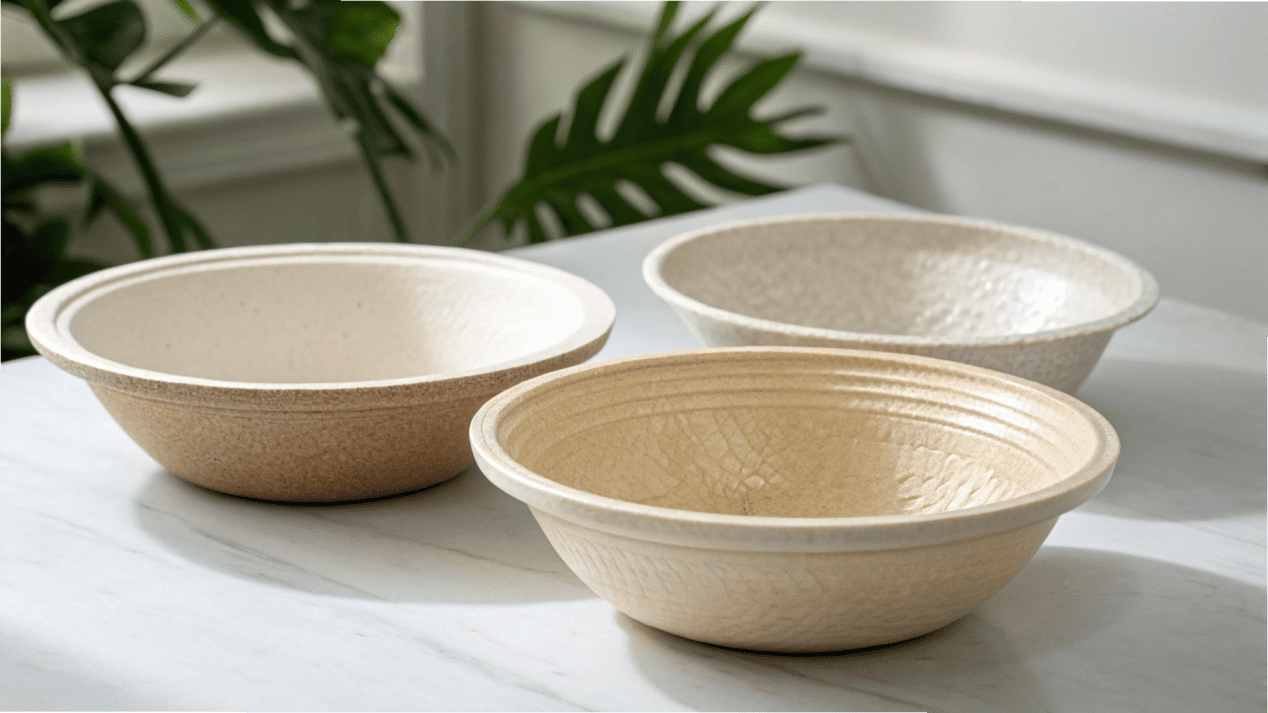
The term "food-grade coating" covers a few different technologies. Each has its own properties. For a bowl, the main job is to create a strong barrier against liquids, oils, and heat. Here are the three main options we work with every day.
PE (Polyethylene) Coating
This has been the industry champion for a long time. It is a thin layer of plastic that is bonded to the paper. It is extremely effective at creating a waterproof and grease-proof barrier. This makes it a very reliable and cost-effective choice for everything from hot soups to oily noodles.
PLA (Polylactic Acid) Coating
This is a bioplastic made from renewable resources like corn or sugarcane starch. PLA performs very well, similar to PE. Its key benefit is environmental: it is commercially compostable. I see many of our clients who focus on building an eco-friendly brand story8 choose PLA. It allows them to tell their customers their packaging is made from plants and can be composted.
Aqueous (Water-Based) Coating
This is the "plastic-free" innovation frontier. It is a water-based liquid that is applied to the paper and then cured to form a barrier. Our advanced aqueous coating formulas are specifically designed to resist heat, water, and grease, making them perfect for food bowls. The biggest advantage is that bowls with this coating are designed to be easily recycled in standard paper recycling systems.
How Do We Prove a Coating Is Actually Safe?
A supplier says their bowl is "food-grade." But how do you really know? Trusting a claim without proof could put your customers and your business at risk.
We prove safety through relentless scientific testing. This includes migration tests9 for chemical safety, sensory tests for taste and smell, and durability tests10 to ensure performance.
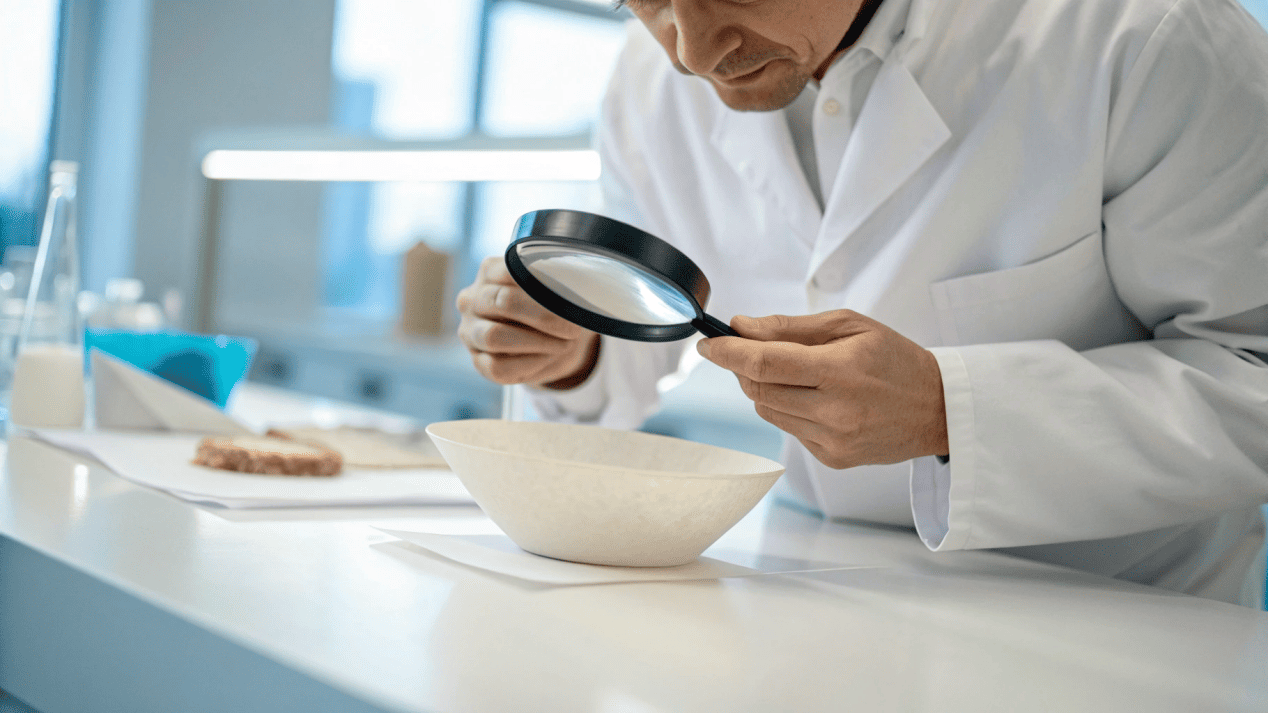
It is easy for anyone to claim a coating is "food-grade." Proving it requires science and a lot of testing. This is a non-negotiable part of our manufacturing promise at Haokelao.
Migration Testing
This is the most important test. We simulate real-world use. We fill the coated bowls with different liquids that mimic food types (acidic like tomato soup, fatty like oily noodles). We hold them at different temperatures for set amounts of time. Then, our lab uses advanced equipment to measure if any microscopic particles from the coating have "migrated" into the liquid. The results must be far, far below the strict limits set by the FDA3.
Sensory Testing
A bowl can be perfectly safe but still ruin the food if it adds a weird taste or smell. We have trained panels that test our packaging to make sure it is completely neutral. It must not change the intended flavor or aroma of your food.
Durability and Barrier Testing
We test the physical strength of the coating. We pour hot oils and boiling water into the bowls to make sure the coating does not peel, crack, or fail. This guarantees a clean, mess-free experience for your customer every time.
How Does Your Choice of Coating Affect Your Brand Image?
You think a bowl is just a bowl. But your choice of coating sends a powerful, silent message to your customers about your brand's values.
The coating reflects your brand's priorities. PE signals reliability and affordability. PLA and Aqueous coatings signal a deep commitment to sustainability and attract eco-conscious customers.

The coating you choose is a direct reflection of your brand. In my work with clients in over 80 countries, I see clear trends in how different businesses make this choice.
High-Volume & Fast-Casual
Many quick-service restaurants depend on the proven performance and low cost of PE-coated bowls. It is a workhorse solution. It gets the job done perfectly every time, guaranteeing a good customer experience with zero failures.
Eco-Centric & Health-Food Brands
Cafes and brands that focus on natural, organic, or sustainable food are quickly adopting PLA-coated and Aqueous-coated bowls. Being able to say "our packaging is compostable" (for PLA) or "our packaging is plastic-free and recyclable" (for Aqueous) is a powerful marketing tool. It connects directly with their target customers.
Premium & Specialty Food Services
For high-end food brands, investing in advanced Aqueous coatings is an investment in the future. It aligns their brand with the newest sustainability technology11. It also prepares them for future regulations against single-use plastics, positioning them as leaders in the market.
Conclusion
Choosing the right food bowl is about partnership. It's about finding a manufacturer who is as obsessed with safety, compliance, and quality as you are.
Understanding food-safe coatings is crucial for ensuring the safety and quality of your food packaging. ↩
Health compliance is essential for protecting customers and maintaining your brand's reputation. ↩
The FDA sets strict guidelines that ensure food packaging is safe for consumers. ↩
Food-grade coatings are essential for ensuring the safety and quality of food packaging. ↩
BRCGS certification guarantees high-quality manufacturing processes in food packaging. ↩
PE coatings are reliable and cost-effective, making them a popular choice for food packaging. ↩
PLA is a sustainable option that appeals to eco-conscious consumers. ↩
Eco-friendly packaging can enhance your brand's image and attract environmentally conscious customers. ↩
Migration tests ensure that harmful substances do not transfer from packaging to food. ↩
Durability tests guarantee that coatings withstand various conditions without failing. ↩
Staying updated on sustainability technology can position your brand as a market leader. ↩