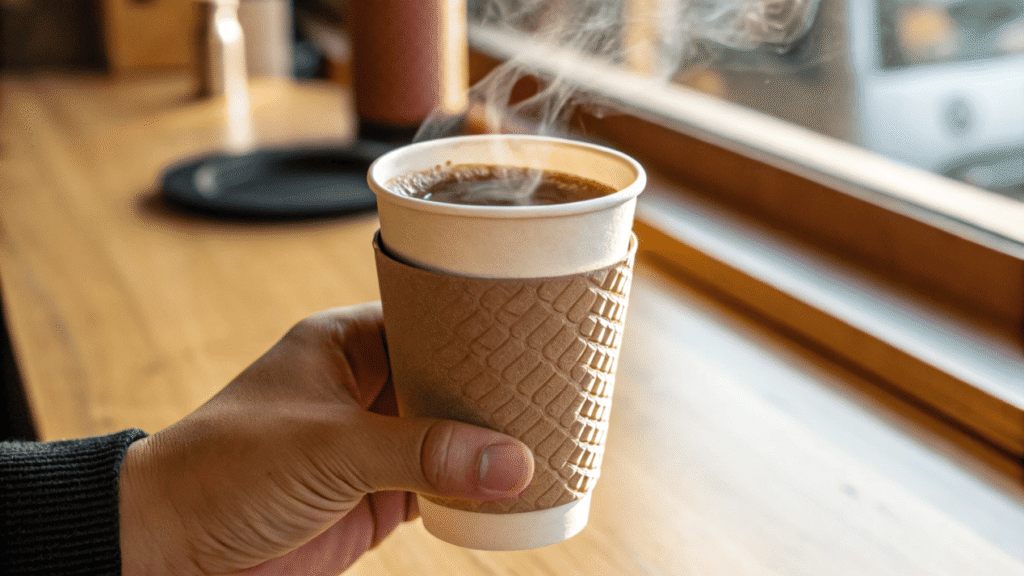
You hand a customer a cup, trusting it's safe. But "food-grade1" is often just a label. Without knowing the real standards, you risk your customer's safety and your brand's reputation.
Food-grade cups must meet four key standards: official food safety compliance (like FDA2, BRC3), strict material requirements (100% virgin pulp, food-safe inks), consumer safety performance4 (leak-proof5, strong), and scientific verification through testing.
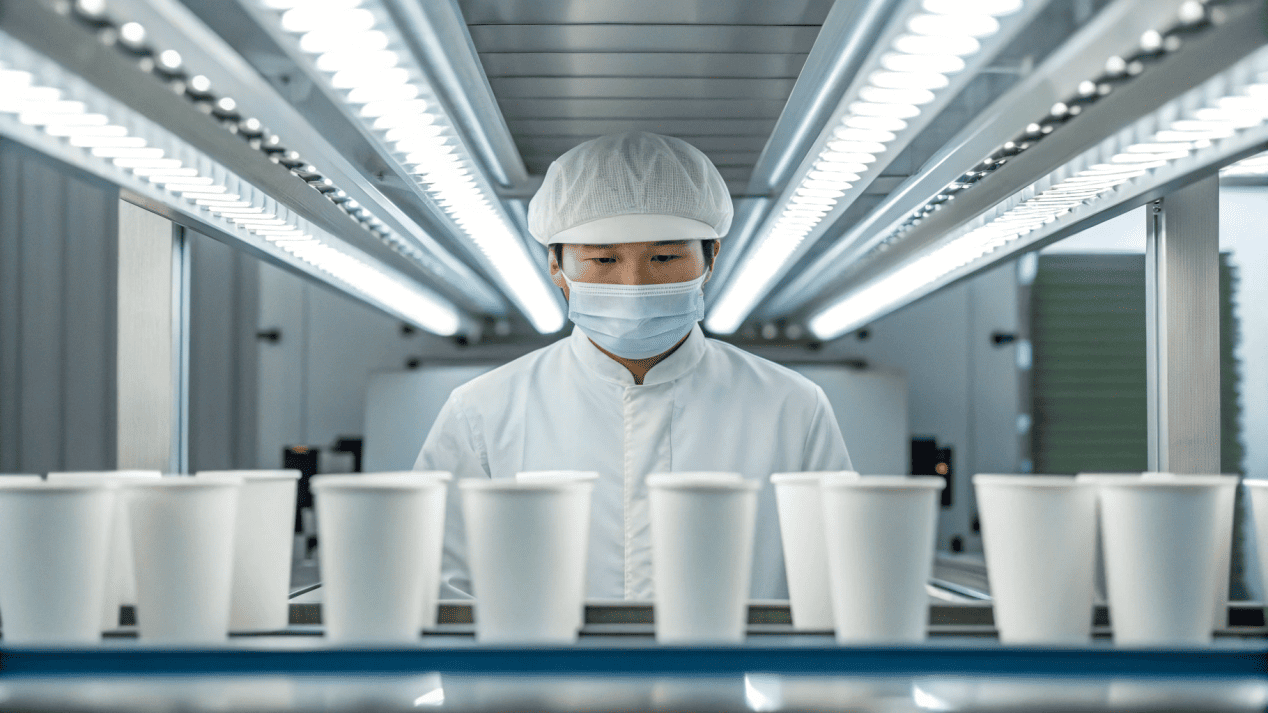
Behind every safe, reliable paper cup is a strict set of quality standards. They govern everything from the raw trees to the finished product in your customer's hand. As a global leader with certifications like FDA2, BRC3, and ISO, my team and I live by these standards every day. This is my expert guide to understanding the absolute, non-negotiable qualities your food-grade1 paper cups must meet to protect your business and your customers.
How Can You Verify a Cup is Truly Safe?
You see certifications like FDA2 or BRC3 on a supplier's website. But these can feel like just a string of letters, leaving you unsure of what they really guarantee.
These certifications are the official seal of trust. FDA2 approves materials, BRC3 audits the entire factory for hygiene and safety, and ISO 90016 proves the manufacturer has consistent, high-quality processes.
This is the foundation of trust. If a manufacturer cannot show you these certifications, you should not work with them. It is that simple. In my 15 years in this industry, I have learned that these are not just pieces of paper to hang on a wall; they are proof of a deep commitment to a culture of safety. In my factory, we follow these rules religiously, ensuring the products we send to over 80 countries are unequivocally safe. Let’s break down what the most important ones mean for you, the person buying the cups.
| Certification | What It Guarantees | My Perspective |
|---|---|---|
| FDA2 | All materials are approved for direct food contact in the US market. | This is the most basic ticket to entry for selling in North America. It means the paper, the coating, and the ink are all considered safe. |
| BRC3 | Audits the entire manufacturing process for safety, hygiene, and quality. | This is a much tougher standard. BRC3 inspectors come to my factory and check everything: Are our workers following hygiene rules7? Is the factory clean? How do we prevent contamination? It's about a safe process, not just a safe material. |
| ISO 90016 | The manufacturer has a Quality Management System to ensure consistency. | As an engineer, I love this one. It proves we have repeatable, documented processes. It means the first cup and the millionth cup in an order are made to the exact same high standard. |
What are Food-Grade Cups Actually Made Of?
You assume any paper cup is fine for food. But using the wrong paper, ink, or inner coating can allow harmful substances to leach into your customer's drink.
A safe paper cup must be made from three key things: 100% virgin wood pulp8 paperboard, a certified food-grade1 PE or PLA inner coating, and non-toxic, food-safe, water-based inks.
A cup is only as safe as the materials used to make it. There can be no compromise here. This is an area where I am extremely strict in my own factory's sourcing. First, the paperboard itself must be made from 100% virgin wood pulp8. Using recycled paper is never acceptable for direct food contact like a cup. You simply do not know what contaminants—like old ink or chemicals from its past life—could be in that recycled paper. It is a risk you cannot take. Second, the inner coating that makes the cup waterproof must also be certified as food-grade1. This applies to both the traditional Polyethylene (PE) plastic lining and the newer, plant-based Polylactic Acid (PLA) lining. Finally, we must talk about the ink. This is a critical detail people often overlook. The beautiful logo on the outside of your cup must be printed with inks that are food-safe, non-toxic, and low-odor. We exclusively use water-based inks to ensure zero harmful chemicals can pass from the cup's exterior into the drink inside.
Is a Cup Safe if It Just Breaks or Leaks?
A cup might be made of safe materials. But if it gets soft and leaks hot coffee onto your customer, it has failed. This is a safety hazard and a brand disaster.
No. Consumer safety goes beyond materials to include performance. A food-grade1 cup must have perfectly sealed seams to be 100% leak-proof5, a smooth and strong rim9, and be taste- and odor-neutral10.
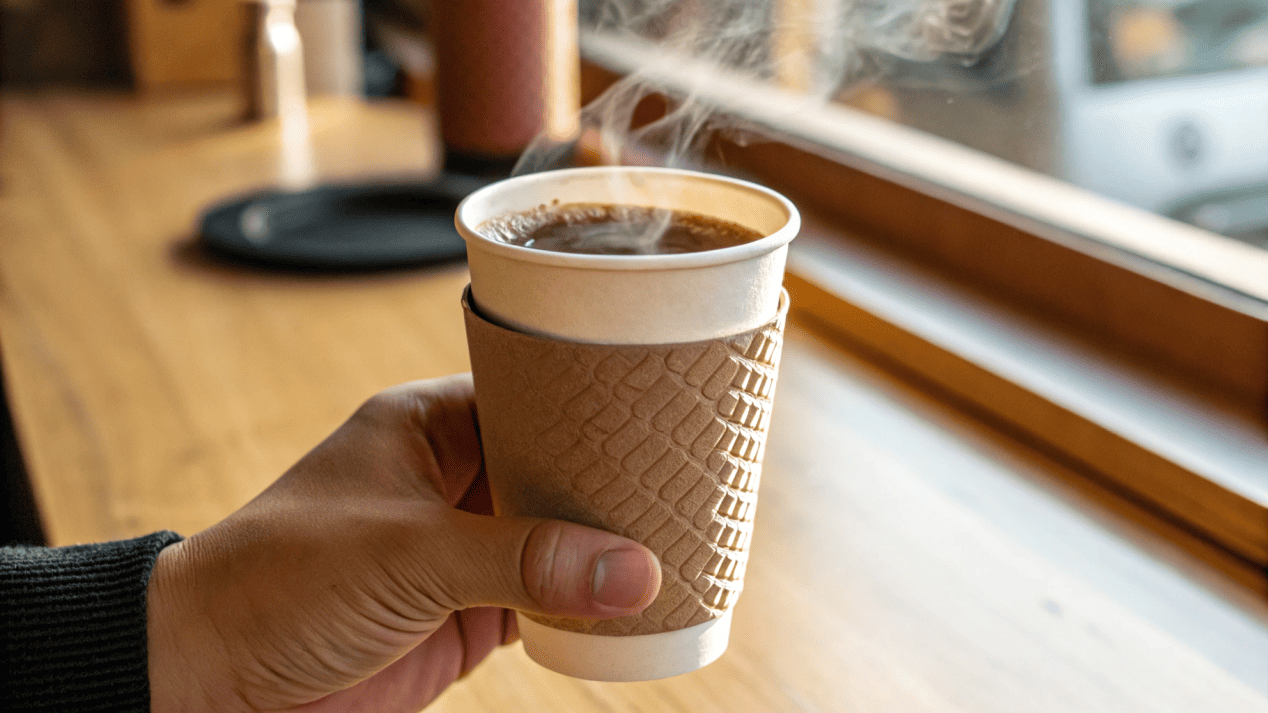
As a mechanical engineer, this is where product design and manufacturing precision become critical. A cup is not just a mix of materials; it is a piece of engineering that has to perform under stress. The weakest point of any paper cup is the seam where the paper joins together. We use advanced ultrasonic heat-sealing technology to create a bond that is incredibly strong and 100% leak-proof5. Each batch of our cups is pressure tested to ensure this seam will not fail, even with very hot liquids. The second critical structural point is the rolled rim at the top. It must be smooth, uniform, and tightly formed. A poorly formed rim is uncomfortable to drink from and, more importantly, it will not create a secure seal with a lid. That leads directly to spills. Finally, the cup must be an invisible partner to your product. This means it cannot add any foreign taste or smell. We conduct sensory tests to guarantee the customer tastes your delicious coffee, not our paper cup.
How Can You Prove a Cup Meets These Standards?
A supplier can make many promises about their quality. But without clear proof, how can you trust that every single cup in a shipment of thousands is actually safe?
Proof comes from rigorous, scientific testing11. This includes migration testing12 to check for chemical leaching, a full traceability system13 to track all raw materials, and constant quality control checks14 during production.

Promises are easy to make; proof requires a serious investment in technology and process. In our company, we prove our quality in three main ways. First is migration testing12. This is a laboratory test where we simulate the cup in use. We fill a cup with a special liquid that mimics a beverage, heat it to a specific temperature for a set time, and then we test that liquid. We are looking for any microscopic particles from the paper, coating, or ink that may have "migrated" into the liquid. The levels must be far below the strict safety limits set by the FDA2. Second is traceability. I can take any cup we have ever made and trace it all the way back to the exact batch of paper, coating, and ink it was made from. If we ever found an issue with a roll of paper, this system allows us to instantly identify and isolate every single cup made from it. Third is constant quality control. Throughout production, my team pulls sample cups every hour to test them for defects, print quality, and structural strength.
Conclusion
Choosing a packaging provider is a decision about trust. True food-grade1 quality is a promise backed by official certifications, pure materials, robust performance, and scientific proof. Your brand deserves this foundation.
Understanding food-grade standards is crucial for ensuring safety and compliance in food packaging. ↩
Explore how FDA certification ensures materials are safe for direct food contact, protecting consumer health. ↩
Learn about BRC certification and its role in ensuring hygiene and safety in food manufacturing processes. ↩
Learn how consumer safety performance ensures that food packaging meets safety and quality expectations. ↩
Understand the engineering behind leak-proof designs in paper cups to prevent spills and enhance safety. ↩
Discover how ISO 9001 certification ensures consistent quality management in manufacturing. ↩
Learn about the hygiene rules that ensure safe food production and protect consumer health. ↩
Find out why using virgin wood pulp is essential for preventing contamination in food-grade products. ↩
Discover how a strong rim contributes to the overall safety and usability of paper cups. ↩
Explore why taste- and odor-neutral packaging is essential for preserving the quality of food and beverages. ↩
Discover the rigorous testing methods used to ensure food packaging meets safety standards. ↩
Learn how migration testing helps identify potential chemical leaching from packaging materials. ↩
Explore how traceability systems enhance safety and accountability in food packaging production. ↩
Understand the importance of quality control checks in maintaining high standards in food packaging. ↩