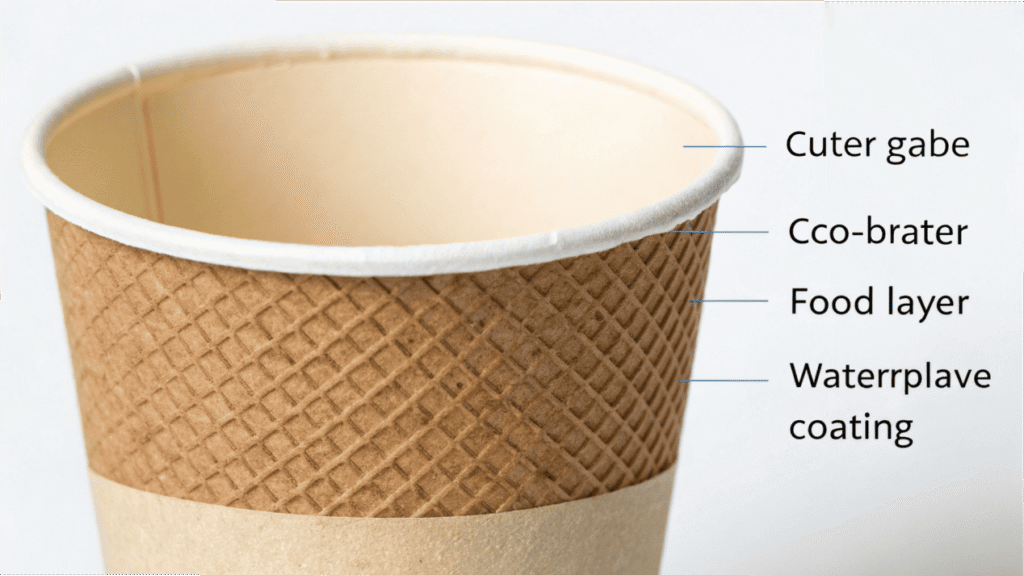
The invisible lining in your paper cup matters. This hidden layer affects your health and the planet, but it's a choice you're making without all the facts.
Most paper cups are lined with plastic (PE or PLA), which can shed microplastics1 and hinder recycling. The superior, safer alternative is a plastic-free2, water-based Aqueous coating3 that makes the cup truly recyclable4 and eliminates health risks5.
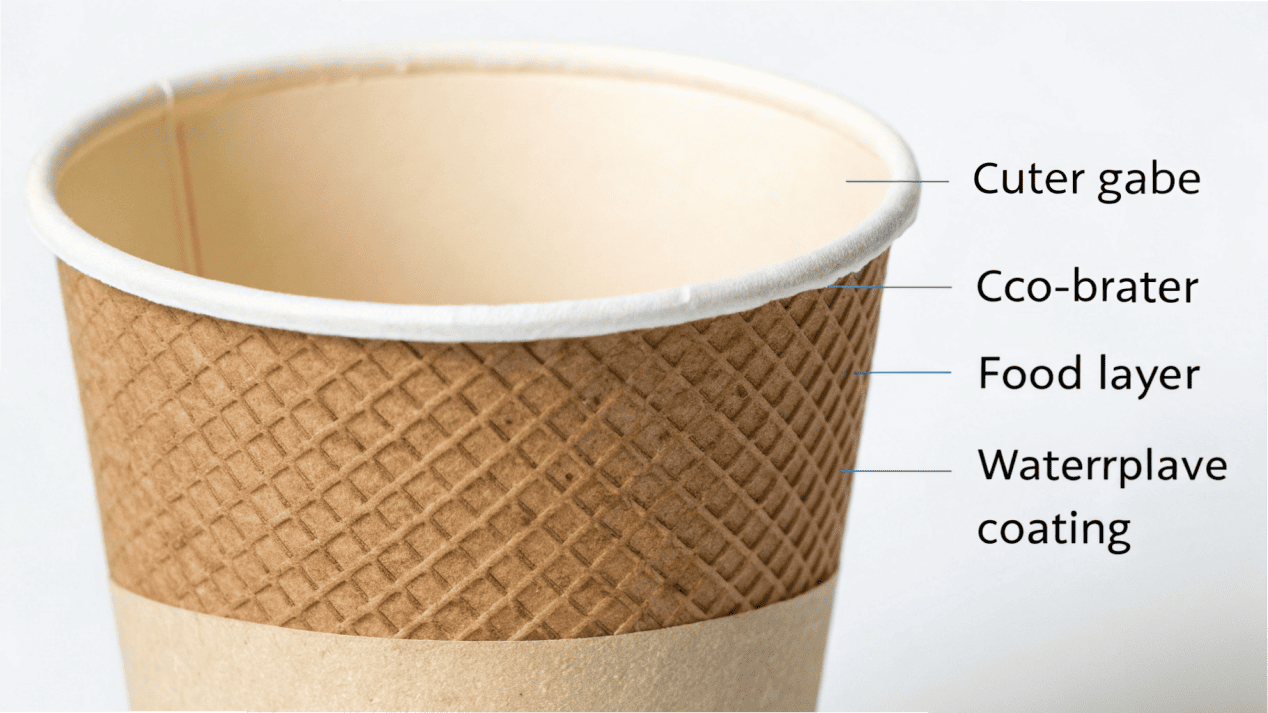
As an engineer, I'm fascinated by the science of how things are made. For a paper cup, the most important part is the invisible coating that keeps it from getting soggy. For decades, our industry used the cheapest and easiest option: plastic. It worked, but we ignored the long-term cost to our health and the environment. I've spent my career looking for a better way. It's not just about making a cup that doesn't leak; it's about making a cup that's safe for people and easy to dispose of responsibly. Let's break down the three main options you'll find today.
What Are the Different Types of Cup Coatings?
You see terms like "eco-friendly" and "plant-based6," but these labels are confusing. The vague marketing makes it hard to know if you're making a truly sustainable choice7.
There are three main coatings: PE (standard plastic)8, PLA (a compostable9 bio-plastic), and Aqueous (a plastic-free2, water-based sealant10). PE and PLA are plastics, while Aqueous coating3 integrates with the paper itself.
When I talk to clients, I simplify it like this: you have two types of plastic and one true paper solution. It's crucial to understand what they are made of, not just what the marketing says.
The Three main coatings are:
- Polyethylene (PE) Coating: This is the old industry standard. It's a thin film of plastic made from petroleum. It's simply laminated onto the paper. It’s cheap, effective, and everywhere.
- Polylactic Acid (PLA) Coating: This is often marketed as a green alternative. It's a "bio-plastic" made from plant starches like corn. While it comes from a renewable source, it is still a type of plastic that is applied as a film.
- Aqueous (Water-Based) Coating: This is the technology we champion at Haokelao. It is not plastic. It's a water-based liquid that is sprayed onto the paper. It seeps into the fibers and makes the paper itself water-resistant from within.
| Coating Type | Material Source | Classification | Application Method |
|---|---|---|---|
| PE | Petroleum | Plastic | Laminated Film |
| PLA | Plant Starch (e.g., Corn) | Bio-plastic | Laminated Film |
| Aqueous | Water-based Polymers | Plastic-Free Sealant | Sprayed On |
Could Your Coffee Cup Be Leaching Microplastics?
You drink hot coffee from a paper cup every day. But that hot liquid could be releasing thousands of tiny microplastic particles directly into your body from the cup's lining.
Yes. Studies show hot liquids cause plastic linings (both PE and PLA) to release tens of thousands of microplastic particles. A plastic-free2 Aqueous coating3 is the only way to fundamentally eliminate this risk.
When I first read the 2020 study from the Indian Institute of Technology, it confirmed a worry I'd had for years. The study found that pouring hot liquid (85-90°C) into a typical plastic-lined cup for just 15 minutes can release around 25,000 microplastic particles into your drink. As an engineer who helps make these products, that number is shocking.
The Plastic Problem
Both PE and PLA are plastics. They are polymers that degrade when exposed to heat. This means that whether the plastic comes from petroleum or from corn, it has the potential to break down and shed these tiny particles into your beverage. While research on the long-term health effects is ongoing, the fact is that you are directly drinking plastic.
The Plastic-Free Solution
The logic for solving this is very simple from my perspective. If you don't want to drink plastic, you need to remove the plastic from the cup. Because our Aqueous coating3 is a water-based sealant10 and not a plastic film, it eliminates the source of the problem. No plastic means no microplastics1. It’s a cleaner and safer choice.
Are 'Eco-Friendly' Cups Actually Good for the Planet?
You buy cups labeled "recyclable4" or "compostable9" to help the environment. But most end up in landfill11s anyway, making your good intentions lead to more waste.
Not usually. PE-lined cups contaminate paper recycling. PLA-lined cups need rare industrial composters and contaminate recycling, too. Only Aqueous coated cups are truly eco-friendly because they can be recycled anywhere.
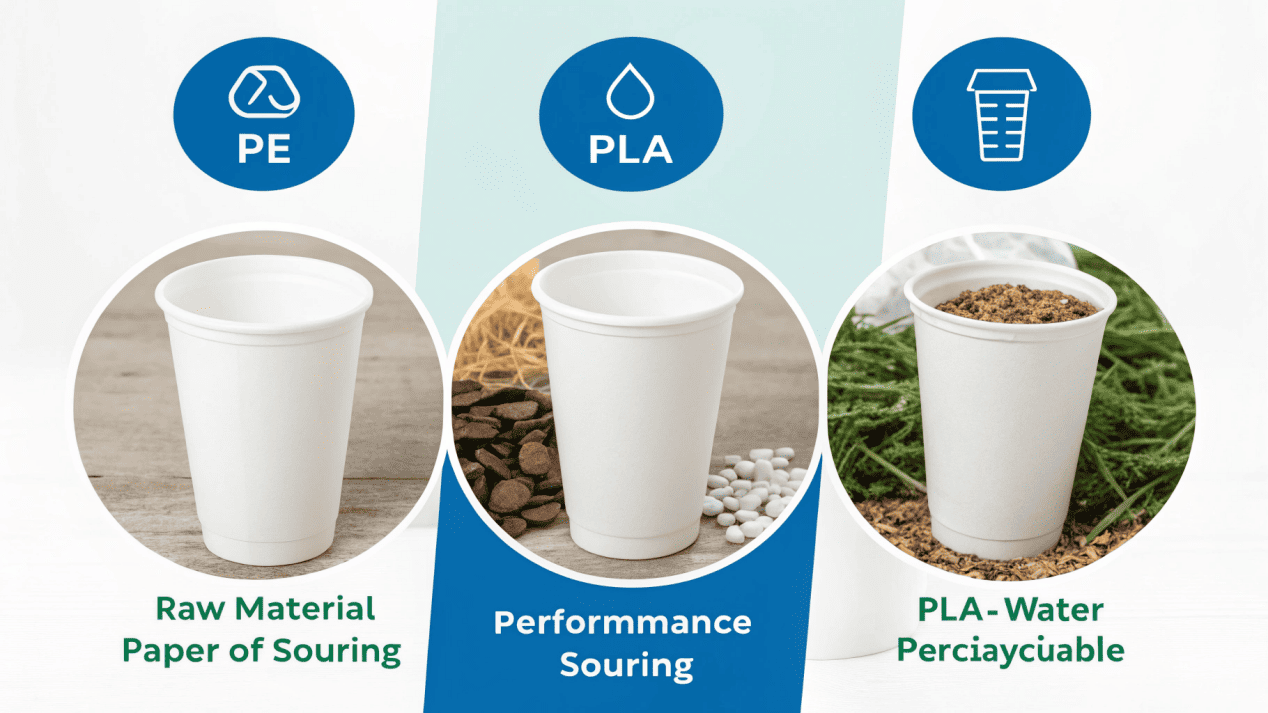
This is where marketing claims really fall apart in the real world. A cup is only "eco-friendly" if it can be easily disposed of using the infrastructure we already have.
The Recycling Reality for Each Coating
- PE-Lined Cups: These are a dead-end. The fused plastic and paper cannot be separated at standard recycling mills12. They are considered contaminants and are sent to landfill11s.
- PLA-Lined Cups: This is the most misleading category. "Compostable" sounds great, but it requires an industrial composting facility, which most cities don't have. If it goes in a landfill11, it acts like plastic. If it goes in a recycling bin, it contaminates the paper stream. It's a perfect solution for a world that doesn't exist.
- Aqueous Coated Cups: This is the only practical solution. Since it's just paper, it can be thrown in any paper recycling bin and processed at any standard mill, just like a cardboard box. It works with the systems we already have, everywhere.
| Coating Type | Standard Recycling | Industrial Composting | Likely End-of-Life |
|---|---|---|---|
| PE | Contaminant (Rejected) | Not Possible | Landfill |
| PLA | Contaminant (Rejected) | Possible (Rare) | Landfill |
| Aqueous | Easily Recycled | Possible | Recycled into New Paper |
What Is the Best No-Compromise Coating for Paper Cups?
You feel stuck choosing between a cup that harms health and one that harms the planet. It seems like every option forces you to accept a frustrating compromise.
The best alternative is a plastic-free2 Aqueous coating3. It offers perfect waterproofing without the health or environmental downsides of PE and PLA cups. It is the only no-compromise solution available today.
For too long, the food and beverage industry has been forced to make a bad choice. Do you use the PE cup that goes to a landfill11, or the PLA cup that also likely goes to a landfill11? As people who manufacture these products, we felt this frustration too. We wanted to create a product we could be proud of from start to finish. The development of Aqueous coating3 was the engineering breakthrough we were waiting for. It solves the two biggest problems in a single, elegant solution. It eliminates the health risk of microplastics1 because it contains no plastic. And it solves the environmental problem because it allows the cup to be recycled easily everywhere. There's no need for special facilities or complex consumer sorting. It just works. This is what I mean by a "no-compromise" solution. It finally delivers on the promise of a disposable cup that is both premium and responsible.
Conclusion
Stop choosing between bad options. The invisible coating in your cup matters. Choose an Aqueous coating3 for a cup that's safe, truly recyclable4, and free of compromises.
Understanding the health implications of microplastics can help you make informed choices about what you consume. ↩
Learn why choosing plastic-free products is essential for health and environmental sustainability. ↩
Learn about Aqueous coating technology and its benefits for health and the environment. ↩
Understanding recycling terminology can help you make better choices for the environment. ↩
Learn about the potential health risks of using plastic-lined cups and how to avoid them. ↩
Explore the sustainability of plant-based materials and their role in eco-friendly products. ↩
Explore sustainable options for disposable cups that are better for the planet. ↩
Explore the environmental consequences of using PE plastic and why alternatives are necessary. ↩
Clarifying the difference can help you make more sustainable choices in your daily life. ↩
Discover the benefits of water-based sealants in various applications, including food packaging. ↩
Understanding landfill impacts can motivate better waste management practices. ↩
Learn about the recycling process and how it affects the lifecycle of paper products. ↩