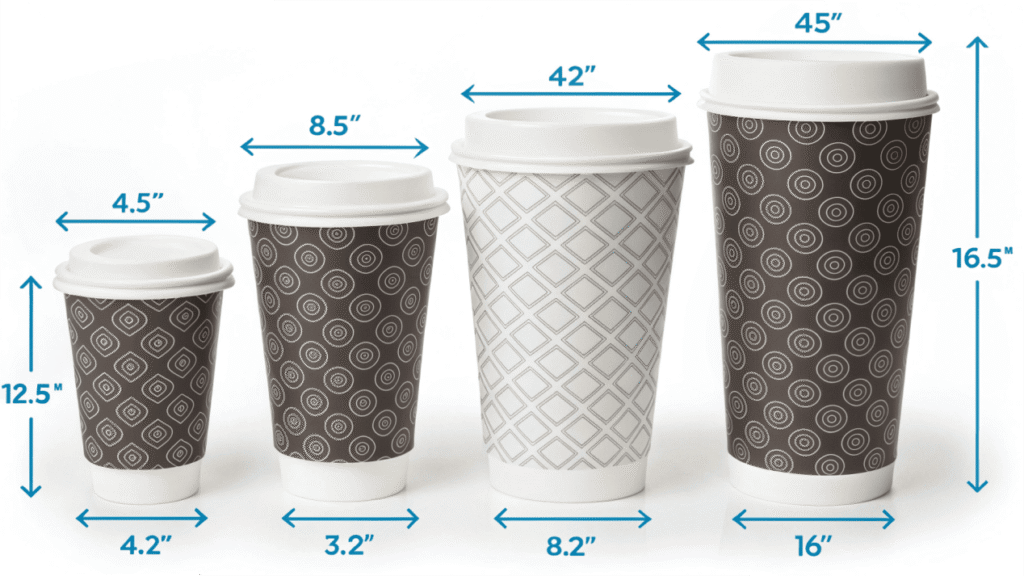
Your "medium" coffee might be a "small" in another country. This size confusion leads to wasted inventory, wrong orders, and a globally inconsistent brand experience.
There is no single global standard, but an industry-wide system exists based on ounces (oz) and milliliters (ml). Generally, 8oz (240ml), 12oz (360ml), and 16oz (480ml) are the core sizes, with regional preferences for smaller or larger cups.

I've worked with coffee shops in over 80 countries. I can tell you that while the love for coffee is universal, the language of cup sizes is not. It’s a mix of imperial ounces1, metric milliliters2, and local customer habits. As an engineer, I believe in creating clarity from complexity. Let's start with the hard numbers to build a simple, universal guide that you can use anywhere in the world.
How Do Ounces, Milliliters, and Inches Relate?
You see listings for "8oz" and "240ml" but aren't sure how they really compare. This uncertainty makes ordering from suppliers a gamble, risking cups that don't fit your lids.
One fluid ounce (oz) is approximately 30 milliliters (ml). So, a 12oz cup is about 360ml. Most common coffee cup sizes3 (12oz, 16oz, 20oz) share a standard top diameter4 of around 3.5 inches (90mm) to use the same lid.
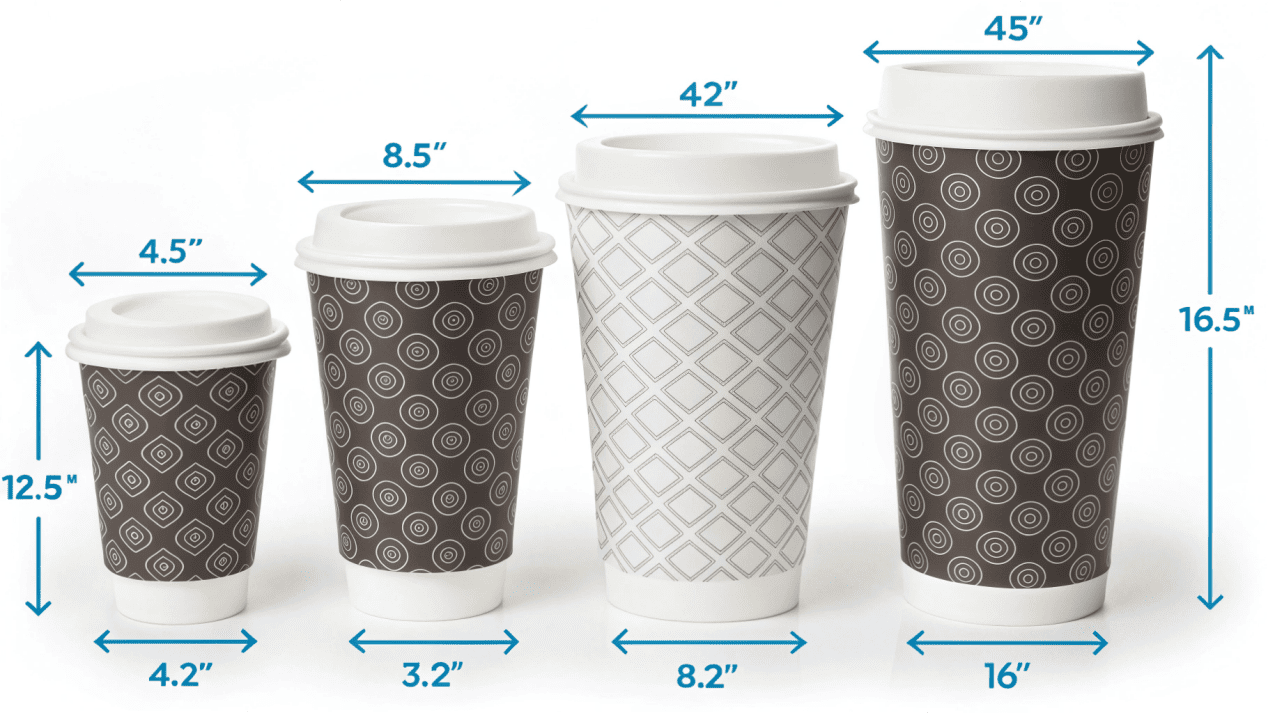
To build a global strategy5, we must first speak the same language of measurement. This chart is your foundation. While there are slight variations between manufacturers, these are the industry-standard sizes.
The Master Conversion Chart
| Size (oz) | Milliliters (ml) | Typical Usage | Top Diameter (approx.) |
|---|---|---|---|
| 4 oz | 120 ml | Espresso, Cortado | 2.5 in / 62 mm |
| 6 oz | 180 ml | Flat White, Cortado | 3.0 in / 76 mm |
| 8 oz | 240 ml | Small Latte, Cappuccino | 3.2 in / 80 mm |
| 12 oz | 360 ml | Standard "Medium" Coffee | 3.5 in / 90 mm |
| 16 oz | 480 ml | Standard "Large" Latte | 3.5 in / 90 mm |
| 20 oz | 600 ml | Extra Large, Iced Drinks | 3.5 in / 90 mm |
The Critical Lid Diameter
Notice something important in the chart? The 12oz, 16oz, and 20oz cups often share the same top diameter (90mm). This is not an accident; it's smart engineering for business efficiency. It means you only need to stock one lid size for your three most popular takeaway cups. My promise as an engineer is consistency. A 12oz cup from HAOKELAO is a reliable 12oz anywhere in the world, with a precision rim that fits the lid perfectly.
Do Different Countries Use Different "Standard" Sizes?
You've set up your menu with 8, 12, and 16oz sizes. But when you expand to a new market, you find customers are asking for sizes you don't carry.
Yes, absolutely. The US market favors larger sizes (12oz+) and uses ounces. Europe and Australasia are metric-focused (ml) and have a strong culture around smaller, espresso-forward drinks6 like the 6oz (180ml) flat white.

Serving clients from Dubai to Dallas, I've seen these cultural differences7 firsthand. Understanding them is key to meeting customer expectations.
1. The American Standard8 (oz-driven)
This system, popularized by giants like Starbucks, established a familiar naming convention: Short (8oz), Tall (12oz), Grande (16oz), and Venti (20oz). Many global brands use this as a reference point, and it has heavily influenced the demand for larger serving sizes.
2. The European & Australasian Standard (ml-focused)
Service here is often more focused on the metric system. A "regular" coffee is typically a 240ml (8oz) or 360ml (12oz) cup. This culture also champions smaller sizes that highlight the quality of the espresso. The 6oz (180ml) cup is the unofficial global standard for a perfectly balanced flat white. Not offering it can make your shop seem less authentic to serious coffee lovers.
3. The Global Specialty Coffee Movement
This culture is driven by the perfect ratio of espresso to milk, not just volume. This has increased the global popularity of 6oz and 8oz cups for drinks where the quality of the coffee shot is the main focus.
How Do You Choose the Right Size for Each Drink?
You have a wide menu of different coffee drinks. Using the same "one-size-fits-all" cup for an espresso and an iced latte can ruin the drink's quality and your brand's image.
You must match the cup to the craft. Use small cups9 (4-6oz) for espresso-focused drinks, medium cups10 (8-12oz) as your main workhorses for lattes, and large cups (16oz+) for high-volume and iced drinks.
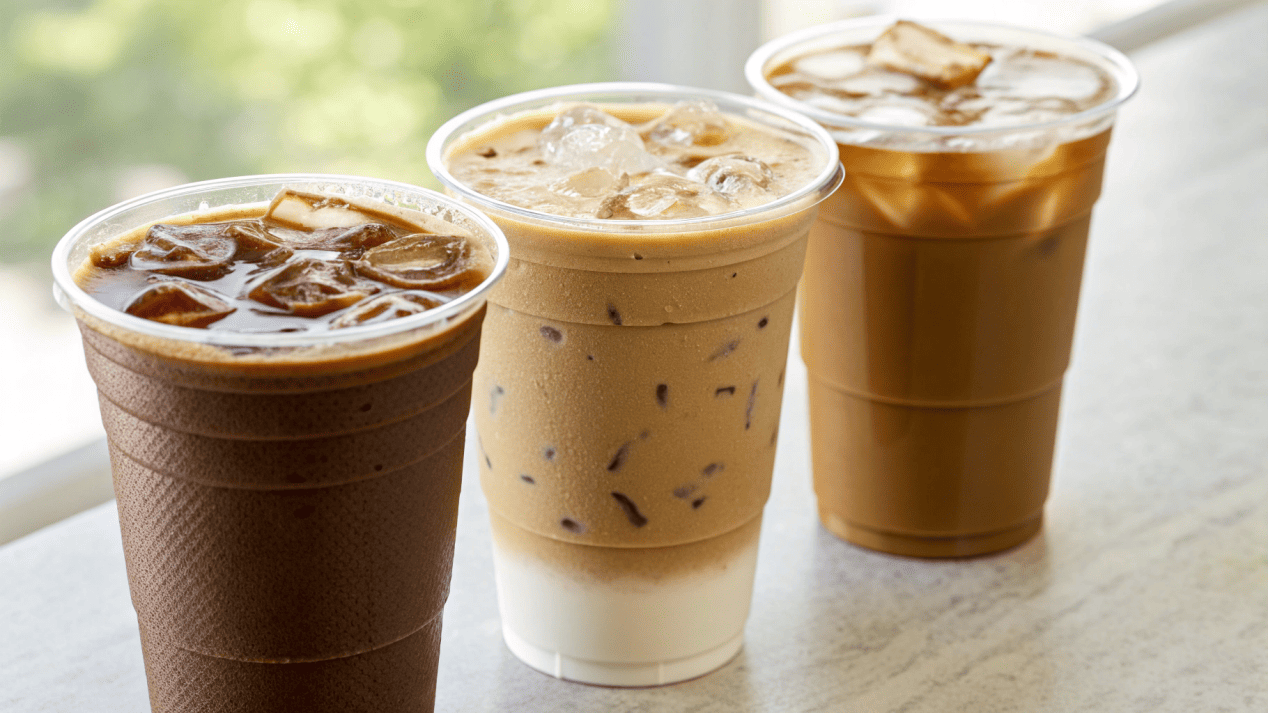
Choosing a cup size is choosing a customer experience11. Here is my strategic advice for building your cup inventory.
The Purist's Cups (4-6oz)
These cups are for drinks that celebrate the pure flavor of espresso. Using a small cup signals craft, quality, and authenticity. It tells the customer you are serious about coffee. They are essential for espressos, macchiatos, and flat whites.
The Workhorse Cups (8-12oz)
These are the backbone of most coffee shops. The 8oz is a classic "small," while the 12oz has become the global standard for a "medium." They offer the perfect balance of coffee and milk for most lattes and cappuccinos.
The Volume Cups (16-20oz)
These sizes cater to the morning commute, large drip coffees, and especially iced beverages, which need extra volume for ice. They appeal to the customer who is looking for value and a drink that will last. My company's flexible production12 and low minimums mean you can affordably stock a full range to serve every drink perfectly.
How Does Cup Size Affect Your Brand's Design?
You have a beautiful logo, but on your smallest cup it's too crowded, and on your largest cup it looks lost and tiny. An inconsistent design makes your brand look unprofessional.
The cup size is your canvas size, and your design must adapt to it. Small cups need a bold, simple logo. Medium cups are versatile. Large cups are walking billboards that can tell a bigger story.
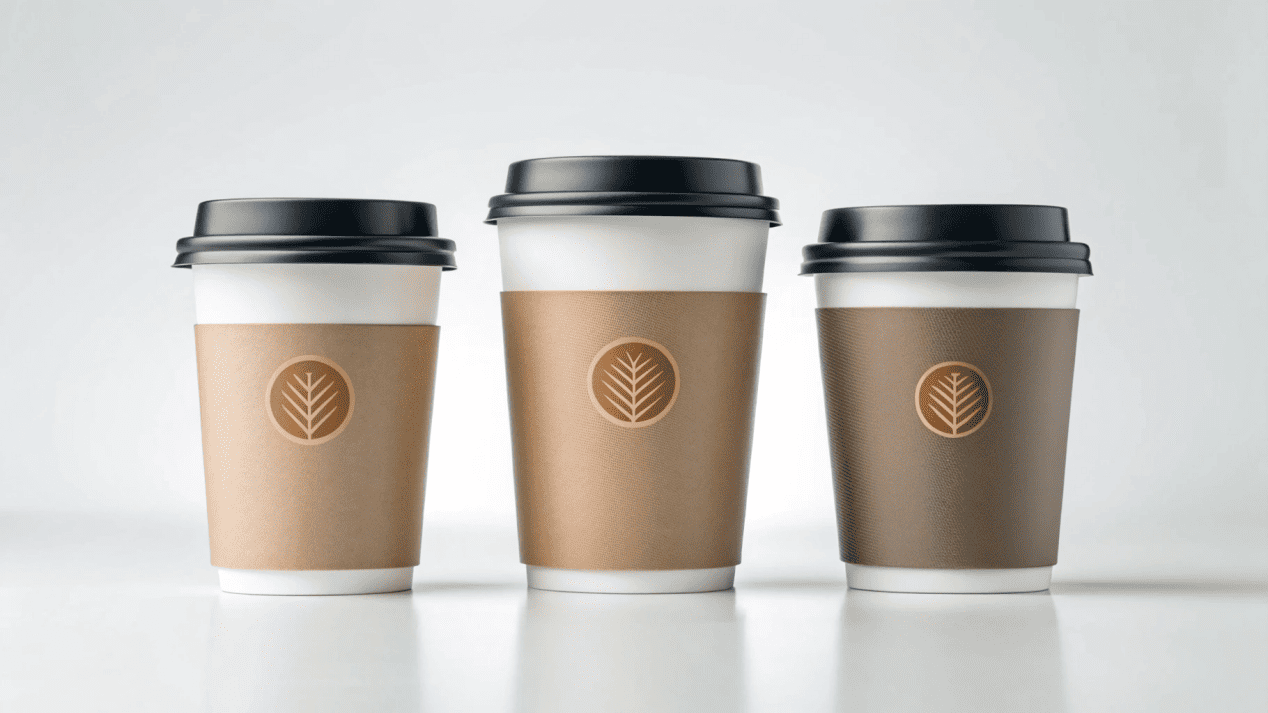
Your cup is your most important marketing tool. The design layout must be intentional for each size.
Small Cups (4-8oz): The Jewel Box
With limited space, your logo must be the hero. A simple, strong, centered logo is most effective. It communicates a message of precision and confidence. Don't try to add too much text.
Medium Cups (12oz): The Sweet Spot
This is the most versatile canvas. It has plenty of room for your main logo, a tagline, your website or social media handle, and it still looks clean and uncluttered. This is where you establish your core brand identity.
Large Cups (16oz+): The Walking Billboard
This is your chance to tell a story. The large surface area can hold more complex graphics, promotional info, QR codes to your loyalty app, or even feature local artists. It offers maximum brand visibility as it travels around the city with your customer. My team and I often consult with our clients to ensure their design is effective across every size they offer.
Conclusion
Understanding cup sizes is not just about measurements. It's about knowing your customers, perfecting your product presentation, and building a powerful global brand identity.
Learn about the differences between measurement systems and how they affect coffee serving sizes. ↩
Discover how metric measurements influence coffee culture and serving sizes in different regions. ↩
Explore this link to understand the variations in coffee cup sizes globally and how they impact customer experience. ↩
Find out why the top diameter of coffee cups matters for lid compatibility and customer satisfaction. ↩
Explore strategies for standardizing coffee cup sizes across different markets for consistency. ↩
Understand the significance of espresso-forward drinks and how cup sizes enhance their quality. ↩
Learn how cultural preferences shape coffee cup sizes and customer expectations worldwide. ↩
Discover the popular naming conventions and sizes used in the American coffee market. ↩
Understand the significance of small cups for espresso and other concentrated drinks. ↩
Explore the versatility of medium cups and their role in coffee shop menus. ↩
Understand the importance of matching cup sizes to drinks for an enhanced customer experience. ↩
Learn how flexible production can help coffee shops stock a variety of cup sizes efficiently. ↩