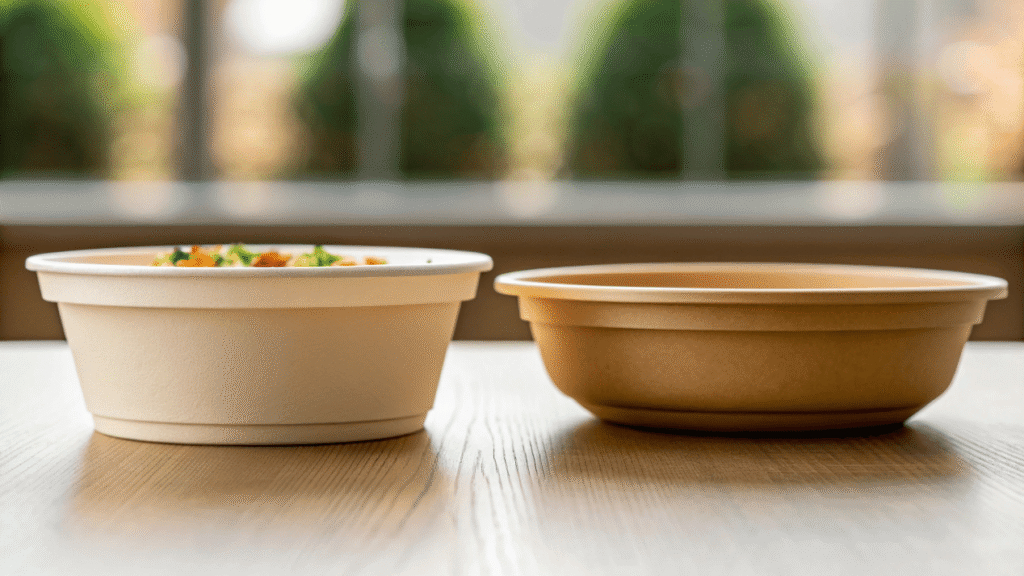
Choosing between plastic and compostable paper bowls1 is confusing. You need a bowl that works, but the wrong choice can hurt your brand and the environment.
Modern compostable paper bowls1 match the durability of plastic while offering huge benefits in brand perception2 and sustainability3. While plastic is cheaper per unit, paper provides superior overall value.
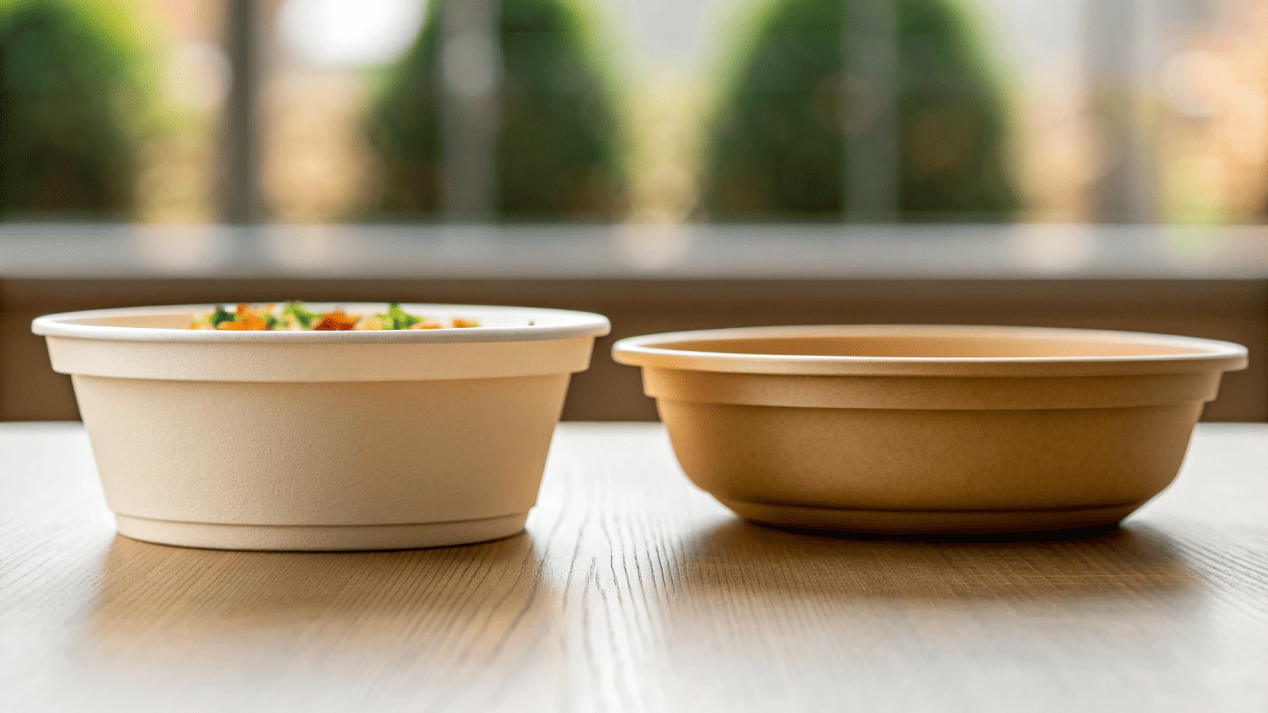
As the founder of a packaging company, this is the number one question I get from food business owners. They want a bowl that is strong enough for their food, affordable for their business, and good for the planet. For years, you had to choose two out of three. But technology has changed the game. Let's compare these two bowl types honestly across the four factors that matter most to your business.
Are Compostable Paper Bowls as Strong as Plastic?
You worry that a paper bowl will get soggy and leak. A single spill can ruin a customer's meal and make them lose trust in your quality.
Yes. High-quality compostable paper bowls1 made from heavyweight paperboard4 (300gsm+) with a PLA lining5 are just as strong, waterproof, and grease-resistant as their plastic counterparts. They will not leak or get soggy.
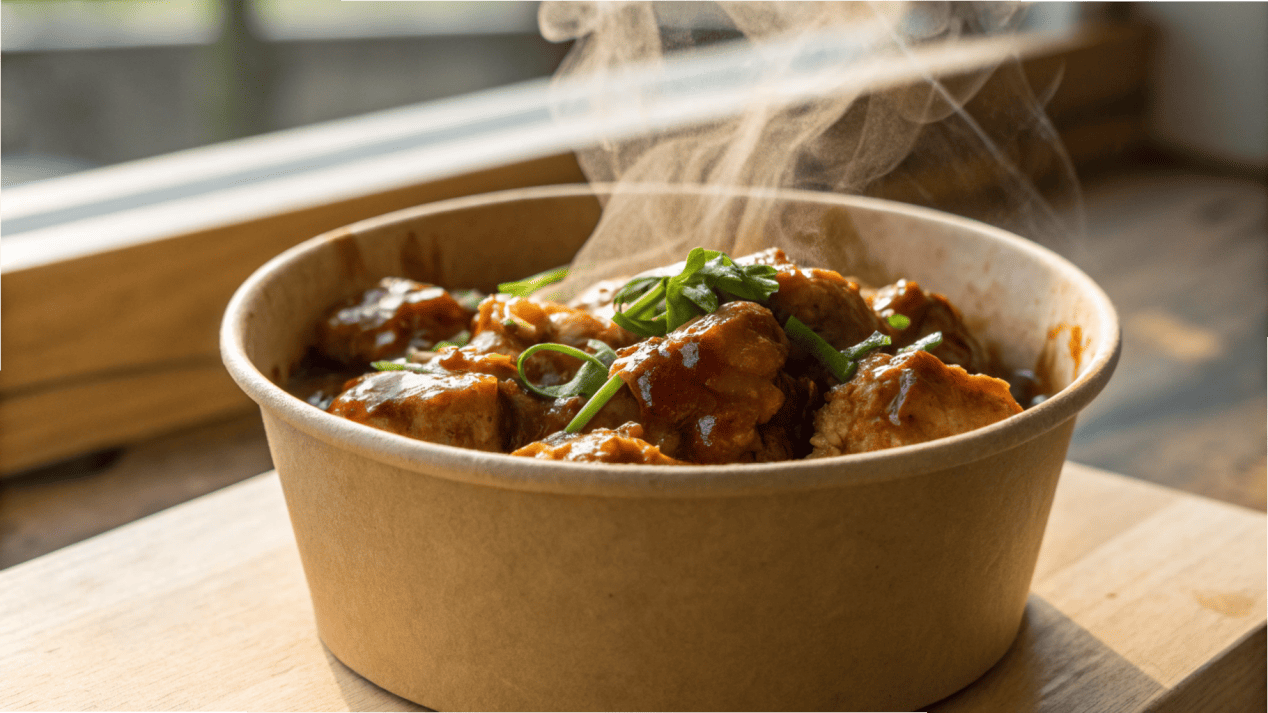
Let's be direct. For a long time, plastic was the king of durability for a good reason. It is completely waterproof and very rigid. It set a high standard. Flimsy paper bowls of the past could never compete, especially with hot soups or greasy foods. But those days are over.
The Modern Paper Bowl
The game changed with engineering. Today's premium compostable bowls are not the paper bowls you remember. We start with heavyweight, high-density paperboard, an ingredient I am very particular about. Using a grade of 300gsm (grams per square meter) or higher gives the bowl exceptional rigidity. It feels secure and confident in your customer's hand, not flimsy.
The Power of PLA Lining
The secret to making this strong paper waterproof is the lining. We use PLA (Polylactic Acid), which is a bioplastic made from plant resources like corn starch. I have tested PLA lining5s with everything from boiling soup to oily stir-fries. It creates a perfect, food-safe barrier6 that is fully waterproof and grease-resistant. The performance gap between paper and plastic is now closed. You get all the strength you need without any of the compromises.
Which Bowl is Genuinely Better for the Planet?
"Eco-friendly" claims are everywhere and it's hard to know what's real. You want to make a choice that truly has a positive impact, from start to finish.
Compostable paper is vastly superior. It comes from renewable trees and is designed to break down into soil after use. Plastic is made from finite oil and pollutes landfills for centuries.
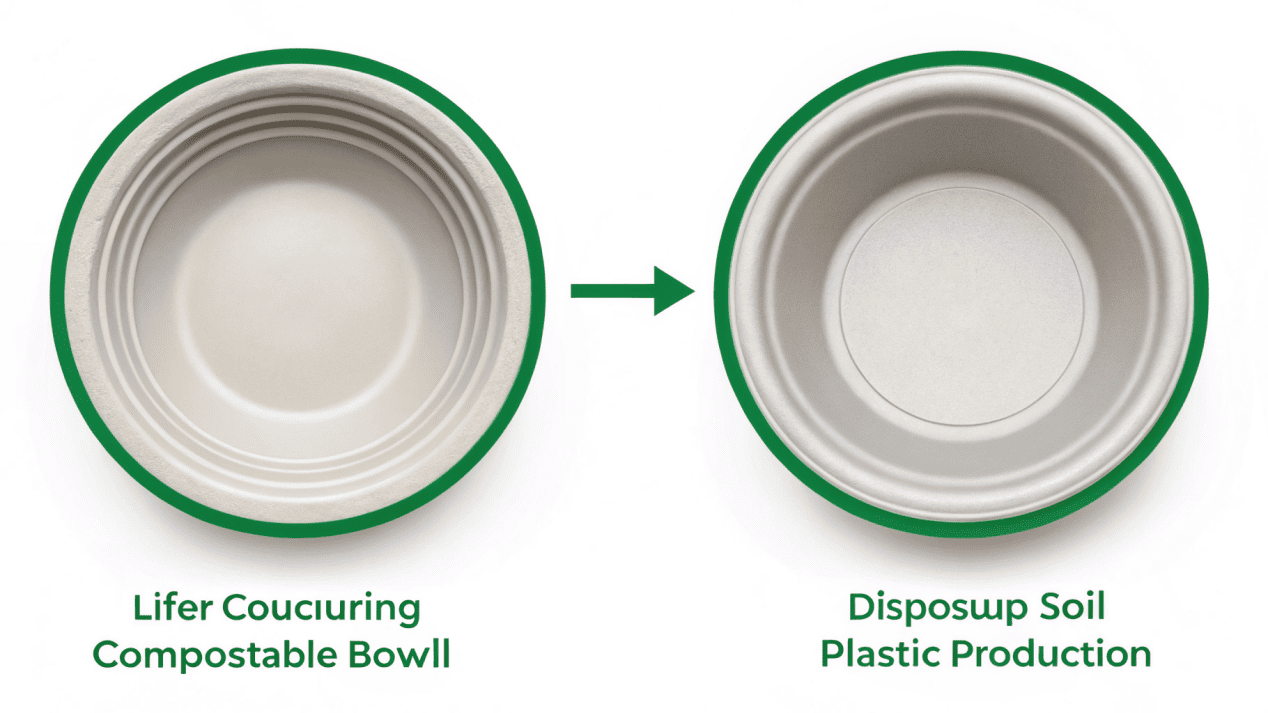
To answer this question, we have to look at the entire life story of each bowl. I always encourage my clients to think about the "cradle-to-cradle" journey.
The Lifecycle of a Plastic Bowl
A plastic bowl's life begins as fossil fuels, a non-renewable resource. The process of turning oil into plastic is energy-intensive. After a single use, a food-soiled plastic bowl is almost never recycled. It goes to a landfill, where it will sit for hundreds of years. Over time, it can break down into tiny, harmful microplastics that pollute our soil and water. It is a linear journey from oil rig to landfill.
The Lifecycle of a Compostable Paper Bowl
A paper bowl's life begins in a responsibly managed forest, a renewable resource. We specifically use FSC-certified paper7 to ensure this. After its use, it is designed for a better end. In an industrial composting facility, it breaks down completely, returning to the earth as nutrient-rich soil that can be used to grow more plants. This is a circular model.
| Feature | Plastic Bowl | Compostable Paper Bowl |
|---|---|---|
| Source Material | Fossil Fuels (Finite) | Trees (Renewable) |
| End of Life | Landfill for 500+ years | Compost / Soil |
| Environmental Legacy | Microplastic Pollution | Contributes to a Circular Economy |
Is Sustainable Packaging Too Expensive for Your Business?
You want to make the sustainable choice. But plastic bowls8 are so cheap, and when you are running a business, every penny counts. The higher cost seems hard to justify.
Plastic has a lower upfront cost per bowl. But compostable paper offers far greater total value9 by acting as a marketing tool10, justifying a premium price for your food, and building customer loyalty11.
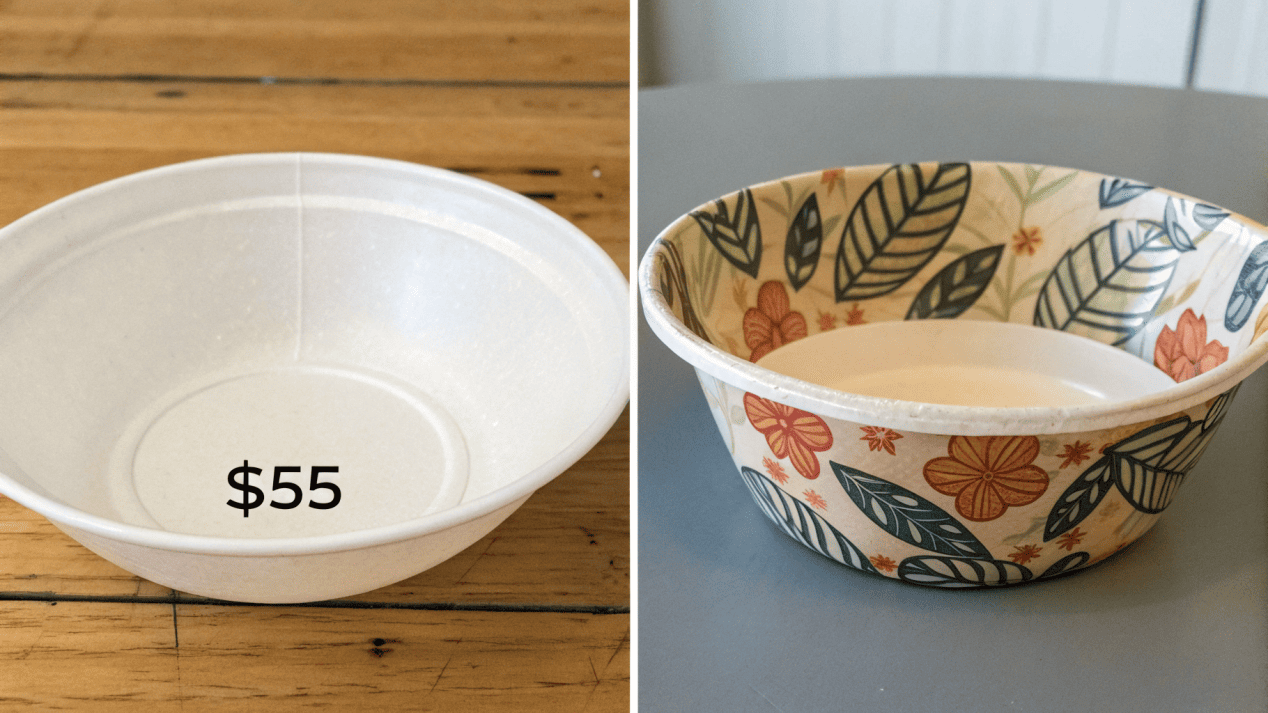
Let's talk about money, because it matters. On a strict per-unit basis, a plastic bowl is often cheaper. For a business on the tightest of margins, this initial cost is very tempting. But this is where I ask owners to think about total value9, not just initial price. That small extra cost for a paper bowl is not an expense. It is a direct investment in your brand that pays you back in multiple ways. We’ve seen this happen again and again. The ability to call your brand "eco-friendly12" is a powerful marketing asset that attracts new customers. The superior look and feel of a high-quality paper bowl also helps justify a premium price for your food. Most importantly, a growing number of consumers are actively loyal to brands that share their values. That loyalty is priceless. Plastic wins on upfront cost, but compostable paper wins on overall brand value.
How Do Customers Perceive Your Brand When You Use Paper vs. Plastic?
You have perfected your food. But serving it in the wrong bowl can instantly make it feel cheaper and less special in the customer's mind.
Customers increasingly see plastic as cheap, outdated, and irresponsible. A sturdy, custom-printed paper bowl feels premium, modern, and thoughtful, which makes people feel better about choosing your brand.

This is where compostable paper bowls1 deliver their biggest return on investment. In today's market, perception is reality. Handing a customer a plastic bowl can subconsciously devalue the amazing food you put inside it. It can send a message that your brand is not aligned with modern values.
The Message Paper Sends
A beautiful, sturdy paper bowl does the opposite. It elevates the entire dining experience. It feels substantial and looks artisanal. It instantly communicates that you are a thoughtful, modern, and responsible brand. It tells your customer, "We care about the quality of every detail, and we care about our impact on the world." This is incredibly powerful. It gives your customers a reason to feel good about spending their money with you. It changes a simple meal into a statement of shared values, which builds a much deeper connection than food alone ever could. In the court of public opinion, paper is the clear winner.
Conclusion
While plastic is functional, it costs your brand in perception and hurts the planet. Modern compostable paper bowls1 offer equal strength and a strategic investment in a stronger, more profitable brand.
Explore the advantages of compostable paper bowls, including sustainability and brand perception, to enhance your food business. ↩
Understand the critical role of packaging in shaping customer perceptions and enhancing brand value. ↩
Discover how sustainability influences consumer preferences and can boost your brand's appeal. ↩
Learn about heavyweight paperboard and its significance in creating strong, reliable bowls. ↩
Find out how PLA lining enhances the durability and functionality of compostable paper bowls. ↩
Learn about the significance of food-safe barriers in ensuring product safety and quality. ↩
Discover the importance of FSC certification in ensuring sustainable sourcing of paper products. ↩
Learn about the environmental impact of plastic bowls and why they may not be the best choice for your business. ↩
Understand how total value can outweigh initial costs, making compostable packaging a smart investment. ↩
Discover how effective packaging can enhance your marketing strategy and attract more customers. ↩
Learn how sustainable packaging can foster customer loyalty and enhance your brand's reputation. ↩
Explore the criteria for eco-friendly products and how they can benefit your food business. ↩