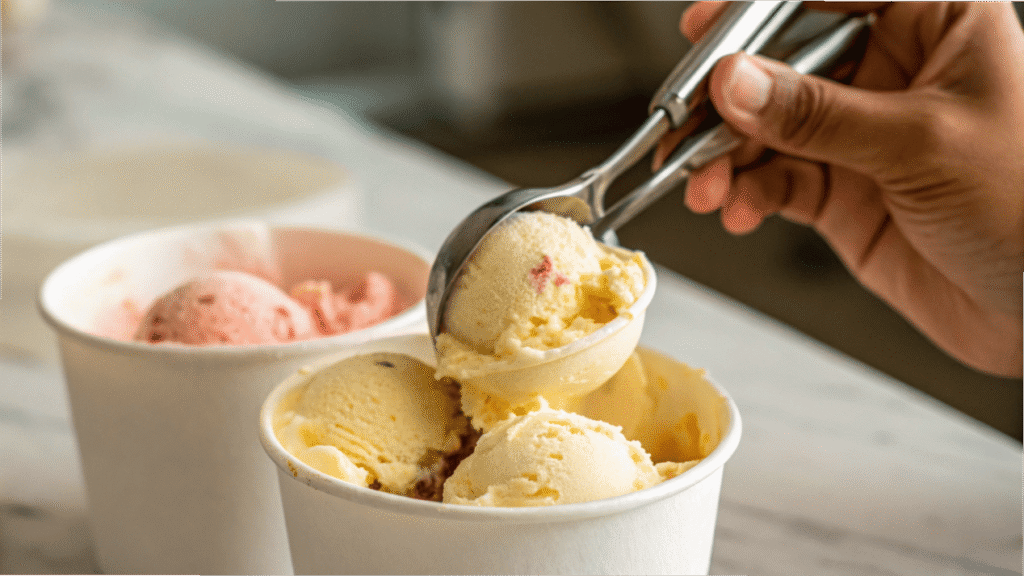
Choosing cup sizes1 feels random, but it's not. The wrong choice wastes money on every scoop and can disappoint your customers, hurting sales and your brand's reputation.
The best size depends on your goals for portion control2, customer preference3, product type, and sales strategy4. Most shops succeed with 3-4 well-chosen sizes (e.g., 4oz, 8oz, and 12oz) that create a clear value ladder5 for customers.
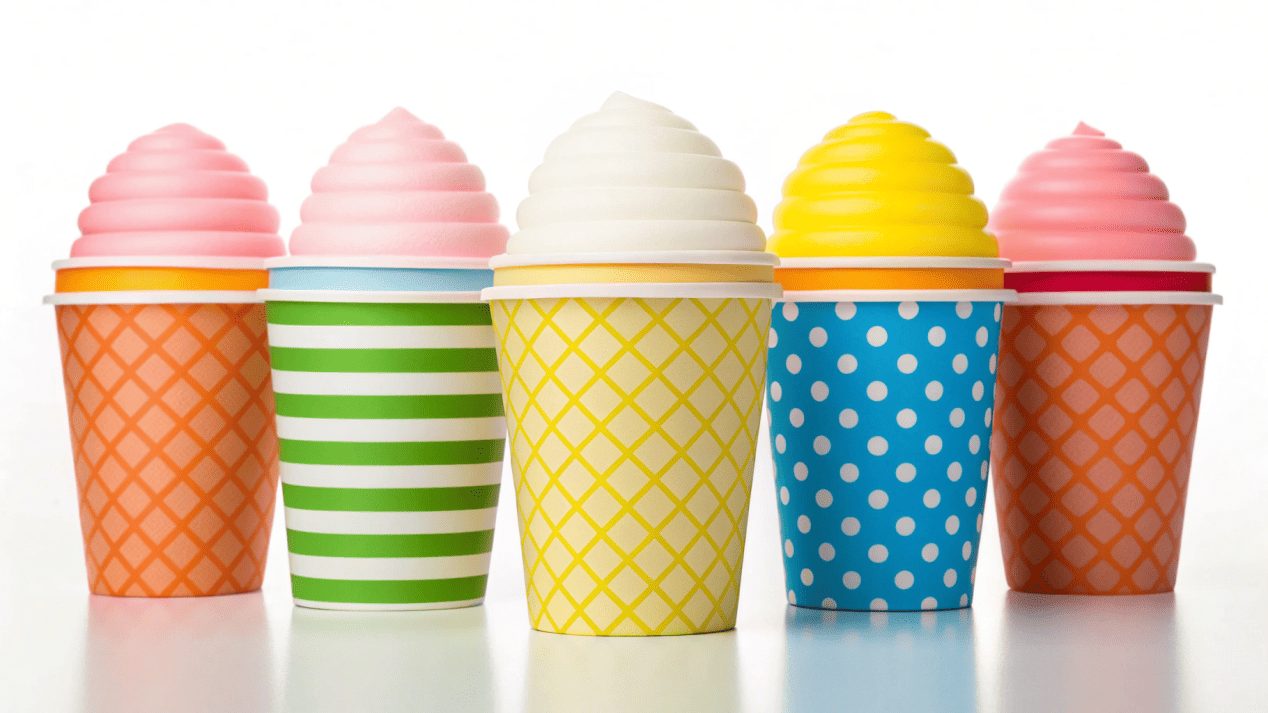
As an engineer, I see cups as tools. They are tools for profit, for marketing, and for creating customer happiness. It's not just about holding ice cream; it’s about shaping desire and controlling costs. Having worked with dessert businesses across the globe, I can tell you there is a science to sizing. Let's break it down so you can make the perfect choice for your shop.
How Can Cup Size Control Your Profits?
You carefully cost out your ingredients, but do you control your portions? Every extra gram of ice cream given away is pure profit melting away, directly hurting your bottom line.
Your cup sizes1 are the physical tools for portion control2. A tiered system (e.g., 4oz for kids, 8oz for regular, 12oz for large) creates a clear cost structure and protects your margins on every sale.
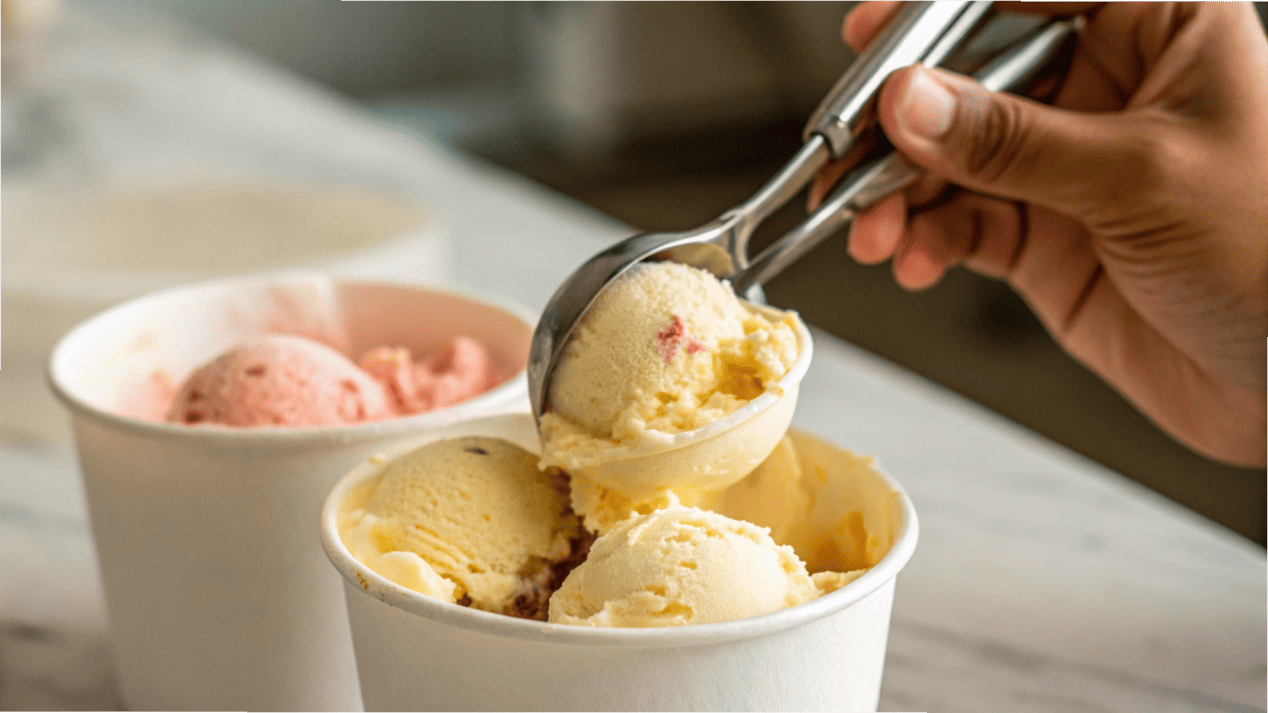
I always tell my clients that this is the single most important factor for the financial health of their business. Your cups are the physical framework for your profits. Think of them as pre-set measuring tools for your staff. By creating a clear, graduated range of sizes, you build a pricing structure6 that is easy for customers to understand and easy for you to profit from.
The Taster or Kiddie Size (3-5 oz / 90-150ml)
This is your essential small size. It's perfect for children, allows adults a small "guilt-free" indulgence, and is the ideal way to offer a "tasting flight" of several premium flavors. Strategically, it protects your profit margins7 on your most expensive, small-batch ice creams.
The "Goldilocks" Standard Size (6-8 oz / 180-240ml)
This is your workhorse. It's the "regular" size that should comfortably fit one or two generous scoops. It must feel like a satisfying value for the price. This is the sweet spot that most customers will choose by default.
The Upsell Engine Size (10-16 oz / 300-480ml)
This is for sundaes8, triple scoops, and shareable treats. The perceived value jump from the "regular" to the "large" should feel significant, justifying a higher price point and encouraging customers to treat themselves. It's your profit multiplier.
| Size | Volume (approx.) | Primary Purpose |
|---|---|---|
| Small | 3-5 oz / 90-150ml | Kids, Tasters, High-Cost Flavors |
| Medium | 6-8 oz / 180-240ml | Standard Single/Double Scoop, Best Value |
| Large | 10-16 oz / 300-480ml | Sundaes, Upselling, Shareable Treats |
What Do Customers Really Want From a Cup?
You think an 8-ounce cup is an 8-ounce cup, right? But customers judge with their eyes first, and a flimsy cup can make even the most premium ice cream feel cheap.
Customers want to feel they got great value. A cup's shape can make the serving look bigger, and a sturdy, high-quality cup9 reinforces the premium quality of the product inside.

The customer's experience is about perception as much as reality. I worked with a gelato10 shop in Italy that made one simple change: they switched from a tall, narrow 8oz cup to a wider, shorter 8oz cup. Customer satisfaction went up because the two scoops of gelato10 looked more abundant and beautiful. This is the power of visual value11.
It’s All About Visual Value
A wider cup makes the product look more impressive and provides a better canvas for toppings. The presentation dramatically affects how much a customer feels the price is justified.
The Paradox of Choice
Do not offer too many sizes. I have seen shops with six or seven sizes, and it just confuses customers and slows down the line. This is called "analysis paralysis12." Most successful brands thrive with 3-4 well-defined sizes: Small, Medium, Large, and maybe a shareable Family size.
The Feel Factor
The sturdiness of the cup is critical. A flimsy cup that bends in the hand feels cheap and creates a risk of messy spills. A solid, well-constructed cup feels secure and communicates high quality before they even take the first bite.
Does Your Product Type Change the Best Cup Size?
You might be tempted to use one or two cup sizes1 for everything to keep things simple. But serving a delicate gelato10 in a giant sundae bowl just looks and feels wrong.
Absolutely. Dense gelato10 works best in smaller, elegant cups (5-8 oz). Scooped ice cream needs room (6-12 oz). Sundaes require wide, stable cups (12-16 oz) to hold toppings without spilling.
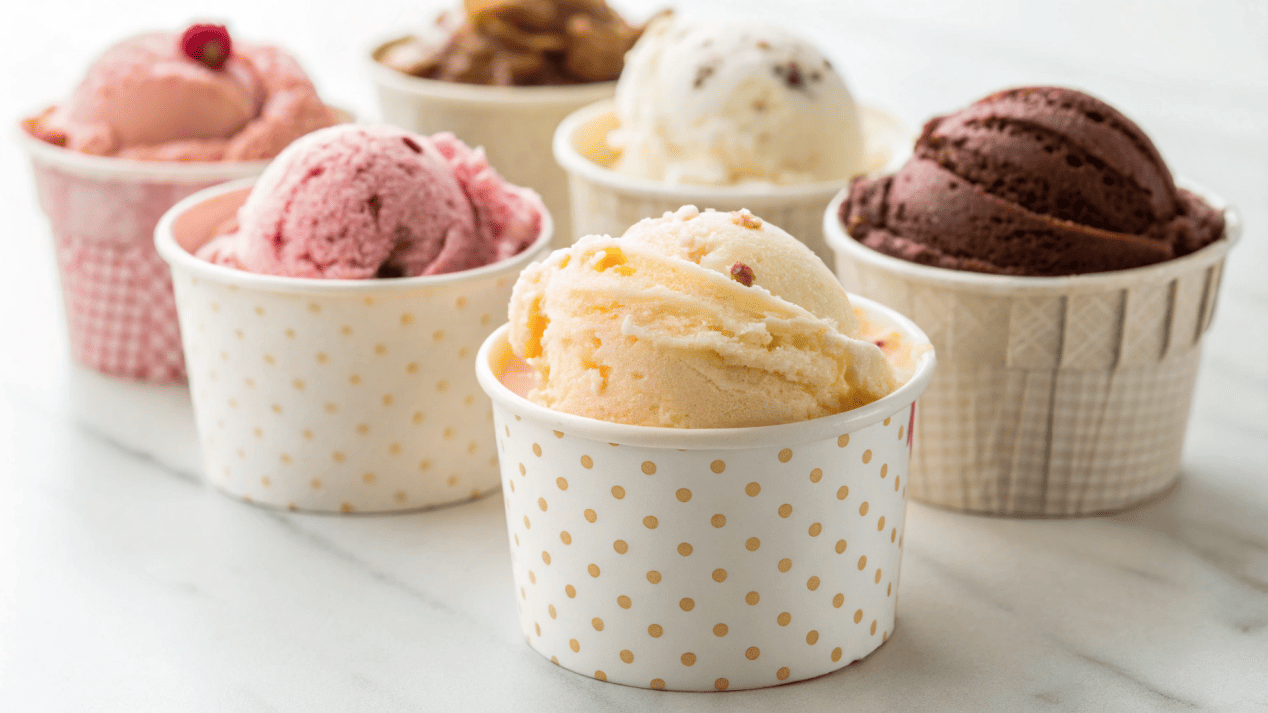
As an engineer, I design cups for performance based on what they will hold. Not all frozen desserts are the same, and the right cup can make a huge difference in the customer's experience.
For Gelato and Sorbet
These are often denser and served with a flat paddle, not a round scoop. The focus is on intense flavor, not huge volume. Smaller, more elegant cups in the 5-8 oz range work best.
For Hard-Scoop Ice Cream
This is where your standard 6-12 oz range is perfect. The cup needs enough width for two distinct scoops to sit beautifully side-by-side or on top of each other without being squashed.
For Sundaes and Loaded Treats
Here, you need width and stability. A 12oz or 16oz wide-mouth cup is essential. It provides a stable base so it won't tip over and gives you a large surface area for piling on sauces, whipped cream, and toppings. This is how you create an Instagram-worthy masterpiece. Our cups are engineered with strong bases and tightly rolled rims just for this reason.
How Can Cup Sizing Increase Your Sales?
You set your prices and sizes and then just hope customers buy what you want. But you are leaving easy money on the table without even realizing it. Your cups can do more work for you.
Use sizing as a sales tool. Introduce a very large "decoy" size to make your regular large seem like a better deal, or use small cups for combo deals13 and limited-time offers14 (LTOs).
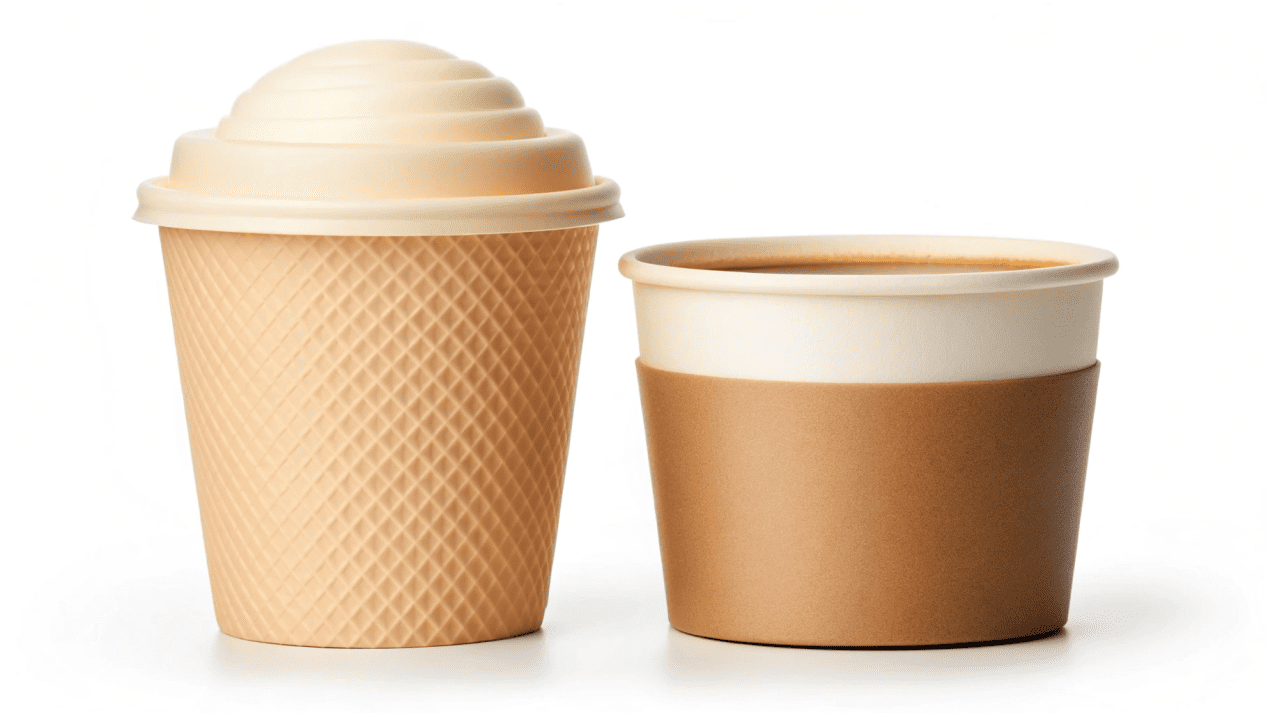
Your size offerings can be an active part of your marketing strategy to increase your average sale value. I've helped many clients implement these simple but powerful ideas.
"Decoy Pricing" Strategy
This is a classic marketing trick. Introduce a very large, slightly overpriced size, like a 20oz "Mega Sundae." Most people won't buy it. However, its presence on the menu makes your standard 16oz "Large" seem like a fantastic deal by comparison, and you will end up selling more of them.
Combo Deals and Specials
Use your smallest size (e.g., 4 oz) as part of a "Pair a Scoop with a Coffee" special during slower parts of the day. This can increase traffic and transaction value when you need it most.
Limited-Time Offers (LTOs)
Introduce a special, unique cup size for a seasonal item, like a "Caramel Apple Crumble Sundae" in the fall. The unique cup itself signals that this is a special event, creating urgency and encouraging customers to try something new. Our flexible production allows you to create these custom-printed cups without ordering a huge inventory.
Conclusion
Your ice cream cups are more than containers. They are tools for profit, branding, and customer delight. Let's build a sizing strategy that helps you scoop up more sales.
Find out the optimal cup sizes that can cater to different customer needs. ↩
Understanding portion control can help you maximize profits and enhance customer satisfaction. ↩
Exploring customer preferences can guide you in selecting the right cup sizes for your target market. ↩
Learn how to implement sales strategies that can boost your ice cream shop's revenue. ↩
Discover how a value ladder can enhance customer experience and increase sales. ↩
Discover strategies for developing a pricing structure that maximizes profits. ↩
Understanding the relationship between cup sizes and profit margins is crucial for financial success. ↩
Explore the ideal cup sizes for sundaes to ensure stability and presentation. ↩
Learn about the features of high-quality cups that enhance customer perception. ↩
Find out how to choose the right cup sizes for gelato to enhance customer satisfaction. ↩
Learn how visual value can enhance customer perception and justify pricing. ↩
Understanding analysis paralysis can help you streamline your offerings and improve sales. ↩
Discover how to effectively use combo deals to increase customer traffic and sales. ↩
Explore how limited-time offers can create urgency and drive sales. ↩