
You need to choose cups, but the options feel overwhelming. White seems clean, but Kraft feels eco-friendly1. Making the wrong choice can mute your branding2 or send a confusing message.
Choose white paper3 for a clean, modern look that makes vibrant brand colors pop and is cost-effective4. Choose Kraft paper5 for a powerful rustic, artisanal, and eco-conscious perception, but be aware it mutes colors and may cost slightly more.
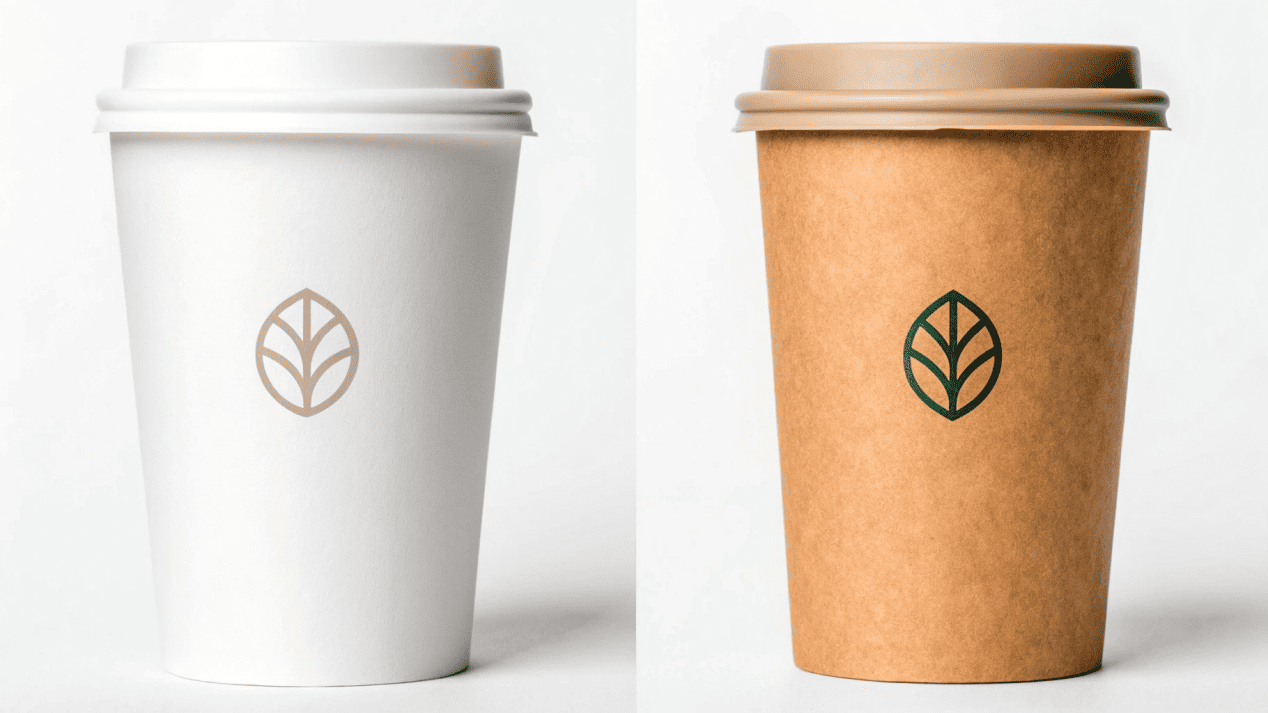
For over 15 years, I’ve helped business owners make this exact choice. It’s one of the first questions I ask a new client. The answer isn't just about aesthetics; it's a strategic decision that defines your brand's story from the very first glance. This isn't just a cup; it's the canvas for your brand. Let's break down the four key factors so you can choose the perfect canvas for your business with confidence.
Are Kraft Cups Stronger Than White Cups?
You like the look of Kraft paper5, but worry it might be weaker or less durable than the standard white cup. A leaking cup could ruin a customer's experience and your reputation.
No, Kraft cups are not inherently stronger. Durability depends on the paper's weight (measured in GSM6) and the quality of manufacturing, not its color. A well-made Kraft cup is just as strong and leak-proof as a well-made white cup of the same specification.

This is one of the biggest myths I have to debunk for my clients. People assume that because Kraft paper5 looks more "natural," it must be different in strength. But that's not how it works. The strength of a paper cup comes down to two things: the quality and weight of the paperboard (called GSM6, or grams per square meter) and the quality of the manufacturing process. A higher GSM6 means thicker, more rigid paper. And excellent manufacturing means the seams are sealed perfectly and the rim is rolled tight to prevent leaks. In our quality control lab, I have personally run countless stress tests. A 280 GSM6 Kraft cup and a 280 GSM6 white cup, made with our high standards, perform identically. They can both hold boiling water without any issues. The failures always come from poor manufacturing, not the color of the paper.
| Factor | White Cup | Kraft Cup | The Bottom Line |
|---|---|---|---|
| Paper Material | Bleached Paperboard | Unbleached Paperboard | Color doesn't determine strength. |
| Key Strength Factor | Paper Weight (GSM6) | Paper Weight (GSM6) | Higher GSM6 = Stronger Cup. |
| Manufacturing Quality | Crucial for seam and rim | Crucial for seam and rim | A well-made cup of any color is durable. |
How Does Cup Color Affect Your Brand's Image?
You have a beautiful logo, but you're unsure which cup will make it look best. The wrong background could make your branding2 look dull or send a message that doesn't fit your business.
White cups offer a clean, neutral canvas that makes colors appear bright and true to your design. Kraft cups provide a rustic, natural feel but will give colors a more subdued, earthy tone. The choice defines your brand's visual identity7.
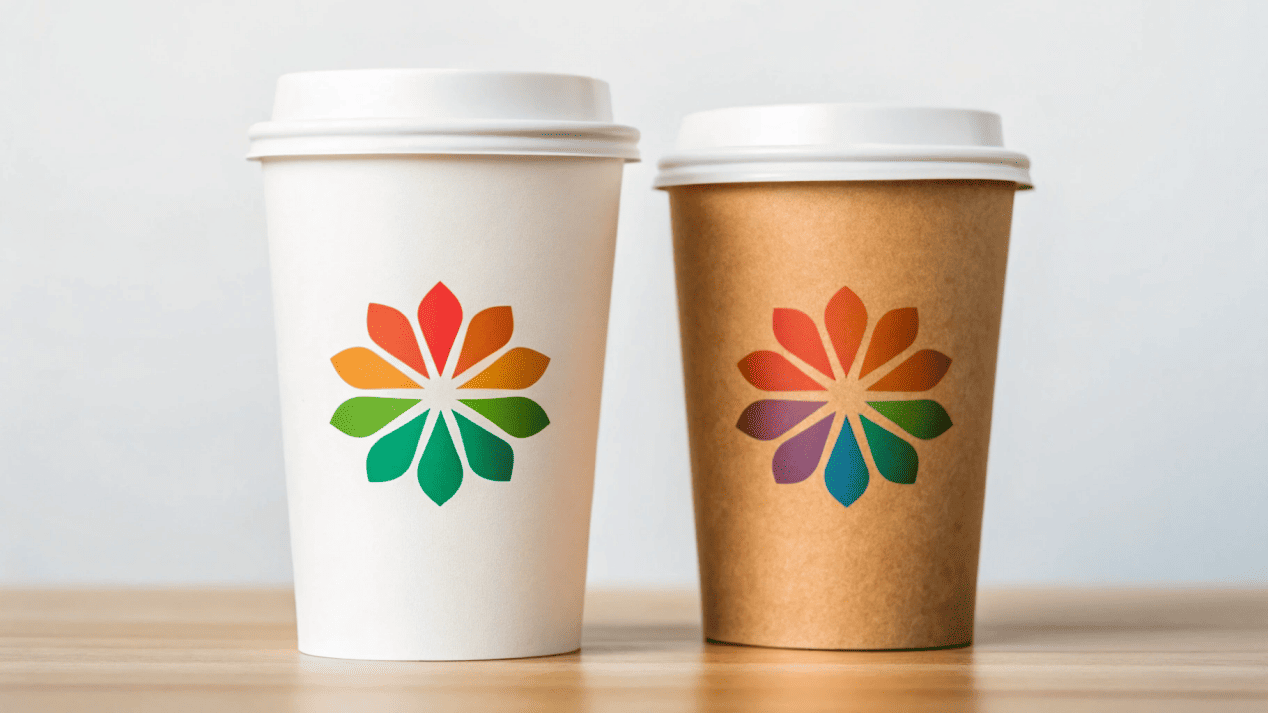
Your cup is a walking advertisement, so its look is critical. I explain it to my clients like this: a white cup is a modern art gallery wall. It's clean, bright, and hygienic. It allows your brand colors to be the hero. If you have a bright pink and blue logo, it will look sharp and vibrant on a white background. This is perfect for a modern cafe, a fro-yo shop, or any brand that wants to feel fresh and clean. A Kraft cup, on the other hand, is like a rustic brick wall. It immediately makes everything feel more artisanal, organic, and authentic. That same bright pink logo will transform into a muted, dusty rose color on Kraft paper5. I had a client, a local coffee roaster, who wanted this exact effect. The earthy tone of the Kraft paper5 reinforced their brand story of being small-batch and handcrafted. The key is to know what you want. White for vibrant pop, Kraft for earthy authenticity.
Are Kraft Cups Really More Eco-Friendly?
You want to show customers you care about the environment, and Kraft paper5 looks "green." But are you choosing what's best for the planet, or just what looks best?
In customer perception, Kraft is the clear winner as it looks natural. In reality, a cup’s true eco-footprint depends on its coating (compostable PLA vs. plastic PE) and paper source (FSC certified8), not its color.
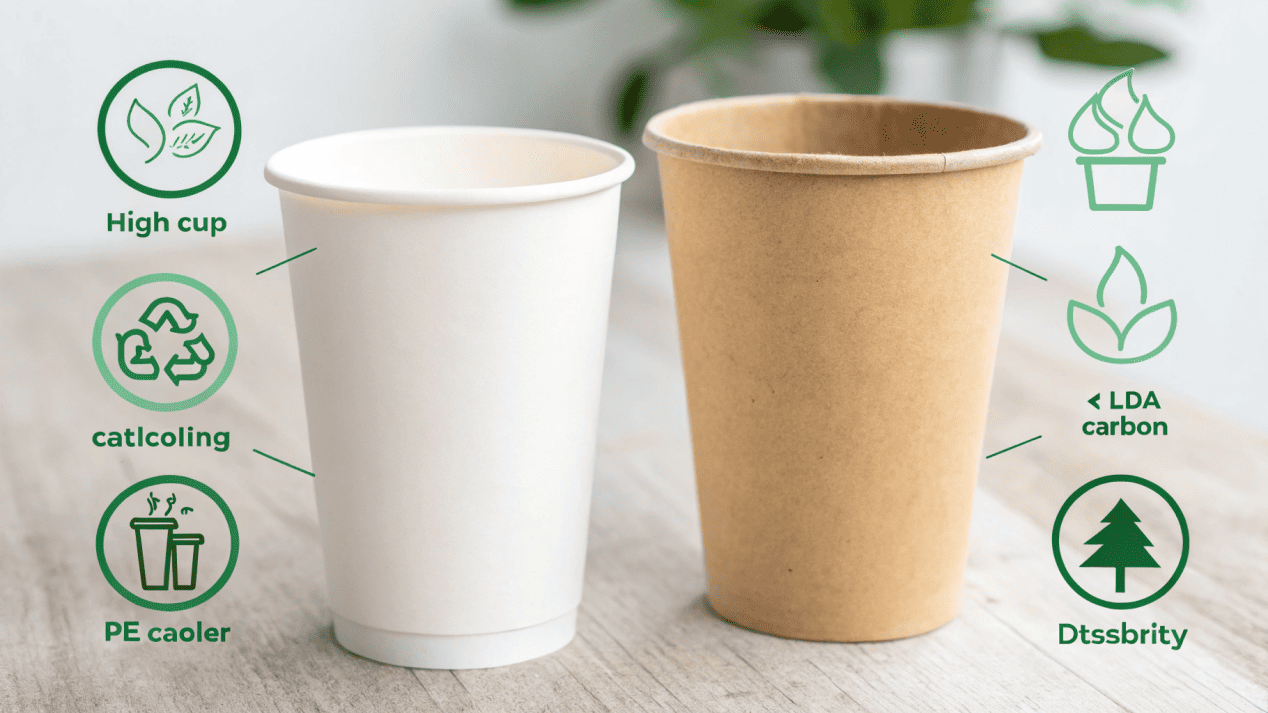
This is the most important conversation I have with my clients. Customers overwhelmingly believe that brown Kraft paper5 is more eco-friendly1 because it looks unbleached and natural. This perception is a very powerful marketing tool. But it's only half the story. The true environmental impact of a cup is more complex. First, where does the paper come from? We source our paper for both white and Kraft cups from responsibly managed forests (FSC certified8), so the origin is equally sustainable. The biggest factor is actually the cup's inner lining. A standard cup uses a polyethylene (PE) plastic lining. A more eco-friendly1 option is polylactic acid (PLA), a plant-based, compostable lining. I always tell my clients: a white cup with a PLA lining and an FSC logo is arguably more sustainable than a Kraft cup with a traditional plastic PE lining. The choice of coating matters far more than the color of the paper. Your job is to tell the true eco-story on the cup itself.
Which Cup is Cheaper, White or Kraft?
You are managing a tight budget for your business. Choosing a cup that's slightly more expensive can add up to thousands of dollars in extra costs over a year.
Standard white paper3 cups are typically the most cost-effective4 option. Due to high demand for its natural look9, high-quality, food-grade Kraft paper5 usually comes at a slight price premium10.
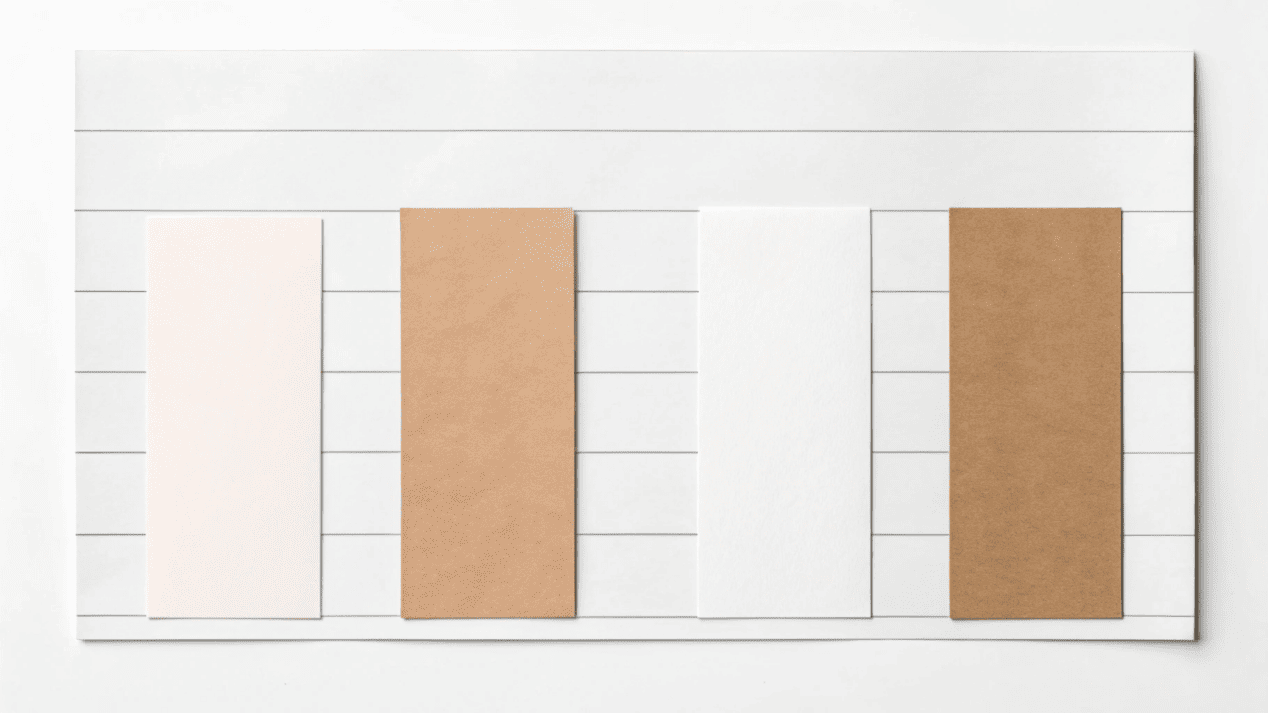
For any business owner, cost is a critical factor. The market reality is that standard white paper3board is generally more economical. The bleaching process is older, highly standardized, and produced at an enormous global scale, which creates cost efficiencies. On the other hand, the demand for the "natural" look has surged in recent years. Producing high-quality, food-grade Kraft paper5 that is strong, consistent, and safe for direct food contact is a specific process, and this high demand has given it a slight price premium10. Now, we are often talking about a very small difference on a per-cup basis—maybe fractions of a cent. But if you are using 100,000 cups a year, those fractions add up. I advise startups on a tight budget that they can save money with white cups and reinvest it into marketing. For an established brand that wants to project an artisanal image11, that small extra cost for Kraft is a worthwhile marketing expense12. It’s all about aligning the cost with your strategy.
Conclusion
The choice between white and Kraft is a strategic brand decision. Choose white for vibrant color and cost savings, or Kraft for a powerful natural, eco-conscious statement.
Investigate the environmental impact of Kraft cups and understand the factors that determine their sustainability. ↩
Understand the impact of cup color on branding and how it can influence customer perception. ↩
Discover how white paper cups enhance brand visibility and make colors pop, perfect for modern businesses. ↩
Learn about the cost benefits of white paper cups and how they can save money for your business. ↩
Explore the advantages of Kraft paper, including its eco-friendly perception and rustic appeal for branding. ↩
Learn about GSM and its significance in determining the strength and quality of paper cups. ↩
Get insights on selecting cups that align with your brand's visual identity and messaging. ↩
Explore the significance of FSC certification in ensuring sustainable sourcing of paper products. ↩
Discover why the natural look of Kraft paper is popular among consumers and its marketing advantages. ↩
Understand the reasons behind the price premium of Kraft paper cups and their market demand. ↩
Learn how Kraft cups can reinforce an artisanal brand image and appeal to eco-conscious consumers. ↩
Find out how to strategically choose cups that align with your marketing goals and brand image. ↩