You see certifications1 listed on a supplier's quote and think of them as a costly, confusing hassle. You are tempted to choose the cheaper, uncertified option to save money.
You must care. Certifications are your proof that a cup is legally safe for food (FDA2, BRC3), consistently high-quality (ISO 90014), and genuinely sustainable (FSC5). They protect your business, build customer trust6, and give you a powerful competitive advantage7.
In a competitive market, every choice sends a message. A plain, uncertified cup says very little. But a cup from a certified supply chain8 speaks volumes. It speaks of safety, quality, and trust. Too often, company owners see certifications1 as just another line on a spec sheet. In reality, they are a powerful business tool. As a globally certified manufacturer, I don't just produce cups; I produce confidence.
How Do Certifications Protect Your Business From Risk?
You face potential legal risks9 with uncertified packaging. A single food safety10 issue could halt your imports, lead to fines, and permanently ruin your business's reputation.
Certifications protect you by providing documented, third-party proof that your cups meet strict global food safety10 laws. They ensure materials, inks, and manufacturing processes are safe for food contact, shielding you from legal and financial disaster.

This is the absolute foundation of your business. Food contact materials are subject to serious regulations. Getting this wrong is not an option.
The Global Benchmarks for Safety
Think of certifications1 as your business's insurance policy. They are independent audits confirming that a manufacturer's products and processes are safe for food contact.
- FDA2 (U.S. Food and Drug Administration): This confirms the cup is safe for the massive US market.
- BRC3 (Brand Reputation through Compliance): This is a globally recognized standard for food safety10 and quality management.
From Risk to Reassurance
I once had a potential client whose container of cups was held at a US port for weeks. They couldn't produce the right food safety10 documentation for customs. They lost thousands of dollars in that delay and nearly lost their customer. This is the exact problem we solve. Working with a certified supplier like me means you are buying documented proof of safety.
| Feature | Uncertified Supplier | Certified Supplier (Haokelao) |
|---|---|---|
| Material Traceability | Unknown, questionable | Fully traceable, food-safe lots |
| Safety Proof | Just their word for it | Third-party audit reports |
| Business Risk | High | Minimized |
Our facilities and products are compliant with both FDA2 and BRC3 global standards. This isn't an optional extra; it is the baseline for everything I produce.
Can Certifications Really Improve Customer Trust?
Your product quality seems inconsistent. One batch of cups is great, but the next has printing flaws or leaking issues. Your customers are starting to notice and lose faith.
Yes. A certification like ISO 90014 isn't about the final product, but the process. It proves your supplier has robust systems for quality control11, guaranteeing consistency. This consistency directly builds your customers' trust in your brand.

Your customers trust you to serve them a quality product, every time. Certifications are the silent guarantee that you are delivering on that promise.
What is ISO 90014, Really?
The ISO 90014 certification is the international standard for a Quality Management System (QMS). It proves that a company has reliable, repeatable systems in place to ensure consistency and manage quality. Think of it as a master recipe for making perfect cups. The recipe is documented, followed every time, and constantly improved. As an engineer, I live by process, because good processes eliminate errors and guarantee excellent results.
The Payoff: Absolute Reliability
This certified process is why the 100,000th cup you order from me will have the same precise rim, flawless print, and perfect structure as the very first one. It means your lids will always fit perfectly. It means you will not get a surprise batch of leaky cups that damage your reputation. Consistency is everything when building a brand, and my ISO 90014 certification is your guarantee of that reliability.
How Do You Prove Your Brand is Truly Sustainable?
You claim your brand is eco-friendly, but so does everyone else. Customers are skeptical of "greenwashing" and may not believe your claims without hard evidence.
You prove it with certifications1. An FSC5® logo shows your paper is from responsibly managed forests. A compostability certification12 (like BPI or TÜV Austria) verifies an item can break down safely. These are your undeniable proof.
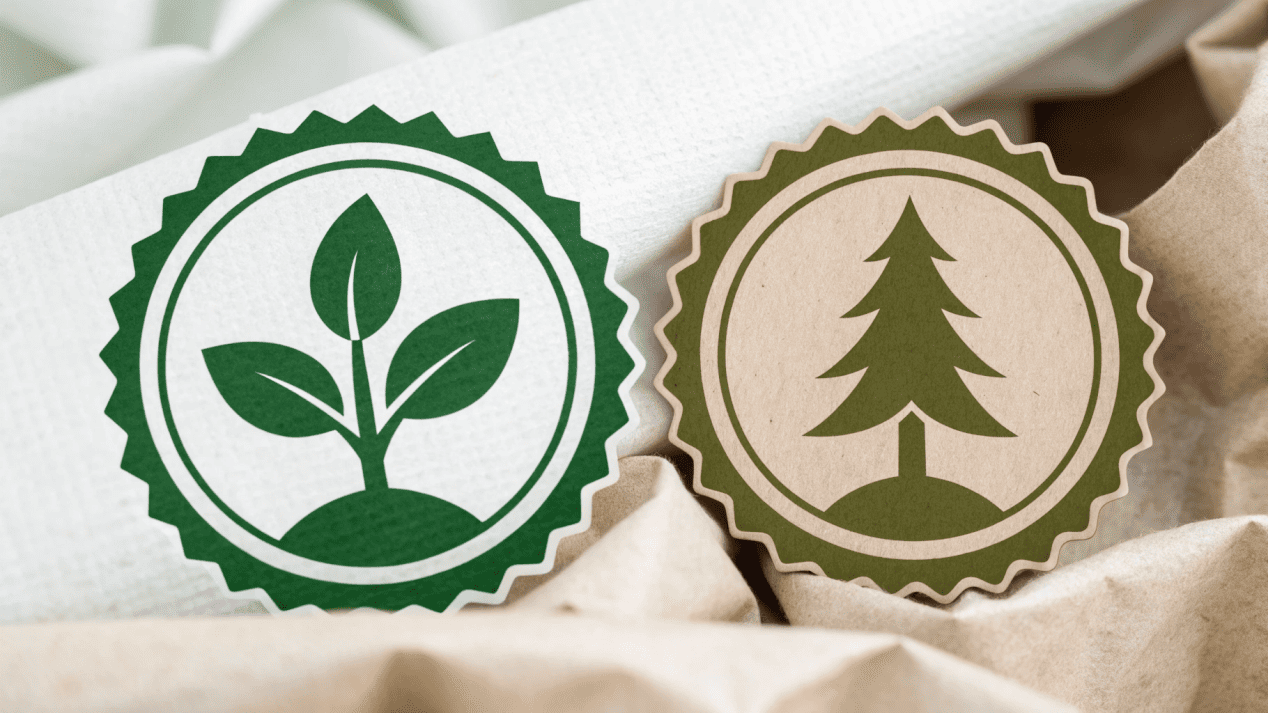
Making an environmental claim is easy. Proving it is hard. Certifications are your proof. They transform your marketing claims into verifiable facts.
Key Eco-Certifications Explained
You can confidently tell your customers your packaging is sustainable and have the documents to back it up.
| Certification Logo | What It Means | Why It Matters to Your Customer |
|---|---|---|
| FSC5® | The paper comes from forests managed to protect biodiversity and the lives of local people. | "My purchase supports responsible forestry, not deforestation." |
| BPI / TÜV AUSTRIA | The product is certified to break down in an industrial composting facility. | "This cup can be turned back into soil, reducing landfill waste." |
I offer a full range of certified sustainable options13, including FSC5-certified paper and cups lined with compostable PLA. I empower you to "walk the talk" on sustainability.
Can Certified Cups Help You Win More Business?
You are bidding against competitors for a large corporate contract. If your offerings look the same, you're forced to compete only on price, which crushes your profit margins.
Yes, absolutely. Certifications are a powerful differentiator. They signal that you are a professional, responsible, and quality-driven brand. In a competitive bid, this can be the single detail that makes a client choose you.

Imagine two cafes bidding for a corporate catering contract. Cafe A uses generic cups. Cafe B proudly states its cups are from an FDA2, BRC3, and ISO 90014 certified facility and are made from FSC5-certified paper. Which one will the corporate client, who has its own reputation and employee safety to consider, choose? The choice is clear.
Inheriting a Portfolio of Trust
The best part is that you don't have to spend years building a certified supply chain8 yourself. When you choose to partner with me at HAOKELAO, you instantly inherit our entire portfolio of world-class certifications1. Your brand story becomes stronger, your risk becomes lower, and your competitive edge becomes sharper from day one. It helps you win new business, justify a premium price14, and attract the growing number of environmentally conscious customers.
Conclusion
Your cup is an extension of your brand. Certifications are not just paperwork; they are your documented proof of safety, quality, and commitment. Don't settle for less.
Explore how certifications can enhance your business credibility and customer trust. ↩
Learn about FDA certification and its importance in ensuring food safety standards. ↩
Understand the significance of BRC certification in maintaining food safety and quality. ↩
Discover how ISO 9001 can streamline your operations and enhance product quality. ↩
Find out how FSC certification ensures sustainable sourcing of paper products. ↩
Discover how certifications can enhance customer confidence in your products. ↩
Learn how certifications can differentiate your brand in a crowded market. ↩
Explore how certifications can improve transparency and reliability in your supply chain. ↩
Explore the potential legal implications of using uncertified packaging materials. ↩
Explore essential food safety regulations that protect consumers and businesses alike. ↩
Understand the importance of quality control in maintaining customer trust and satisfaction. ↩
Learn about compostability certifications and their role in promoting eco-friendly products. ↩
Discover various sustainable packaging solutions that can enhance your brand's eco-credentials. ↩
Learn how certifications can help you command higher prices by adding value to your offerings. ↩